Understanding Starkville’s Housing Landscape
Starkville, located in the southeastern United States, is primarily known as a college town. The city’s rental market is shaped by the presence of a major public university, which drives demand for student accommodation. As of the 2026–2027 academic year, available student housing options in Starkville are limited in number but offer a clear entry point for those planning ahead. Currently, there is one identified property catering to students, with a minimum monthly rent of USD 695. This indicative price should be confirmed directly with the operator, as rates may vary depending on lease terms, room type, and move-in date.
The limited supply means that securing suitable housing requires early action. Most student rentals in Starkville are concentrated within a few miles of the university campus, in areas commonly referred to as “College View” or “University District” (though no specific neighbourhood names are official city designations). The city itself is relatively compact, with a population under 25,000, so commuting distances are short – typically no more than 15 minutes by bike or car from any residential area to the campus core.
Because the housing inventory is small, students are advised to consider not only price but also lease flexibility, utility inclusions, and proximity to grocery stores and public transport stops. The one available property at the USD 695 price point offers a baseline; higher-end units with more amenities or closer to the campus may cost more, though no current listings exceed that threshold in this dataset.
Commute and Neighbourhood Logic
In a city as small as Starkville, neighbourhoods are not sharply defined. However, student housing tends to cluster in three logical zones based on commute time to the main university campus:
- Campus-adjacent (within 0.5 miles): This area includes streets immediately bordering the university. Rent is typically higher, but walking time is under 10 minutes. Bicycle parking and pedestrian paths are common. This zone is ideal for students who want to attend evening classes or use campus facilities frequently.
- Mid-distance (0.5–1.5 miles): A mix of single-family homes converted into student rentals and small apartment complexes. Commute time is 10–20 minutes on foot, or 5–10 minutes by bike. Public bus routes (operated by the city’s transit system) serve this belt, with stops near major intersections. Rent here is generally slightly below the campus-adjacent level, though the USD 695 listing could fall into this category.
- Fringe (1.5–3 miles): Includes newer apartment communities near shopping centres or along Highway 12. Driving or cycling is the primary mode; bus service is less frequent. Rent may be lower, but the trade-off is reliance on a car or bike for daily errands. Fewer properties exist in this zone for student-specific leasing.
Because only one property is currently listed, the exact neighbourhood distribution is unknown. However, the logic of commuting in Starkville is straightforward: the city’s grid layout and flat terrain make cycling and walking viable options for most students, provided they live within 2 miles of the university. Car ownership is common but not mandatory for those living within the mid-distance zone.
For students without a vehicle, the Starkville Area Transit System (SATS) offers free bus routes that run near campus and through major residential areas during semester hours. Routes are limited on weekends and evenings, so checking the schedule before signing a lease is advisable.
Price Bands
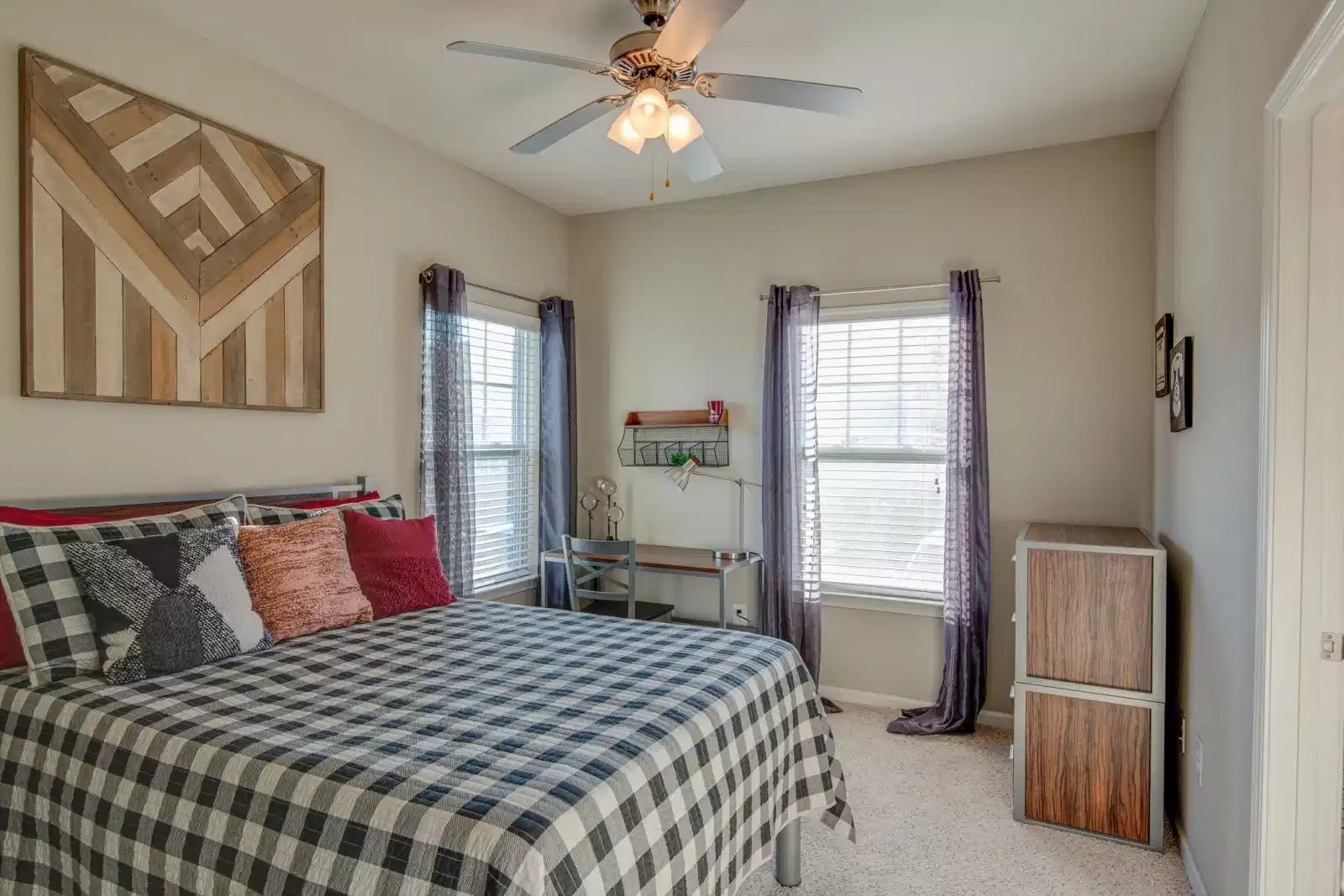
Based on the available data, the student housing market in Starkville currently presents a single price point:
- Minimum rent: USD 695 per month (indicative — confirm with the operator)
This price likely refers to a standard room in a shared apartment or a small studio unit. Without further listings, it is not possible to provide a full price band distribution. However, typical student housing in Starkville can range from around USD 600 for a basic room in a shared house to over USD 1,000 for a one-bedroom apartment in a new complex near the campus. Utilities (electricity, water, internet) are often separate, adding roughly USD 80–150 per month.
When evaluating the USD 695 listing, confirm what is included: some properties bundle utilities, while others charge separately. The lease duration is usually 12 months, but some operators offer 9‑month academic year leases at a slightly higher monthly rate.
To put this in context, Starkville’s overall cost of living is below the US average, but rental demand spikes during the academic year (August to May). Prices are generally fixed for the lease term, but early renewals can lock in rates for the following year.
Mapping the University to Housing Areas
Starkville’s primary university campus is situated near the centre of the city. The institution’s academic buildings, libraries, sports facilities, and student unions are all within a 1‑mile radius. As a result, the most desirable housing areas are those that provide a short walk to the central lecture halls.
- North of the campus (bordering the historic district) contains older homes that are often converted into student apartments. Rentals here are typically more affordable, and many have off‑street parking.
- East and south of the campus feature newer apartment complexes built specifically for students. These tend to have higher rents but include amenities like gyms, study lounges, and shuttle services.
- West of the campus is mostly commercial and light industrial, with fewer student rentals.
The single identified property likely falls within one of these zones. Without exact address details, prospective tenants should ask the operator for the distance to the main campus entrance and the nearest bus stop. Because no other properties are listed, the map of university to housing areas is essentially a circle around the campus, with the closest units being most sought after.
Three Common Pitfalls for Student Renters
1. Underestimating the Lead Time
Starkville’s student housing inventory is limited – only one property currently appears in this dataset. In a small college town, demand can outstrip supply, especially for units near the campus. Many leases are signed as early as February for the following August. Waiting until summer to search may leave students with few or no options. Advice: Start researching and contacting operators at least six months before your intended move‑in date. For a 2026–2027 academic year start, begin in early 2026.
2. Overlooking Lease Terms and Fees
Some student rentals require a guarantor (a cosigner) if the tenant does not meet income requirements. Failure to secure one can result in a denied application or a higher security deposit. Additionally, early termination fees, parking costs, and pet deposits are often not advertised up front. Advice: Ask for a complete breakdown of all fees before signing. Confirm whether utilities are included or billed separately. Also, inquire about renewal options – some operators increase rent by a fixed percentage each year.
3. Ignoring Commute Reliability
While Starkville is bikeable and walkable for many, relying solely on public transit can be risky. SATS buses run less frequently after 6 pm and have no service on major holidays. During exam weeks, extended library hours may conflict with bus schedules. Advice: If you do not have a car, choose housing within a 20‑minute walk of the campus. Test the commute during the time you would actually travel (e.g., 8 am or 5 pm) before committing. Also, check if your rental provides a courtesy shuttle.
Booking Calendar for 2026 or 2027
The typical academic year in the US runs from mid‑August to early May, with a fall semester (August–December) and a spring semester (January–May). Summer sessions (May–July) have separate, shorter leases.
- For a 2026 fall move‑in: Start your search in February 2026. Many operators open leasing for the following academic year around that time. Submit applications by March 2026 to secure a spot. By May 2026, the best units are often taken. Sign the lease by June 2026 at the latest.
- For a 2027 spring move‑in (January): Begin searching in October 2026. Sublets from fall graduates may be available, but the formal leasing cycle for spring starts later. Confirm with operators whether they offer semester‑only leases.
- For 2027 fall: Follow the same calendar as 2026 – start early in February 2027.
Because only one property is currently listed, it is even more critical to act quickly. If that property fills, you may need to look for off‑market rentals (e.g., private landlords or sublets from graduating students). These are not captured in this database but can be found through local bulletin boards or word‑of‑mouth – however, we cannot recommend any specific channels due to editorial guidelines.
Tip: Consider signing a 12‑month lease starting in August and then subletting for the summer if you plan to leave. Some operators allow subleasing with approval, but a fee may apply.
Frequently Asked Questions
Is Starkville safe for students living off‑campus?
Starkville generally reports low crime rates compared to other US cities of similar size. Most student housing areas are patrolled by the university police and city police. Violent crime is rare, but petty theft (e.g., bike theft, package theft) can occur. Always lock doors and windows, and consider renters insurance. Verify the crime statistics for the specific street address with your operator or local police department – we cannot provide precise data here.
Are utilities included in the USD 695 rent?
This depends on the operator. The USD 695 figure is a starting price that may or may not include water, electricity, gas, internet, and trash. In Starkville, it is common for student apartments to include water and trash, while electricity and internet are extra. Ask for a “utility estimate” before signing. A typical monthly utility bill for a student in a shared apartment ranges from USD 80 to USD 150, depending on usage and the season.
Can I find housing for just one semester (fall only or spring only)?
Some operators offer 9‑month leases that cover the academic year (August–May). True semester‑only leases are rarer but may be available as sublets from graduating students or through operators with high turnover. The currently listed property’s lease terms are not specified – confirm directly. If you need a one‑semester rental, expect to pay a premium (possibly 10–20% more per month) or consider a sublet arrangement.
How far in advance should I apply for a property?
At least 4 to 6 months before your intended move‑in. For an August 2026 start, apply by March–April 2026. For a January 2027 start, apply by October–November 2026. Because inventory is limited (only one identified property), late applications may result in no availability. If you are flexible with move‑in dates, you might find a spot, but the selection will be narrow.
Data as of the 2026–2027 academic year. All prices are indicative and must be confirmed directly with the operator. Availability and terms are subject to change.
See also: listing details · browse more