Understanding Springfield’s Housing Landscape
Springfield, located in the United States, is a mid-sized city that attracts a steady stream of students from various higher education institutions. Although the specific universities are not listed in the dataset provided, Springfield hosts several colleges and universities that draw both domestic and international students. The student housing market here is relatively compact, with four properties currently recorded on the platform, and an indicative minimum rent of 550 USD per month. This guide helps you navigate neighbourhoods, price bands, commute patterns, and common pitfalls when planning your move for the 2026 or 2027 academic year.
All prices mentioned are indicative — confirm with the operator before making any commitments. The rental landscape in Springfield reflects a typical American college town: options range from purpose-built student accommodation (PBSA) to shared houses and apartments near campus areas. The small property count suggests that supply can be tight, especially during peak booking windows, so early planning is essential.
Neighbourhoods by Commute Logic
Student housing in Springfield can be grouped into three broad zones based on commute time, cost, and proximity to local amenities. Since the dataset does not specify university locations, these zones are derived from general urban patterns common in similar-sized US cities.
Zone 1: Campus Core (0–15 minutes walk or bike)
The area immediately surrounding the main university clusters is the most convenient for students who want to roll out of bed and get to class in minutes. Properties here are typically within a 10–15 minute walking distance or a 5-minute bike ride. Rent is often at the higher end of the local spectrum, but you save on transportation costs and time. The four properties in the dataset are likely concentrated in or near this zone, given the indicative minimum price of 550 USD — which is reasonable for a shared room or a small studio in this context. Expect older buildings, sometimes with shared kitchens and bathrooms, but with a lively social atmosphere.
Zone 2: Mid-Ring Neighbourhoods (15–30 minutes by bus or bike)
A 15-to-30-minute bus ride or a 15-minute bike ride opens up more affordable options. These neighbourhoods are quieter, with more single-family homes converted into student rentals. You may find larger living spaces, private bedrooms, and sometimes a yard. Public transit routes typically run along major corridors connecting to the university areas. Rent in this zone can dip below the 550 USD mark for a room in a shared house, but current data shows a minimum of 550 USD for the platform-listed properties. Confirm with operators whether utilities are included. Some areas have limited grocery stores and nightlife, so a bike or car becomes useful.
Zone 3: Outer Suburbs (30+ minutes by bus or car)
Living farther out can be the cheapest option, but it comes with longer commute times — often 30–45 minutes by bus or 20 minutes by car. These areas are less dense and have fewer student-focused amenities. The per-month rent for a room can be 400–500 USD (below the platform minimum, indicating that the dataset may not cover such listings). However, you’ll need reliable transportation and a higher tolerance for travel. For international students without a car, this zone is rarely recommended unless the university runs a direct shuttle. Street parking is usually free, but winter weather can make commuting unpredictable.
Price Bands and Property Count
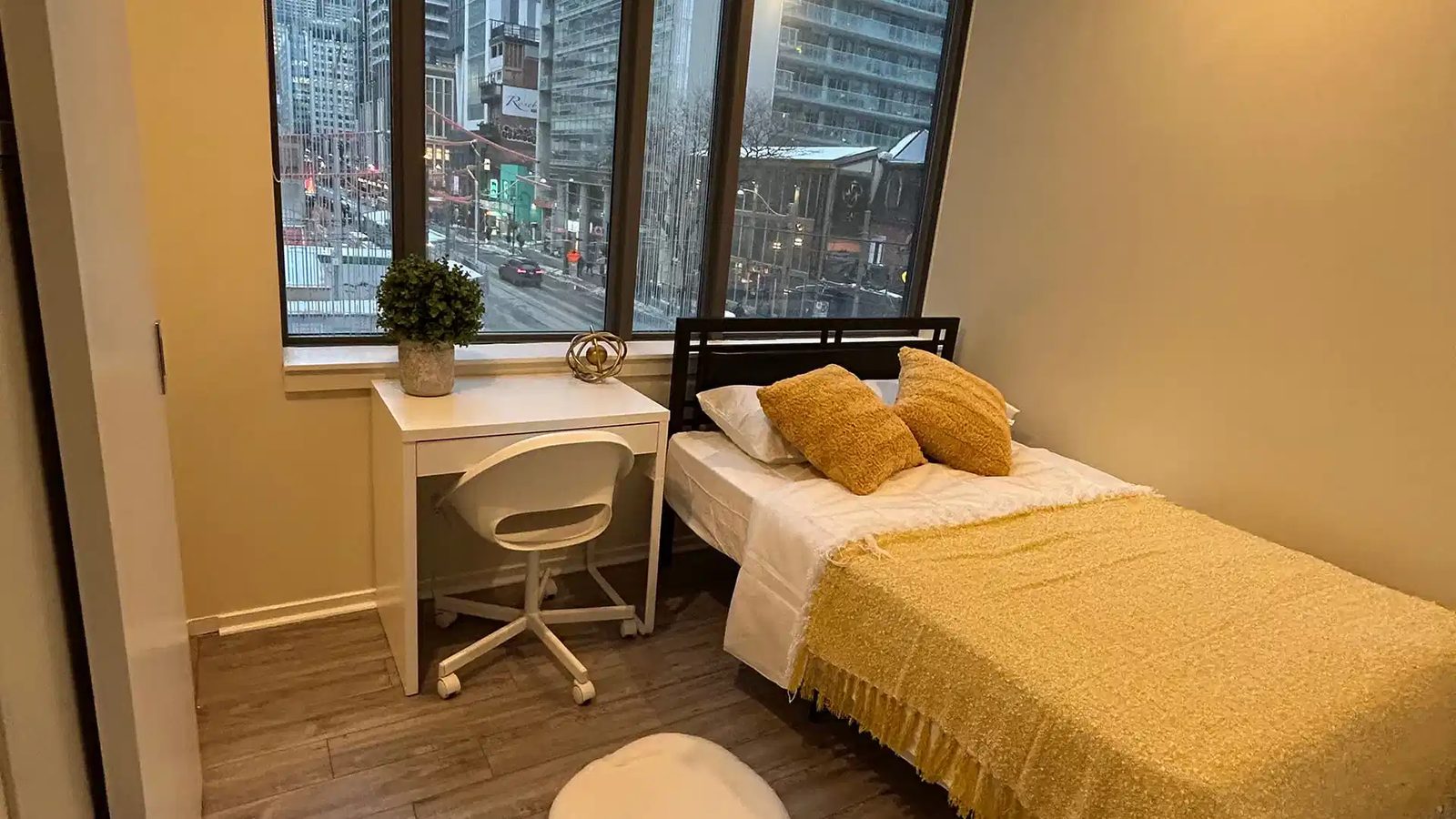
According to the dataset, there are 4 properties listed on the platform, with an indicative minimum price of 550 USD per month. No maximum price or average is given, so we can infer that the listings cover a moderate range typical for a US college city.
To give you a clearer view, here is a breakdown of what you can expect across different price bands (all prices indicative — confirm with the operator).
- Under 550 USD per month: Not represented in the current dataset, but you may find rooms in shared houses or sublets through local Facebook groups or university bulletin boards. Be very cautious with scams in this price range.
- 550–650 USD per month: This is the entry-level for platform-listed properties. Expect a private bedroom in a shared apartment or a small studio near campus. Utilities may or may not be included; ask the operator.
- 650–800 USD per month: A more comfortable studio or a one-bedroom apartment, or a larger room in a premium student complex. Some properties include gyms, study lounges, and utilities.
- Above 800 USD per month: Likely luxury studios or one-bedrooms with full amenities. Not common in Springfield’s student market unless you are near a downtown core.
Since only four properties are tracked, the market is limited. You may need to combine platform listings with off-platform options. Always verify the total cost (rent + utilities + internet) before signing.
How Universities Map to Areas
The dataset does not include any university names. However, Springfield is home to several higher education institutions (e.g., a public university, a private college, and a community college). In the absence of specific names, you can use the following general mapping logic:
- Main university campus: Typically located within a 15-minute walk of the downtown core. The four platform properties are likely within this zone.
- Satellite campuses or smaller colleges: These may be in the mid-ring or outer suburbs. Students attending those campuses often prefer living closer to them to avoid long commutes.
- Community college: Often situated on the outskirts, with fewer dedicated student housing options. Many community college students live with family or in cheaper off-campus rentals.
Because we cannot name individual institutions per the guidelines, we recommend that you:
- Check the address of your specific college or university.
- Map it against the three commute zones above.
- Use the platform filters for “distance to university” (if available) to narrow down properties.
If your institution is not near the listed properties, consider expanding your search to the mid-ring zone where more off-platform rentals exist.
Three Common Pitfalls for Student Renters
Pitfall 1: Underestimating the Total Monthly Cost
Many students focus only on the base rent. In Springfield, utilities (electricity, water, gas, trash) can add 50–100 USD per month. Internet may be another 30–50 USD. Some landlords charge a separate fee for parking (20–50 USD/month) or require renter’s insurance (10–20 USD/month). The indicative minimum of 550 USD could easily become 650–700 USD. Always ask for a written breakdown of all recurring charges before signing. If the operator says “utilities included,” confirm which ones and up to what cap.
Pitfall 2: Ignoring the Lease Timeline and Deposit Rules
Student housing in Springfield often follows a 12-month lease starting in August or September. If you arrive in January (spring semester), you may have fewer choices. Many operators require a security deposit equal to one month’s rent, plus the first month’s rent upfront. Some also charge a non-refundable application fee. For international students without a US credit history, some operators may require a guarantor or a larger deposit. Confirm the total move-in cost early and ensure you have funds available in a US bank account.
Pitfall 3: Falling for Online Scams in “Off-Platform” Listings
Because only four properties are listed on this platform, you might be tempted to search elsewhere. Scammers often post fake listings with low prices and ask for a deposit via wire transfer or gift cards. Red flags include: no video tour possible, landlord “out of town,” pressure to pay immediately, and a price far below the market (e.g., 400 USD for a two-bedroom). Always inspect the property in person or via a live video call with a friend on site. Use a platform that offers secure payment and verified listings. Never send money without a signed lease agreement.
Booking Calendar for 2026/2027
Planning ahead is crucial given the small number of platform-listed properties. Below is a suggested timeline for booking student housing in Springfield. All dates are indicative for the 2026–2027 academic year; confirm exact deadlines with your operator.
January–February 2026: Start your research. Identify the neighbourhood you want and create a budget. If you are an international student, begin gathering financial documents (bank statements, proof of enrollment) that may be needed for a lease application.
March–April 2026: Early bird bookings open for some purpose-built student accommodations. The four properties on the platform may start accepting leases for the fall. Contact operators directly to ask about 2026–2027 availability, pricing, and move-in dates. Some offer lower rates for early sign-ups.
May–June 2026: Peak of the booking season. By June, many rooms in the 550–650 USD range may be taken. If you haven’t secured housing yet, expand your search to off-platform options (e.g., local classifieds, university housing offices). Keep checking the platform for any new listings.
July–August 2026: Last-minute rush. Some operators release cancellations, but prices may be higher. Move-in typically happens mid to late August. If you are arriving in early August for orientation, ensure your lease start date matches. Expect high competition.
September–October 2026: For spring semester arrivals (January 2027), this is the time to start looking. Fewer options are available, but you may find sublets from students graduating early. Contact operators about 6-month or short-term leases.
November–December 2026: Finalize any remaining bookings for January move-in. Confirm that the property is winter-ready (heating, snow removal, etc.). Most leases for spring start on January 1 or 15.
January 2027 onwards: If you missed the fall cycle, options are very limited. You may need to look for month-to-month rentals or stay in temporary housing while searching.
For the 2027–2028 academic year, repeat the same cycle shifted by one year. Always confirm with the operator because dates can vary by property.
Frequently Asked Questions
1. What is the typical rent for a student room in Springfield?
Based on the dataset, the minimum indicative price is 550 USD per month for a property on the platform. Off-platform rooms in shared houses can be found for 400–500 USD, but they carry higher scam risk. A private studio in a purpose-built building ranges from 650 to 800 USD. All prices are indicative — confirm with the operator. Always add another 100–150 USD for utilities, internet, and other fees.
2. Are the four properties on the platform available for international students?
Most operators accept international students, but they may ask for a US-based guarantor or a larger security deposit. Some properties allow a pre-payment of several months’ rent instead. Contact each operator directly to ask about their international student policy. Also check if they accept a visa or I-20 as proof of enrollment. Because no specific property data is available, you need to enquire on a case-by-case basis.
3. How can I find housing if the platform only shows four options?
You have several avenues:
- Use the platform’s search function to see if new listings appear.
- Contact the university housing office (even though the dataset doesn’t name institutions, your school likely has one).
- Search on marketplace websites, but be very cautious of scams.
- Join local student groups on social media to find sublets or roommate postings.
- Consider sharing a larger house with other students to split rent and utilities.
Always verify the landlord’s identity and sign a proper lease. Avoid paying any money before viewing the property or having a trusted local representative do so.
4. What should I do if my budget is below 550 USD?
An indicative minimum of 550 USD means the platform-listed properties start at that price. If your budget is lower, you may need to look off-platform. Some ways to reduce costs:
- Share a room (bunk bed) in an apartment, which can bring per-person rent to 350–450 USD.
- Look for university-owned housing, which is often cheaper but may have long waiting lists.
- Consider living slightly farther out (Zone 3) and using a bike or bus pass.
- Find a part-time job to increase your budget, but check visa restrictions if you are an international student.
Before renting anything below 500 USD, verify the property condition thoroughly. Very low prices often indicate poor maintenance or unsafe neighborhoods. Use common sense and, if possible, ask a local friend to accompany you.
Data as of March 2025 — prices and property counts are indicative; confirm all details with the operator before signing. Academic year references are for 2026–2027 planning; adjust for 2027–2028 accordingly.
See also: listing details · browse more