Understanding Raleigh’s Neighbourhoods by Commute
Raleigh’s student housing landscape is shaped by the presence of North Carolina State University (NCSU) and the city’s broader transport network. The university’s main campus is located near downtown, and most purpose-built student accommodation (PBSA) listed for 2026/27 sits within a 10–20 minute commute by foot, bike, or bus. Here is a breakdown of the key areas, arranged by travel time to NCSU’s central campus.
1. Campus Perimeter (0–1.5 miles)
- What it is: The blocks immediately surrounding NCSU’s main entrance on Hillsborough Street and along Western Boulevard. This is the densest student corridor, with apartments, townhouses, and the highest concentration of PBSA.
- Commute: Walking time 5–15 minutes to most lecture halls. Bicycle racks are plentiful. The Wolfline bus system (free for students) also runs through this area.
- Typical housing: Mid-rise buildings with shared apartments, often 2–4 bedrooms. Many units include furniture and utilities in the listed price.
- Vibe: High foot traffic, proximity to campus bars, coffee shops, and the NCSU libraries. Noise levels can be higher on weekend nights.
2. University Hill / Hillsborough Street Corridor
- What it is: The stretch of Hillsborough Street from the NCSU Belltower westward toward the fairgrounds. It is the main commercial strip for students.
- Commute: 10–20 minute walk to central campus; 5 minutes by bus (routes 1, 2, 9, 12). Cyclists have dedicated lanes.
- Typical housing: Mix of older houses converted to student rentals and newer PBSA complexes with gyms, study rooms, and rooftop terraces.
- Vibe: Lively, with restaurants, a movie theater, and grocery stores. Street parking is limited; many residents rely on bikes or the free campus bus.
3. Western Boulevard / Avent Ferry Road
- What it is: A major arterial running south of the main campus, lined with apartment complexes and student communities. It connects to the NCSU Centennial Campus (engineering, textiles, sciences).
- Commute: 10–20 minutes by bus (routes 1, 7, 9) to main campus; 5–10 minutes by bike to Centennial Campus. Driving can be congested at peak hours.
- Typical housing: Larger complexes with pool, parking, and shuttle services. Many units are 4-bedroom layouts, appealing to groups.
- Vibe: Quieter than Hillsborough Street, but still student-heavy. Proximity to parks and grocery stores.
4. Downtown Raleigh (east of campus)
- What it is: The central business district, about 1.5–2 miles from NCSU. More apartments, condos, and a handful of PBSA properties.
- Commute: 20–30 minute walk, 10–15 minutes by bus (R-line, GoRaleigh route 1), or 5 minutes by rideshare. City buses run on reduced frequency after 9 pm.
- Typical housing: Studio and 1-bedroom units are more common here; prices tend to be higher per person but lower for solo living.
- Vibe: Urban, with access to museums, nightlife, and the Red Hat Amphitheater. Less focused on student amenities; better for graduate students or those who prefer city life.
5. Outer Suburbs (Cary, Garner, Morrisville)
- What it is: Adjacent towns 15–30 minutes by car from NCSU. Some students choose them for lower rent, but housing listed on the platform is minimal (0–1 property in some cases).
- Commute: 20–45 minutes by bus (GoTriangle, limited weekend service) or 15–25 minutes by car. Parking on campus costs $500–$800 per semester.
- Typical housing: Single-family homes or large apartment complexes with family-oriented amenities.
- Vibe: Quiet, suburban. Recommend only for students with a car or willingness to use park-and-ride.
Price Bands and What You Get for $599+
The platform currently lists 9 properties in Raleigh for the 2026/27 academic year, with a starting price of $599 per month (indicative — confirm with the operator). Prices typically cover rent only; utilities, internet, and fees may be extra. Here is how the price bands break down:
- $599 – $700 per month (2–3 properties): Shared apartments in older buildings, usually 3–4 bedrooms, near Western Boulevard. These may have basic furnishings (bed, desk, chair) and shared kitchen/living. Some require a separate deposit (often $300–$500). No in-unit washer/dryer; coin laundry on site.
- $701 – $850 per month (4–5 properties): Mid-range purpose-built student housing, typically within 1 mile of campus. Includes upgraded furniture, on-site gym, study lounge, and sometimes utilities (electricity, water, internet) bundled. Most have 2–4 bedroom floor plans. Parking is available for an extra $50–$100/month.
- $851 – $1,100+ per month (1–2 properties): Premium units close to Hillsborough Street or downtown, with private bathrooms, in-unit washer/dryer, and amenities like rooftop decks, coworking spaces, or pool. Studio or 1-bedroom options may appear in this band. Lease terms are usually 12-month, but some offer 9-month options for a higher monthly rate.
Important: Listed prices change throughout the year. The $599 figure is a starting point for the lowest-rent property; actual availability depends on lease start date. Always confirm the total cost (including any “admin fees,” “activity fees,” or “parking fees”) before signing.
Where to Live: Mapping NCSU to Areas
North Carolina State University (ranked 272 globally, per the provided data) is a large public research university with two main campuses: North Campus (main, near Hillsborough Street) and Centennial Campus (south of Western Boulevard, home to engineering and veterinary medicine). Students in different colleges should prioritize different housing areas.
- Engineering, Computer Science, Textiles (Centennial Campus): Focus on Western Boulevard / Avent Ferry Road. The free NCSU bus route (known as the “Centennial Connector”) runs every 10 minutes during class hours. Properties along this corridor can save you 10–15 minutes each way compared to living north of main campus.
- Liberal Arts, Business, Education, Humanities (North Campus): Live within walking distance of Hillsborough Street or University Hill. The 5–10 minute walk to the Student Union, D.H. Hill Library, and the Talley Student Center is a major advantage.
- Graduate Students & Researchers: Consider downtown Raleigh or quieter streets off Hillsborough Street (e.g., Horne Street, Clark Avenue). Graduate students often prefer 1-bedroom apartments or studios, which are rare in the lowest price band but available in the $850+ range.
- Freshmen & Transfer Students (no car): The Campus Perimeter (Watauga Street, West Campus area) offers the shortest commute and easy access to Walmart shuttle (the “Green Route”) and downtown buses.
Tip: NCSU’s “Wolfline” bus system is free for all students with a valid ID. Schedules are viewable on the Transloc app. If you live more than 2 miles from campus, check bus frequency — some routes stop running after 7 pm on weekends.
Three Common Pitfalls for Student Renters in Raleigh
1. Underestimating the “First-Year Eligibility” Rule Many PBSA properties in Raleigh require residents to be at least a sophomore or have a guarantor if they are under 19. Some buildings also enforce a “no subleasing” policy. Always ask: Is a guarantor needed? Can my parents co-sign if I’m under 21? Ignoring this can cause delays — especially during August when properties are full.
2. Ignoring Utility Caps and Flat Fees A $599/month rent might sound unbeatable, but some properties charge a flat utility fee of $80–$150/month (electric + water + internet) that pushes the true cost above $699. Others use a “cap and share” model (e.g., each bedroom gets a $25 electricity credit; overages are split among roommates). Read the lease’s “additional rent” section carefully. Confirm with the operator if utilities are included or capped.
3. Falling for “Flash” Marketing Without Checking Commute Times Some new luxury buildings marketed as “student living” are located on the edge of downtown, 2.5 miles from NCSU’s main entrance. The listed property may have a rooftop pool and on-site coffee bar, but the daily commute — walking 30 minutes or waiting for a bus that comes every 30–45 minutes — can become exhausting. Google Maps the property address to the nearest NCSU classroom building during rush hour (8:00–9:00 am and 4:30–5:30 pm). If the bus takes longer than 20 minutes, ask if the property operates its own shuttle.
Booking Calendar: When to Start Your Search
The PBSA market in Raleigh operates on an early-bird cycle. Here is a timeline based on typical lease cycles for the 2026/27 academic year:
- October – November 2025: Early releases. Some properties offer “rental rates at current prices” if you sign before December. This is when the $599 starting price is most likely available.
- December 2025 – February 2026: Peak applications. Most properties open full leasing. The number of available units is highest, but prices may already be $50–$100 higher than early-bird rates.
- March – April 2026: Late applications. You will still find 7–8 of the 9 listed properties, but the cheapest units (at $599) may be sold out. This is a good time to secure a mid-range option ($700–$850).
- May – June 2026: Summer lease start. If you need accommodation for a summer internship, note that many PBSA contracts run August–July. Short-term summer sublets are rare; you may need to sign a 12-month lease anyway.
- July – August 2026: Peak move-in. This is the most stressful period. Properties that still have vacancies tend to be at the upper end of the price band, or located farther from campus. Expect to pay $900+ for a 1-bedroom if you wait this late.
Recommendation: Start browsing properties at least 9–10 months before your move-in date. If you plan to start in August 2026, aim to have a signed lease by February 2026.
Frequently Asked Questions
1. Do I need a car to live in Raleigh as a student? Not necessarily. NCSU’s free Wolfline system covers most student neighborhoods. If you live within 1.5 miles of campus, a bicycle is sufficient. However, if you choose an outer suburb (e.g., Cary or Morrisville), a car is strongly recommended because public transit schedules are limited on weekends and after 8 pm. Parking on campus costs approximately $500–$800 per semester, so factor that into your budget.
2. Are the $599 properties safe? The platform lists properties that have been vetted by the operator. That said, “lowest price” does not automatically mean low quality. Check recent Google or Yelp reviews for the specific building. Common issues in the $599 band include older air conditioning units, inconsistent hot water, and less responsive maintenance. Always schedule a virtual or in-person tour, and ask about pest control history.
3. Can I break my lease early? Most PBSA leases in Raleigh are individual-room contracts (you are liable only for your own bedroom) with a 12-month term. Early termination fees typically equal 1–2 months’ rent, and you may still be responsible for the remaining rent until someone re-lets the room. Some properties allow lease reassignment for a one-time fee ($300–$500). Avoid signing a lease that has a “no cancellation” clause unless you are certain of your plans.
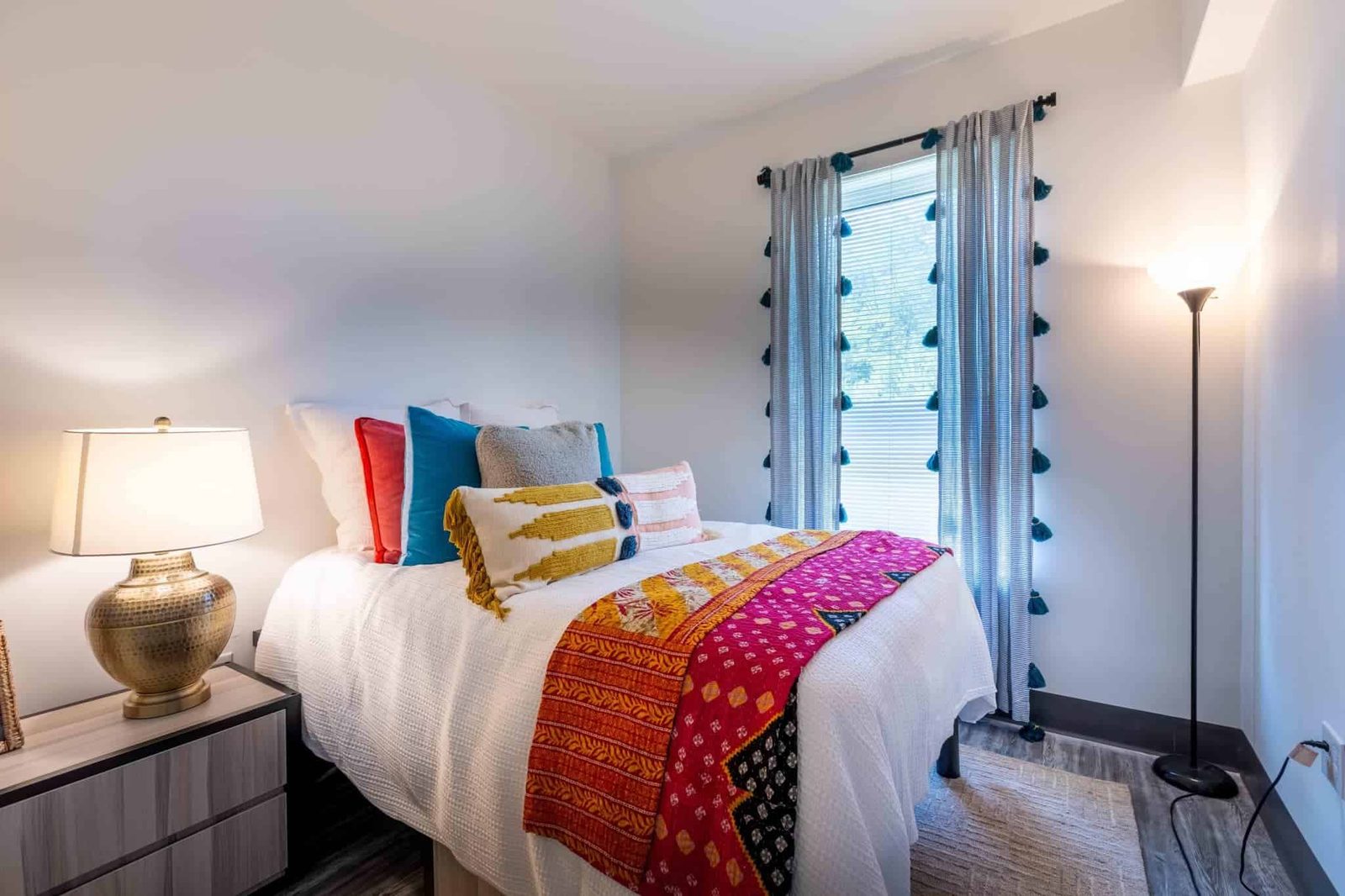
4. Are furnished units really furnished? Yes, usually with a twin or full bed, desk, chair, dresser, and nightstand. Kitchens typically come with refrigerator, stove, microwave, and sometimes a dishwasher. Many properties also include a sofa and dining table in common areas. However, “furnished” rarely includes kitchenware, bedding, or electronics. Confirm the furnishing list in writing, especially if you see “luxury furnished” in the description — it may only mean upgraded flooring and countertops.
Data as of 2026. Prices and availability are indicative — confirm with the operator before making any financial commitment.
See also: listing details · browse more