Understanding the Nottingham Student Housing Market
Nottingham is one of the United Kingdom’s largest university cities, hosting more than 60,000 students across its two principal institutions. On our platform, 31 student housing properties are currently listed, with rents starting from £86 per week (indicative — confirm with the operator). The city’s compact geography means most areas are within a 30-minute commute to either campus, but the type of neighbourhood you choose — student‑dominated, quiet residential, or city‑centre — will significantly affect your budget and daily experience.
This guide is designed to help you compare neighbourhoods by commute time, understand the price bands available for the 2026/27 academic year, see how each university maps onto specific areas, avoid common pitfalls, and plan your booking calendar.
Choosing Your Neighbourhood by Commute
Nottingham’s student areas fall into three broad categories based on which campus you are aiming for. Commuting is typically by bus, tram, bike, or on foot. The city has an extensive Nottingham City Transport bus network and a tram line (Nottingham Express Transit) that connects the University of Nottingham’s main campus to the city centre.
For The University of Nottingham (Main Campus at University Park)
Lenton & Dunkirk – These are the most popular areas for University of Nottingham students. Lenton is a traditional student quarter, a 10–20 minute walk or 5-minute bus ride from University Park. Dunkirk is immediately adjacent to the campus. Both are lively, with terraced houses converted into shared flats. Rents in Lenton often fall in the lower to mid‑range (around £86–£130 per week for a room in a shared house). Commute: on foot 10–20 minutes.
Beeston – Located southwest of the campus, Beeston is a self‑contained town with its own shops, restaurants, and a tram stop. The tram takes you to University Park in about 10 minutes. Beeston is quieter than Lenton and popular with postgraduate students and families. Rent for a room in a shared house can be £100–£150 per week; studios start from £130 (all indicative). Commute: tram 10 minutes, cycle 15 minutes.
Wollaton – North of the campus, Wollaton is a residential area with good bus links. It is less student‑dense, offering larger houses and more green space. Commute by bus 15–20 minutes. Rents similar to Beeston.
City Centre – Living in the city centre means a 20–25 minute bus ride to University Park, or 30 minutes on foot. The centre offers purpose‑built student accommodation (PBSA) with studios and en‑suite rooms. Prices are typically higher: £150–£220 per week for a studio (indicative). Commute: bus or tram 20 minutes.
For Nottingham Trent University (City Campus and Clifton Campus)
City Centre & The Lace Market – Nottingham Trent University’s city campus is right in the heart of Nottingham. Most students live in the centre or in nearby areas such as The Lace Market, Hockley, or Sneinton. Commute from most city‑centre postcodes is a 5–15 minute walk. Purpose‑built studios and flats dominate, with rents from £110 per week for a shared room in a cluster flat, up to £200+ for a studio (indicative). The area is busy and entertainment‑focused.
Radford / Forest Fields – Northwest of the city centre, these areas are popular among NTU students seeking larger, cheaper houses. Radford is about a 20–25 minute walk to the city campus, or a short bus ride. Rents in shared houses can be as low as £86 per week (indicative). The neighbourhoods are more multicultural and offer excellent value.
Clifton – Nottingham Trent University also has a Clifton campus (south of the city). Clifton village itself has a small student community, but most students commute from the city centre or Lenton/Beeston. The bus from the city centre takes about 25 minutes. Purpose‑built accommodation near Clifton campus is limited; most students rely on private houses in Clifton or on university‑managed halls.
West Bridgford & The Meadows – Across the River Trent, West Bridgford is a popular, safe neighbourhood with good bus routes to both city centre and University Park. It is more upmarket, so rents are slightly higher (around £130–£170 per week for a room). Commute to NTU city campus: 15 minutes by bus. To University Park: 30 minutes by bus.
Price Bands and What They Mean
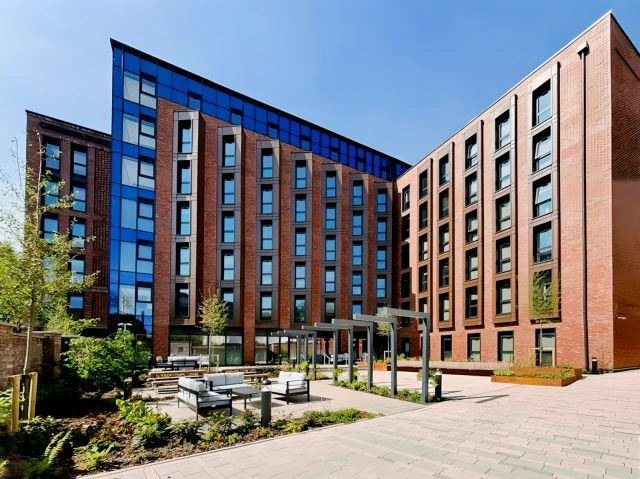
From the 31 properties listed on our platform, the minimum weekly rent is £86. Based on typical Nottingham listings, the market can be broken into three indicative bands for the 2026/27 academic year. All prices are indicative — confirm with the operator.
-
Budget band (around £86–£120 per week): This covers rooms in shared houses (HMOs) in areas like Lenton, Radford, and Forest Fields. You will usually share a kitchen and bathroom. Utilities and internet may be included or charged separately. Most budget properties are older, but well‑maintained.
-
Mid‑range band (around £120–£170 per week): En‑suite rooms in purpose‑built student accommodation (PBSA) or larger shared houses in Beeston, Wollaton, or the city centre. You get a private bathroom and share a kitchen with 4–8 other tenants. Many PBSA buildings include a gym, common room, and laundry.
-
Premium band (around £170–£250+ per week): Studios or one‑bedroom flats in the city centre or near University Park. These offer privacy and often include bills, contents insurance, and high‑speed internet. Some luxury PBSA buildings have rooftop terraces, cinema rooms, and concierge services.
Note: The 31 properties cover a range of types. Not all price points may be available in every neighbourhood. Always check the exact property details for the academic year you are booking.
Mapping Universities to Key Areas
The University of Nottingham (World ranking 97, QS 2025) has its main campus at University Park, with additional campuses at Jubilee (near the QMC hospital) and Sutton Bonington (outside the city). For University Park and Jubilee, the recommended housing areas are Lenton, Dunkirk, Beeston, and Wollaton. Postgraduate students or those with families often prefer Beeston or West Bridgford. The University is well‑served by the tram line (to Beeston and University Park) and frequent buses.
Nottingham Trent University (World ranking 609) has two principal campuses: the City Campus (Goldsmith Street, Shakespeare Street, and Gothic Revival buildings in the centre) and the Clifton Campus (south side). The City Campus is best served by living in the city centre, Radford, Sneinton, or The Meadows. Clifton Campus students tend to live in Clifton village itself, or in shared houses along the Clifton Lane bus route. NTU also has a dedicated accommodation office that partners with private PBSA providers; many of those buildings are in the city centre.
Both universities: Many students from both institutions mix in shared houses in Lenton, Radford, and the city centre. The two universities are only 2.5 miles apart, so students often choose a location that balances commute to both (e.g., city centre) if they have friends at the other institution.
Three Common Pitfalls to Avoid
1. Underestimating the Commute to the Correct Campus
Nottingham Trent University has two distinct campuses, and The University of Nottingham also has multiple sites (University Park, Jubilee, Sutton Bonington). A student who signs a contract in Clifton thinking they will be at City Campus every day may find the commute long and costly. Always check which campus your classes will be at and test the journey during peak hours. For University of Nottingham students, the Jubilee Campus is a 10-minute walk from University Park, but the Sutton Bonington campus is 12 miles away and requires a shuttle bus or car. Choose your neighbourhood accordingly.
2. Ignoring Bills and Contract Terms
Some advertised weekly rents are “bills included”, while others are not. A listing at £90 per week excluding bills may end up costing £110 when you factor in gas, electricity, water, and internet. Always read the tenancy agreement carefully. Also, many private landlords charge a holding deposit and a tenancy deposit of up to five weeks’ rent. For 2026/27, confirm with the operator what is covered. Additionally, some PBSA contracts run for 51 weeks, while university‑owned halls run for 38-40 weeks. If you plan to go home for the summer, a shorter contract saves money.
3. Overlooking the Impact of the City’s Nightlife and Events
Nottingham has a vibrant nightlife scene, and the city centre can be noisy until the early hours, especially on weekends. If you are a light sleeper, avoid flats directly above bars or clubs. Lenton and Radford also have lively street parties (e.g., Lenton Sound) that can cause noise and disruption. Check the noise reputation of the street before signing. Additionally, the city hosts large events (e.g., Splendour Festival, Goose Fair) that can increase demand and prices for short‑term rentals — but that is unlikely to affect a standard 12-month student contract.
Booking Calendar for 2026/27
The typical student housing cycle in Nottingham follows a pattern that repeats each academic year. Below is an indicative timeline for the 2026/27 academic year (i.e., start September/October 2026). All dates are approximate; confirm with operators.
-
November 2025 – January 2026: Early‑bird release. Some PBSA operators open bookings for the following year. University halls typically open applications in January. This is the best time to secure choice in the city centre or premium studio blocks.
-
February – April 2026: Peak booking season. Most private shared houses in Lenton and Radford are let between February and April. If you are looking for a house with friends, start searching in February. Prices are still at standard rates.
-
May – July 2026: Late availability. By May, the majority of PBSA and popular houses are gone. However, a few properties remain, sometimes at a slight discount. If you are flexible on location, you can still find good options.
-
August – September 2026: Urgent search. Last‑minute bookings are possible, but choice is limited. Some operators may offer discounts to fill remaining rooms. However, you may end up in a less convenient neighbourhood.
-
After course start (October 2026): Very few standard tenancies available. You may need to sublet or take over a contract.
Recommendation: Start looking in February 2026 for shared houses, or November 2025–January 2026 for PBSA. Early booking gives you the best choice, especially for low‑budget options.
Frequently Asked Questions
1. What is the cheapest student accommodation in Nottingham?
The minimum rent listed on our platform for Nottingham is £86 per week (indicative — confirm with the operator). This typically corresponds to a single room in a shared house in Radford or Lenton. Always check whether bills are included.
2. Which area is best for a postgraduate student?
Postgraduate students often prefer quieter areas. Beeston (for University of Nottingham) and West Bridgford (for both universities) offer more residential environments, good transport links, and a mix of housing types. Studios and one‑bed flats are more common in the city centre.
3. When should I book my accommodation for September 2026?
For the best selection, begin searching in February 2026 for shared houses, and November 2025–January 2026 for purpose‑built studios or en‑suites. If you are joining a university‑owned hall, their application window typically opens in January.
4. Is it cheaper to live alone or share?
Sharing a house with other students is generally the most cost‑effective option. A room in a shared house can be as low as £86 per week, while a studio in the city centre can exceed £170 per week. However, sharing requires managing joint bills and housekeeping, which may not suit everyone.
Data as of [current month/year] – prices are indicative and subject to change. Always confirm with the operator before committing.
See also: listing details · browse more