Understanding Clemson’s Housing Landscape
Clemson is a small city in northwestern South Carolina that functions primarily as a college town. The local university anchors the local economy and culture, and most rental demand comes from students, faculty, and staff. With only five available student‑housing properties listed on the platform and a starting price of $530 per week (indicative — confirm with the operator), the rental market here is compact but can be competitive during peak intake periods. Because the housing stock is limited, renters need to understand the neighbourhood logic, price bands, and common pitfalls before signing a lease.
This guide focuses on the 2026–2027 academic cycles. All prices mentioned are indicative; actual rates and availability should be verified directly with the property operator at the time of booking.
Neighbourhoods by Commute Type
Clemson’s geography is relatively straightforward: the city is built around the university campus, and most off‑campus housing falls into three commute categories. The choice of neighbourhood largely determines your daily travel mode and time.
1. Walking‑Distance Neighbourhoods (0 – 1.5 miles from campus core)
These are the most sought‑after areas because they allow a commute of 10 to 20 minutes on foot. Properties in this ring are typically older, single‑family houses converted into student flats, or purpose‑built apartment complexes located on the main roads leading to campus.
- Typical characteristics: Higher density of student tenants, close to campus dining and library, limited on‑site parking. Because supply is constrained, units in this zone tend to lease earliest.
- Commute details: Walking to the centre of campus takes 10–20 minutes; cycling cuts that to 5–8 minutes. Some residents use skateboards or scooters.
- Noise and social life: Expect more activity on weekends and during football game days. Quieter pockets exist away from College Avenue.
- Price indicator: Units near campus often start slightly above the city’s base price, but with only five total properties on the platform, exact ranges are hard to generalise. A studio or one‑bedroom may cost $600–$800 per week (indicative).
2. Biking / Bus‑Dependent Neighbourhoods (1.5 – 3 miles)
Medium‑distance areas include the “Central” district (along U.S. Highway 123) and residential subdivisions east of campus. The city runs a campus shuttle service (free for students) that covers these corridors, and biking infrastructure is present but not extensive.
- Typical characteristics: Mix of apartments, townhouses, and small single‑family homes. Parking is generally easier than in the campus‑adjacent ring. Many newer builds are concentrated here because land is cheaper.
- Commute details: Cycling to the core takes 10–15 minutes; the shuttle runs every 15–30 minutes depending on the route. Driving is roughly 5–8 minutes, but finding a campus parking permit can be difficult and expensive.
- Advantages: Lower rent per square foot, quieter environment, and less competition for leases.
- Price indicator: Two‑bedroom units in this band may range from $450 to $600 per person per week (indicative). Some properties include utilities.
3. Car‑Mandatory Neighbourhoods (3+ miles)
Areas farther out include the neighbouring towns of Pendleton and Seneca (both within a 10–15‑minute drive). Bus service to campus exists but is less frequent. These neighbourhoods feature larger apartments, houses with yards, and more family‑oriented settings.
- Typical characteristics: Lower density, more parking, often include washer/dryer in unit. Grocery shopping requires a car.
- Commute details: Driving to campus is 10–20 minutes; carpooling is common among roommates. The free campus shuttle extends to some parts of Seneca, but check the route map before committing.
- Who chooses this: Graduate students, families, or undergraduates who prioritise space and quiet over proximity. Because the supply of rental properties in these towns is not fully captured on the platform (only within Clemson city limits), you may find additional listings off‑platform.
- Price indicator: A three‑bedroom house in Seneca can rent for around $350–$450 per person per week (indicative), sometimes with more generous square footage.
Price Bands and Available Count
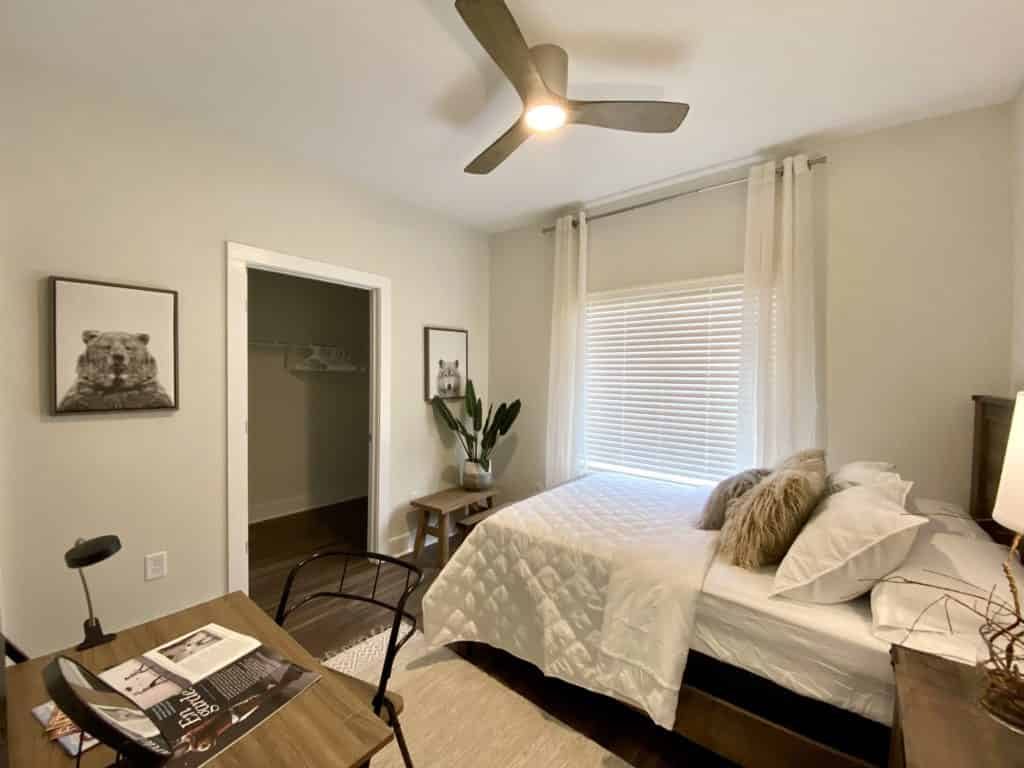
The platform data shows exactly five student‑housing properties in Clemson, with a minimum price of $530 per week. This suggests a tight market with limited direct inventory. Because the property count is low, price bands are narrow:
- Entry‑level (approximately $530–$600/week): Likely shared apartments or studios with basic amenities. These may be located in the biking/bus zone.
- Mid‑range (approximately $600–$750/week): Larger private rooms or one‑bedroom flats in walking distance or newer complexes.
- Premium (above $750/week): Possibly top‑floor units, furnished with premium appliances, or rare single‑occupancy houses.
All prices above are indicative — confirm with the operator. They do not include utilities or renters’ insurance unless stated.
Because the data is limited to five properties, renters should also check local listing sites and Facebook groups to get a fuller picture. The university’s off‑campus housing office (not named here per editorial guidelines) can also provide a broader database.
How the Local University Maps to Areas
Although the platform’s university list for Clemson is empty, the city is essentially a single‑university town. The academic institution is located near the geographic centre, with its main campus occupying a large area west of U.S. 76 and north of Lake Hartwell.
- Campus core (Coliseum, library, student union): Most academic buildings are within the walking‑distance zone. Housing within 1 mile of this core is ideal for arts, sciences, and engineering students who need to be on campus daily.
- Athletic facilities (football stadium, basketball arena): These lie on the eastern side of campus. Students attending frequent sports events may prefer east‑side neighbourhoods (walking or short bus ride).
- Graduate and research buildings: Several research parks and the graduate school are located on the periphery of campus (west side, near the botanical gardens). Car‑or bike‑dependent neighbourhoods in Pendleton can be practical for graduate students with fewer class hours.
Because the university is integrated into the fabric of Clemson, almost every rental neighbourhood serves students in some capacity. The key decision factor is the acceptable commute length and the trade‑off between rent and convenience.
Three Common Pitfalls for Student Renters in Clemson
Pitfall 1: Underestimating Lease Start Dates vs. Academic Calendar
Many student leases in Clemson begin in June or July, but the academic year runs from late August through early May. If you sign a 12‑month lease starting in June, you pay for three summer months you may not use (unless you take summer courses or stay for work). Some operators offer shorter June‑to‑June or August‑to‑July terms, but these are less common. Always ask whether the lease term aligns with your actual stay. If you leave in May, you might be liable for rent through the lease end.
Pitfall 2: Ignoring Parking Constraints
If you plan to bring a car to Clemson, parking on campus is limited. A resident parking permit is expensive and often oversold. Many off‑campus properties in the walking‑distance zone do not include a parking space, or they charge extra. In the car‑mandatory neighbourhoods, parking is plentiful, but then you need a campus pass. Before signing, verify whether the property includes a designated off‑street parking spot, and research the campus parking permit system (which typically opens in July for the fall semester). Relying solely on street parking in a college town can result in tickets or towing.
Pitfall 3: Overlooking Utility Costs and Move‑In/‑Out Fees
Some rental listings show a low weekly rent but do not include electricity, water, gas, or internet. In Clemson, summer temperatures often exceed 90°F (32°C), so air‑conditioning can add $100–$200 per month to utility bills. Also, many operator contracts charge a non‑refundable cleaning or administration fee at move‑in, and a carpet cleaning fee at move‑out. Read the lease carefully for “common area utility split” and “early termination” clauses. The initial low price can be misleading when these extras are added.
Booking Calendar for 2026 / 2027
Clemson’s rental market has a predictable booking cycle, though the five properties on the platform may be subject to earlier fill‑up.
- Autumn 2026 entry (August 2026): Start searching as early as November 2025. The most desirable walking‑distance units begin leasing in January or February 2026. By April 2026, the available selection narrows. By June 2026, you may only find leftover units in car‑dependent areas.
- Spring 2027 entry (January 2027): Fewer leases start in January. If you need a spring‑only term, look for sublets or lease takeovers from students graduating in December 2026. These become available in October–November 2026. Some operators offer 6‑month leases at a higher price.
- Summer 2027 entry (May/June 2027): Mostly taken by students enrolled in summer sessions or continuing from the previous year. Sublets are common because many students leave for internships.
Given the low property count on this platform, it is wise to create alerts and book viewings as soon as listings appear. Confirm the contract terms carefully, and always verify the indicative price with the operator before paying any deposit.
Frequently Asked Questions
Q: How can I find student housing in Clemson if the platform only shows five properties?
A: Use independent student‑housing platforms (like this one) as a starting point. Additional listings can be found via local classifieds, Facebook groups for Clemson renters, and the university’s off‑campus listing board. Visiting in person or asking current students can reveal unadvertised options such as sublets or private rooms in houses.
Q: Is $530 per week the average rent in Clemson?
A: No, $530 per week is the minimum starting price among the listed properties (indicative). Actual rents vary by location, size, and amenities. One‑bedrooms within walking distance may be higher, while shared units farther away may be lower. Always confirm current pricing with the operator, as rates change each semester.
Q: Do I need a car to live in Clemson?
A: It depends. If you live within 1.5 miles of campus, you can walk, bike, or take the free campus shuttle. For farther neighbourhoods (Pendleton, Seneca), a car is very convenient but not strictly necessary if you live near a shuttle stop. However, groceries and nightlife are spread out; many students prefer to have some form of transport.
Q: When is the best time to start looking for a lease starting in August 2026?
A: Begin your search in January 2026. By then, some operators release inventory for the next academic year. The most competitive units will be reserved by March. Starting later may limit your choices to higher‑priced or less convenient properties.
Data as of 2025 – prices are indicative, confirm with the operator.
See also: listing details · browse more