Neighbourhoods by Commute Logic
Chicago is a large city with distinct neighbourhoods that serve different student populations. The three universities in this guide — University of Chicago, University of Illinois Chicago (UIC), and Illinois Institute of Technology (IIT) — are spread across the south side, near west side, and near south side respectively. Choosing housing near campus reduces commute time, but rent and living style vary significantly.
1. Hyde Park (for University of Chicago)
The University of Chicago is located in Hyde Park, a residential neighbourhood about 7 miles south of downtown. Most off‑campus properties here are within walking distance or a short bus ride. The area has a mix of older apartment buildings and newer developments catering to students. Rent for a private room typically starts around $700–$900 per month, but a shared apartment can be found from approximately $600 per month (indicative — confirm with the operator). Commute to downtown Chicago takes 20–30 minutes via the Metra Electric line or bus.
2. Near West Side / Little Italy (for UIC)
UIC’s main campus sits on the Near West Side, adjacent to the Greektown and Little Italy neighbourhoods. This area is dense with apartment complexes built for students, many offering individual leases and furnished units. Prices range from about $650 for a shared room to $1,200 for a studio. The Blue Line (Illinois Medical District stop) and several bus routes connect the area to the Loop and other parts of the city. Walking to campus is typical for most students.
3. Bronzeville / Bridgeport (for IIT)
IIT’s main campus is in Bronzeville, a historic neighbourhood on the South Side. Housing options include older apartment buildings, single‑family homes divided into flats, and a few newer student‑targeted complexes. Rent is generally lower than in Hyde Park or the West Side; a shared room can start around $550–$650 per month. The Green and Red Lines (35th‑Bronzeville–IIT station) provide direct access to downtown in about 15 minutes.
4. Downtown / Loop
Many students prefer to live in the Loop or nearby South Loop for access to all three universities via public transit. The Loop offers high‑rise apartments and luxury amenities, but prices are higher — studios start around $1,300 per month. Commute times: 20–25 minutes to UIC (Blue Line or bus), 25–30 minutes to IIT (Red Line), and 35–40 minutes to UChicago (Metra or bus). This area suits graduate students or those who prioritise urban lifestyle.
Price Bands from Given Data
The platform lists 95 student housing properties in Chicago, with a minimum advertised price of $600 per month. This figure is an indicative starting point — actual availability and final rates should be confirmed with the operator. Below is a general breakdown of what you can expect at different price levels, based on the number of properties and typical room types.
Budget‑friendly: $600–$800 per month
- About 30–35 properties fall into this band.
- Mostly shared rooms (2‑4 bedrooms) in older buildings near IIT or in outer neighbourhoods like Woodlawn, Rogers Park, or Albany Park.
- Utilities (electricity, water, internet) may or may not be included — always check the lease.
- Commute to campus usually requires a bus or train of 20–40 minutes.
Mid‑range: $800–$1,100 per month
- Roughly 40–45 properties in this range.
- Private rooms in shared apartments or studios in areas like Hyde Park, Near West Side, and South Loop.
- Many newer constructions or recently renovated units.
- Proximity to UIC and UChicago is common; most are within 15–25 minutes of campus by public transit.
Premium: $1,100+ per month
- About 15–20 properties, mostly in the Loop, River North, or luxury student complexes.
- Studios, one‑bedrooms, or penthouse‑style shared apartments.
- High‑end amenities (gym, rooftop, study lounges, on‑site laundry).
- Walkable to the Loop and short commutes to all three universities.
How the Listed Universities Map to Areas
- University of Chicago (UChicago) – Hyde Park, Woodlawn, Kenwood, South Shore. Most student housing clusters around 53rd Street and along the Lakefront. Properties near the Metra Electric stations (53rd St, 55th–56th–57th) are especially popular.
- University of Illinois Chicago (UIC) – Near West Side, Little Italy, University Village, Pilsen, West Loop. The area bounded by Roosevelt Road, Ashland Avenue, and Taylor Street contains the densest concentration of student housing. The Blue Line and Pink Line serve the campus.
- Illinois Institute of Technology (IIT) – Bronzeville, Bridgeport, Douglas, Grand Boulevard. The Red and Green Lines intersect near campus. Many properties are within a 15‑minute walk of the academic buildings.
Students attending UIC often share neighbourhoods with IIT students in the Near South Side, but the main housing hubs for each university remain distinct. If you are studying at UChicago but prefer a livelier scene, South Loop is a common compromise (30‑minute Metra ride).
3 Common Pitfalls for Chicago Student Renters
1. Underestimating winter heating costs
Chicago winters (December–February) have average lows of 20°F (–6°C). Apartments with old windows or poor insulation can lead to sky‑high heating bills — hundreds of dollars per month. Before signing, ask the operator or landlord for an estimate of typical winter utility costs. Many student buildings include heat in the rent, but not all. If heat is separate, budget an extra $80–$150 per month between November and March.
2. Signing a 12‑month lease that doesn’t align with your academic calendar
Most student housing in Chicago runs on a standard 12‑month lease starting August 15 or September 1. If your school year ends in June but your lease runs through July, you may pay rent for an empty unit. Some operators offer 9‑ or 10‑month leases, but they are less common. Subletting is allowed in some buildings but requires approval. Always clarify the exact move‑in and move‑out dates.
3. Ignoring the CTA red line or bus reliability
The Chicago Transit Authority (CTA) is generally safe and efficient, but certain lines experience delays or safety concerns late at night. The Red Line, which serves IIT and passes through South Loop, runs 24/7 but has inconsistent frequency after midnight. If you plan to commute from Hyde Park (UChicago), note that the Metra Electric line runs on a limited schedule on weekends. Relying on a bus that comes only every 20 minutes could make a 10‑minute drive turn into a 45‑minute trip. Test your commute during the actual time of day you would travel before signing.
Booking Calendar for 2026
The typical booking cycle for Chicago student housing follows the academic year. Below are recommended time frames based on the 2026 calendar. (Dates are indicative; confirm availability with operators.)
-
October 2025 – January 2026
Early bird leasing begins. Most large student housing complexes release their 2026–2027 inventory. Prices are often lower early on, but many options remain. -
February – April 2026
Peak booking period for autumn arrivals. Popular properties fill up, especially near UIC and UChicago. You should aim to have a signed lease by the end of March for a September move‑in. -
May – July 2026
Last‑minute leasing. Some cancellations free up units, but the selection narrows. Premium properties may still have availability, while budget rooms near IIT might be gone. -
August – September 2026
Move‑in month. Operators are busy processing arrivals. If you arrive without a pre‑signed lease, you may find only higher‑priced or less desirable units.
For a spring (January) start, begin searching in October of the prior year.
Frequently Asked Questions
1. Are the apartments furnished?
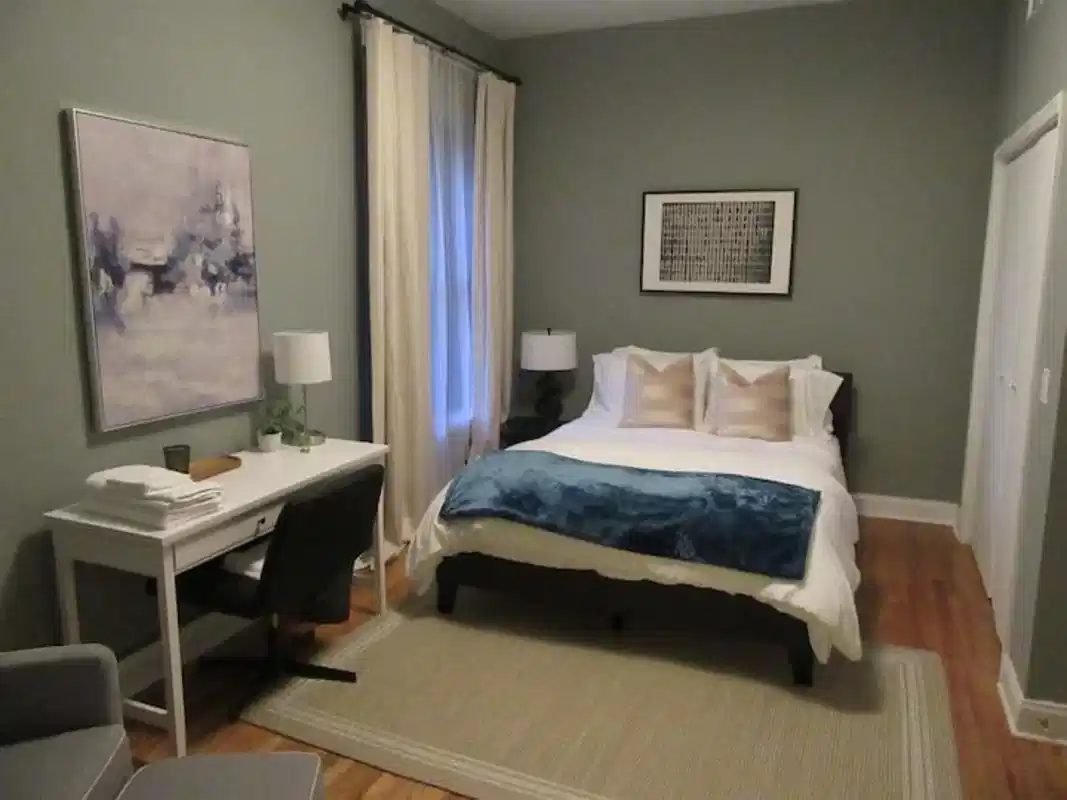
Many student‑focused properties in Chicago come fully furnished (bed, desk, chair, lamp, sometimes a small sofa). Older apartments or private landlords often provide unfurnished units. The platform listings usually specify “furnished” or “unfurnished”. Always confirm the exact inventory before arrival — some include a microwave and fridge but no linens.
2. What utilities are included in the rent?
It varies by building. Most student complexes include water, trash, and internet in the rent. Electricity and gas are often billed separately, either a flat fee or usage‑based. Some all‑inclusive properties also cover heating and electricity, but at a slightly higher rent. Always ask the operator for a breakdown. If you are on a budget, an “all‑inclusive” lease simplifies planning.
3. Is it safe to live near campus?
Hyde Park (UChicago) is generally safe, with 24/7 university shuttle service available. UIC’s neighbourhood is well‑patrolled but has some blocks with higher property crime. Bronzeville (IIT) has improved in recent years but remains varied block‑by‑block; students often use the university escort services at night. Downtown/South Loop is considered safe for urban standards, but avoid walking alone very late. Always check crime maps and talk to current students.
4. Can I find a sublease or shorter‑term lease?
Some operators offer 9‑month leases (September–May) for around 10% higher monthly rent. If you need only a semester, subleasing from a graduating student is common — check university housing Facebook groups or the platform’s sublease listings. Be aware that subleases require landlord approval and may not include the same amenities.
Data last updated: 2026. Prices shown are indicative — confirm with the operator. Property count: 95 student housing options in Chicago. Minimum listing price: $600 USD per month.
See also: listing details · browse more