Chapel Hill Student Housing Guide: What to Know for 2026-2027
Chapel Hill is a compact university town in central North Carolina, best known for its academic atmosphere and relatively walkable layout. For the 2026‑2027 academic year, the local purpose‑built student housing market is extremely limited – only two properties are recorded on independent platforms – and the monthly rent starts at USD 1,440 (indicative – confirm with the operator). This guide covers neighbourhood planning, price realities, how the local university relates to different areas, three common mistakes, and a realistic booking timeline.
Understanding the Chapel Hill Student Housing Market
The town’s student housing stock is dominated by off‑campus apartments and a handful of privately managed student complexes. Because the local university is the main employer and student magnet, most rental activity clusters within a 3‑5 mile radius of the main campus. However, true purpose‑built student accommodation (PBSA) – buildings designed exclusively for students, often with amenities such as study rooms, all‑inclusive rents, and organised social events – is very scarce. With only two such properties currently listed, supply is tight, and competition starts early.
Most international students rely on one of three routes:
- On‑campus residence halls – typically reserved for first‑year students; availability for upper‑year and transfer students is limited.
- Off‑campus apartments – shared houses or flats rented through local landlords, often requiring a US co‑signer or guarantor.
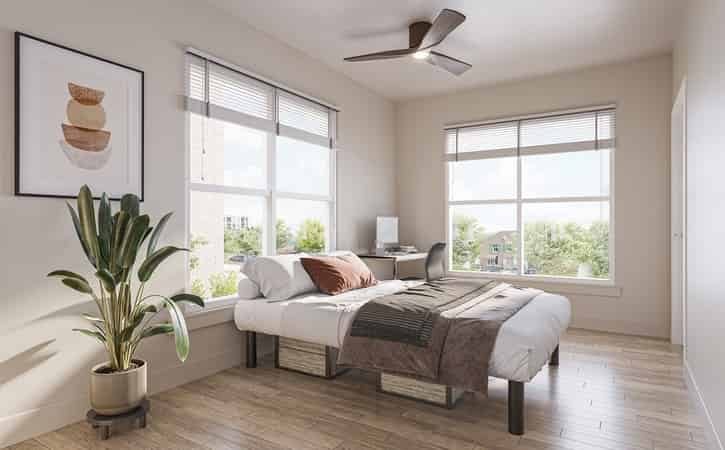
- PBSA – the two properties in the current dataset fall into this category. They offer furnished units, individual leases, and inclusive utility packages, but at a premium price point.
The minimum monthly rent of USD 1,440 (indicative – confirm with the operator) places Chapel Hill’s PBSA segment in the upper tier of US college towns. For comparison, a shared off‑campus apartment can sometimes be found for USD 800‑1,200, but such options are not recorded in the purpose‑built data and require local searching.
Neighbourhoods by Commute Logic
Though Chapel Hill is small, housing clusters differ in walk time, bus access, and atmosphere. The following areas are relevant for students renting PBSA or off‑campus housing:
1. The Main Campus Vicinity (walking distance) Properties within a 15‑20 minute walk to the centre of campus are the most sought after. These are mostly older apartment buildings and converted houses. Walk scores are high (80+), and you can avoid a car or campus shuttle for daily classes. However, rents here tend to be high, and the two PBSA properties are not necessarily in this core – many new student towers are built just off Franklin Street, the main commercial corridor, which is a 10‑15 minute walk to most lecture halls.
2. Franklin Street Corridor Franklin Street is the town’s spine, lined with restaurants, shops, and student housing. The stretch from Columbia Street to Estes Drive contains several large apartment complexes. Commuting to campus is walkable (0.5‑1.5 miles) or a quick bus ride (free with a student ID). This area is lively but can be noisy on weekends. PBSA options here often command the highest rents.
3. South Campus / Highway 15‑501 Area South of the main campus, along U.S. 15‑501, you’ll find newer apartment complexes, some of which are marketed to students. The commute requires a bus (the route U‑ or T‑lines) or a bicycle (about 15‑20 minutes). Rent is generally slightly lower than Franklin Street, but PBSA properties in this zone are rare – none of the two recorded ones are located here.
4. North Chatham County / Meadowmont A further 3‑4 miles southeast of campus, these areas offer larger, lower‑rent apartments, but they are best suited for students with a car. Bus service exists but is less frequent. No PBSA properties are recorded here.
Because the dataset contains only two PBSA listings, it is impossible to provide a detailed neighbourhood breakdown for that specific housing type. Students seeking PBSA should contact the operator directly to confirm exact location and distances.
Price Bands and Available Options
The table‑free summary below organizes what is known from the data and general market context:
- PBSA recorded properties: 2
- Minimum monthly rent (PBSA): USD 1,440 (indicative – confirm with the operator)
- Typical rent range for PBSA: Based on the two properties, one might expect a price band from USD 1,440 to perhaps USD 1,800‑2,000 for a standard studio or one‑bedroom unit. No exact maximum is provided in the data; always confirm with the operator.
- Off‑campus (non‑PBSA) typical range: USD 800‑1,400 for a room in a shared house or a small one‑bedroom flat. These are not covered by the dataset and require local agency search.
Key points:
- PBSA rents are all‑inclusive (water, electricity, internet, furnishings). This can save USD 150‑250 per month compared to a standard off‑campus apartment where utilities and furniture are separate.
- Many PBSA contracts are individual (you pay only for your room), while off‑campus leases often require all tenants to be jointly liable.
- The minimum price of USD 1,440 (indicative – confirm with the operator) is a starting point; larger or premium units will cost more.
How the Local University Maps to Housing Areas
The university in Chapel Hill (public, research‑intensive, over 30,000 students) has its main campus bordered by Franklin Street to the north, South Road to the south, and Columbia Street to the west. Satellite facilities include the Carolina North campus (about 2 miles north) and health‑science buildings near UNC Hospitals.
Mapping by academic zone:
- College of Arts & Sciences / Main campus core: Most undergraduate lecture halls are within a 10‑minute walk of Franklin and Columbia. The best housing for these students is along Franklin Street or the South Campus apartments near the student union.
- Kenan‑Flagler Business School and Law School: Located east of the central quad, still within walking distance from Franklin Street properties. A bus or bicycle is fine for those living further south.
- Medical School / Hospitals: The UNC Health Care complex is just south of the main campus, along Manning Drive. Students in health programs often prefer the South Campus or 15‑501 corridor, which shaves a few minutes off the commute. PBSA in that area is not present in the current dataset.
- Graduate students and families: They often seek cheaper, quieter neighbourhoods like Carrboro (adjacent town, slightly lower rent) or the northside areas around Estes Drive. Carrboro is a 5‑10 minute bus ride from campus.
Because the PBSA data points are so few, it is not possible to state that any specific PBSA property serves a particular school. The two available properties likely sit near Franklin Street, which gives general access to all parts of campus.
Three Common Pitfalls to Avoid
1. Signing a lease without understanding the guarantor policy Many US apartment complexes require a US‑based guarantor who earns at least 3‑4 times the monthly rent. International students without a US guarantor often face a non‑refundable deposit equal to one month’s rent or must pay the entire lease upfront. PBSA operators sometimes offer guarantor services for a fee, but this must be confirmed in writing. Always ask: “What is the policy for international students without a US co‑signer?” before signing.
2. Underestimating the total cost of off‑campus (non‑PBSA) housing A room advertised at USD 900 per month may actually cost USD 1,100 after adding utilities, internet, renter’s insurance, parking permit, and a one‑time security deposit. PBSA rents that are labelled “all‑inclusive” simplify budgeting, but the upfront price is higher. Compare the true monthly out‑of‑pocket cost, not just the base rent.
3. Waiting too long to book PBSA With only two PBSA properties on the market, availability is extremely limited. Most leases for August move‑in begin signing in October‑December of the previous year. Some operators release units as early as autumn for the following fall. If you wait until spring or summer, the chances of finding a PBSA vacancy drop sharply – especially for a studio or one‑bedroom unit. For the 2026‑2027 academic year, start inquiring in September 2025.
Booking Calendar: When to Start Looking
Below is a realistic timeline for securing PBSA in Chapel Hill for the 2026‑2027 academic year. Off‑campus apartments may follow a different schedule (often 60‑90 days before move‑in).
September – November 2025
- Research the two available PBSA properties. Visit their websites, request a virtual tour, and ask about move‑in dates (typically August 2026).
- Sign a lease as soon as you find a suitable unit. Many properties require a deposit to hold the room.
December 2025 – February 2026
- If you missed the early window, check for waitlists or cancellations. Some operators release a second wave of units after the holidays.
- For off‑campus apartments, this is a good time to start browsing listings on local rental sites (outside the PBSA dataset).
March – May 2026
- By this point, PBSA availability is minimal. Focus on off‑campus shared housing or consider sublets from graduating students.
- Confirm your visa timeline; you may need to move in earlier than the standard lease start.
June – July 2026
- Last‑minute openings sometimes appear due to dropouts. Requires patience and quick decision‑making.
- If you still lack housing, consider temporary accommodation (e.g., Airbnb near campus for the first week of August) so you can view apartments in person.
August 2026
- Move‑in. Expect heavy competition for everything from furniture to grocery delivery slots.
Frequently Asked Questions
1. Are the PBSA prices guaranteed for the entire lease term? Prices quoted are indicative – confirm with the operator. Most PBSA operators guarantee the rent for the lease year, but some may increase it for renewals. Always get the price in writing before signing.
2. Can I live off‑campus without a car? Yes, if you choose a property near a bus line or within walking distance of campus. Chapel Hill Transit is free for all passengers and serves most student‑housing areas. Many PBSA properties also provide a shuttle to campus.
3. Do the two listed PBSA properties accept international students with no US credit history? Policies vary. Some operators require a US guarantor or a higher deposit. Others may accept proof of funds (bank statements) or a letter from your university. Ask specifically: “Do you work with international students who have no US credit?” The dataset does not include this information; confirm directly.
4. What is the typical lease start and end date for PBSA in Chapel Hill? Most purpose‑built student housing follows the academic calendar: lease begins in mid‑August (often 15‑20 August) and ends in late July or early August of the following year. Some operators offer spring‑only or full‑year (12‑month) leases. Always verify the exact dates – moving in a week early or staying a week late may incur extra daily charges.
Data as of early 2026. Rent figures are indicative – confirm with the operator. Housing inventory changes frequently; always verify current availability with the property management.
See also: listing details · browse more