Neighborhoods and Commute Patterns
Bloomington is a compact college town centered around Indiana University Bloomington. The majority of student housing is within a 2–3 mile radius of campus, and most students commute by walking, biking, or using the Bloomington Transit bus system. The city’s layout can be understood through three broad commute zones.
Zone 1: Campus Core (0–1 mile) This area includes the neighborhoods immediately surrounding the IU Bloomington campus – Broadview, Woodlawn, and the area along 10th Street and Jordan Avenue. Walking to most academic buildings takes 5–15 minutes. Biking is also common. Housing here is typically older multifamily buildings, converted houses, and a few purpose-built student apartments. Prices tend to be above average because of the convenience. You can expect studios and one-bedroom units starting around $700–$900 per month (indicative — confirm with the operator), though smaller shared rooms may be lower.
Zone 2: Transit Corridors (1–2 miles) Along major bus routes such as 3rd Street, 2nd Street, and College Avenue, you will find a mix of apartment complexes and rental houses. Buses run frequently during the academic year, with service to campus in 10–20 minutes. This zone offers a wider range of price points. Many of the 11 listed properties in Bloomington fall into this category, with several options between $659 and $800 per month for shared rooms or studios. Walking is less practical, but cycling is still feasible. Popular sub-neighborhoods include the Eastside (near College Mall) and the Westside (near the SR 46 bypass). Rent tends to be more moderate, and you often get more square footage or newer finishes compared to Zone 1.
Zone 3: Outlying Areas (2+ miles) The far west side (around Walnut Creek) and the south side (near Smith Road) have larger apartment complexes and standalone houses. Commute by bus is 25–35 minutes, and driving or biking is faster but requires more planning. Prices here are generally the lowest among listed properties – you may find a shared room for $659–$750 per month (indicative — confirm with the operator). However, you will likely need a car or be comfortable with longer bus rides. These areas are quieter, with more parking and green space, but access to restaurants and nightlife is limited.
To choose a neighborhood, first determine your preferred commute time. If you value a short walk to campus and are willing to pay a premium, focus on Zone 1. If you want a balance of price and convenience, Zone 2 is the most common choice. If budget is your primary constraint, Zone 3 offers the lowest entry cost, but plan for a 30-minute door-to-door commute per trip.
Price Bands and What You Get for Your Money
The housing market in Bloomington is dominated by purpose-built student housing and private rentals. Based on the available data (11 properties with a minimum price of $659 per month), here is a breakdown of typical price bands. All prices are indicative — confirm with the operator.
Budget band: $659–$749 per month This band typically covers a bedroom in a shared apartment (usually 3–5 bedrooms) or a small studio in an older building. Utility costs often are not included; check whether electricity, water, internet, and trash are separate. Properties in this range tend to be located in Zone 2 or 3, and may have basic furnishings (bed, desk, chair). Some may have shared bathrooms. Availability is seasonal, with more options during the summer rush for fall move-in.
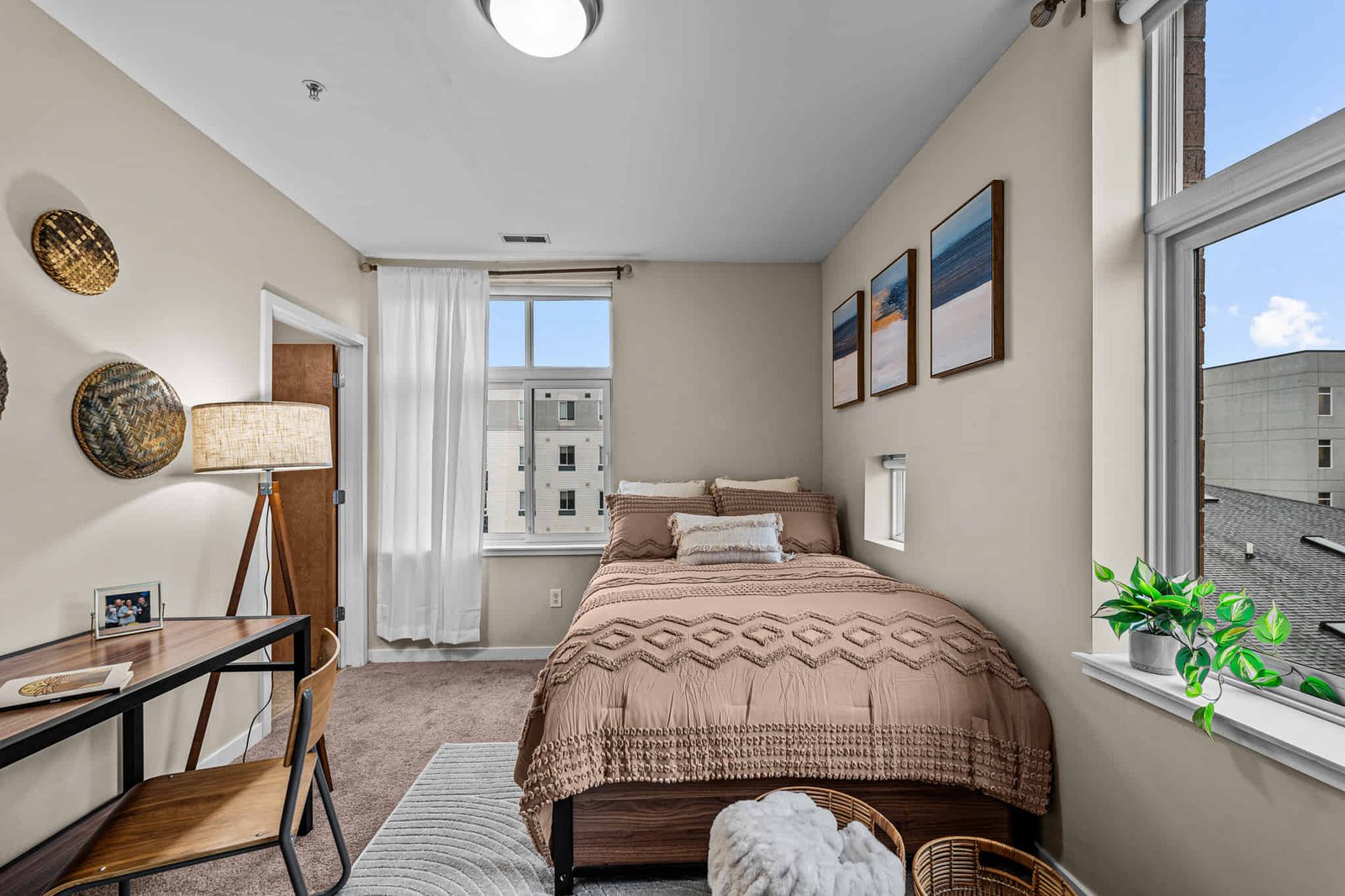
Mid-range band: $750–$950 per month This is the most common price range for a private bedroom in a modern student apartment complex or a decent one-bedroom unit in a mid-rise building. Many properties include high-speed internet, cable TV, and a fitness center. You may also get an in-unit washer/dryer. Most of these are in Zone 1 and 2, within a 10–15 minute walk or bike to campus. Expect a fully furnished room, a private bathroom, and shared living spaces (kitchen, living room). Some newer complexes also offer individual leases (per bedroom) so you are not liable for roommates’ rent.
Premium band: $950+ per month For a luxury one-bedroom apartment or a two-bedroom unit with premium finishes, you will pay $950–$1,200 per month or more. These are typically located very close to campus (Zone 1) or in brand-new buildings. Features may include stainless steel appliances, granite countertops, controlled access, parking, and rooftop decks. If you want a studio by yourself, expect to pay at least $850–$950. For a 2-bedroom sharing, the per-person cost may be $700–$900, depending on the layout.
The 11 listed properties cover a range of these bands. Because Bloomington has a tight rental market, it is common to see rents increase by 3–5% year over year. Many leases are signed in early spring (February–April) for a start in August. Prices can be higher for shorter-term leases (e.g., semester-only), so ask about lease term flexibility.
How the Listed University Maps to Housing Areas
Indiana University Bloomington is the only major university in the city, with about 45,000 students. Its campus is roughly bounded by 10th Street to the north, 3rd Street to the south, Dunn Street to the east, and Jordan Avenue to the west. The central hub is the Indiana Memorial Union and the Sample Gates.
Because nearly all student housing is oriented toward IU, the neighborhoods described earlier are directly shaped by proximity to the campus. Most student-specific housing is clustered along the east side of campus (East 3rd Street, College Avenue) and the north side (10th Street). The university’s athletic facilities and the School of Public Health are located on the south side, so students in those programs often prefer Zones 1 or 2 on the south side (along 2nd Street).
Graduate students and families may look further out (Zone 3) for more affordable rental houses. International students often choose purpose-built apartments in Zone 2 that offer shuttle services to campus or are directly on bus routes.
One important detail: the university does not own or operate student housing in the traditional sense (no dormitory-style accommodations off campus). All off-campus housing is managed by private landlords or companies. Therefore, you should not rely on university resources to find a rental; use independent housing platforms or local listing services.
Three Common Pitfalls to Avoid
Pitfall 1: Underestimating utility and amenity costs Many advertised rent prices do not include all utilities. In Bloomington, typical additional monthly costs are:
- Electricity and gas: $40–$100 (dependent on season and apartment size)
- Water and sewer: $20–$40
- Internet and cable: $30–$80
- Parking: $50–$100 per month (if you have a car)
Some newer complexes include everything except electricity. Always ask for a full breakdown before signing. A $659 base rent may become $800+ with added fees. Always confirm with the operator.
Pitfall 2: Not verifying the lease transfer or subletting policy Student housing contracts often run for 12 months (August–July), but many students only need 9 months (August–May). Some properties offer 9-month or semester leases, but they are less common and may cost more. If you need to leave early, you may be responsible for finding a subletter or paying a buyout fee. Check the policy in writing. Some landlords allow lease reassignment with a fee (often $200–$500), while others hold you to the full term. Also, roommate matching services are not guaranteed – if you do not have a group, you may be placed with random roommates.
Pitfall 3: Ignoring the bus schedule and walkability Not all properties near campus are equally convenient. Bloomington Transit runs frequent routes during the fall and spring semesters, but service is reduced during summer, winter break, and weekends. If you rely on the bus, choose a property on a major route (3, 6, 7, 9) that has late-night service. Walking distances can be deceiving: a one-mile walk is 15–20 minutes; two miles is 30–40 minutes. In winter, snow and ice can make walking unsafe. Ask the landlord for a timeline of bus service changes. Also, note that some complexes offer private shuttles, which can be a useful alternative.
Booking Calendar and Timeline
The housing market in Bloomington operates on a fairly predictable schedule. Here is a typical timeline for renting in 2026 or 2027.
September–December (preview phase) Landlords begin releasing inventory for the next academic year. Some larger complexes open waitlists in the fall. It is not necessary to commit this early, but it is wise to start researching. Identify your preferred zones and price band. Visit properties if you can.
January–March (peak leasing season) This is when the majority of leases are signed. Most 12-month leases starting in August are offered between February and March. Prices are most competitive now because inventory is highest. If you see a property that fits your criteria, apply early. Many complexes require a deposit (usually one month’s rent) and a signed agreement within 48 hours of offer. Be prepared to provide proof of enrollment and income (or a guarantor).
April–June (late options) After April, options shrink. Landlords will still have remaining units, but they may be less desirable floor plans or higher prices. Some properties offer move-in specials (e.g., reduced rent for the first month) to fill vacancies. You can still find good value, but choice will be limited.
July–August (emergency/fill-in) If you have not secured housing by July, you will be competing with last-minute renters. Waitlists become long. Some complexes charge a premium for last-minute bookings. You may need to compromise on location or room type. Subleases also become available from students who are moving out early. These can be short-term solutions but require careful verification.
Move-in dates Most leases start August 1–15, in line with the academic calendar. Some properties offer January start dates (spring semester) for mid-year transfers. If you need a different move-in date, ask about flexible terms. Confirm with the operator because availability varies.
Frequently Asked Questions
1. How far in advance should I start looking for housing in Bloomington? For the best selection, begin your search in January at the latest. The peak leasing season is February–March for August move-in. If you start in April or later, you will still find options but fewer choices, especially in Zone 1. For a January move-in, start looking in October–November.
2. Are utilities typically included in the rent? It varies. Many student-focused properties include water and trash, but electricity, gas, internet, and cable are often separate. Some newer complexes include internet and cable in the rent. Always ask for a written utility list. A typical all-in rent (with utility cap) might be $50–$100 above the base rent. Confirm with the operator.
3. Can I find housing within walking distance to campus? Yes. In Zone 1 (within 1 mile of the Indiana Memorial Union), there are many apartments, houses, and condos. Walking time to central classrooms is 5–15 minutes. Prices in this zone are higher, but a studio can start around $800 per month. Shared rooms may be $700–$900 per person. Confirm availability and exact walking distance with the operator.
4. What is the typical lease duration? The most common lease is 12 months from August to July. Some properties offer 9-month academic leases (August–May) but often at a higher monthly rate. Semester leases (4–5 months) are rare and only available in certain complexes. If you need a shorter term, look for sublease listings (especially on independent platforms) or negotiate with landlords. Always confirm the start and end dates with the operator.
Data as of early 2026. All prices are indicative — confirm with the operator. Availability and terms are subject to change.
See also: listing details · browse more