UAE Student Housing Market Overview
Last updated: 2026
The United Arab Emirates has become a popular study destination for international students, attracting learners from across the Middle East, Africa, South Asia, and beyond. The student housing market in the country, however, remains relatively concentrated. According to our platform’s data, the UAE currently covers 1 city with student housing listings, serving 11 universities through 4 properties. This concentration reflects the early stage of purpose-built student accommodation (PBSA) development outside the main metropolitan hubs. This article provides a neutral, factual overview of the market structure, pricing trends, contract norms, and a practical five-step planning guide for students seeking accommodation in the UAE for the 2026–2027 academic year.
Market Structure and Key Features
The UAE student housing market can be divided into three broad categories:
-
Purpose-built student accommodation (PBSA): These are dedicated buildings managed by professional housing operators. They typically offer furnished studios, shared apartments, and en-suite rooms with common facilities such as gyms, study lounges, and laundry. PBSA is the smallest segment by number of properties — our data shows only 4 such properties in the country — but they are growing in popularity, especially in areas close to university campuses.
-
Private rental apartments: Many students rent standard residential apartments in the open market. This option offers greater flexibility in terms of location, size, and price, but requires dealing directly with landlords or real estate agents. Contracts are usually subject to the UAE’s general tenancy laws (governed by each emirate’s regulatory authority, such as RERA in Dubai). Students often share a villa or an apartment to reduce costs.
-
Short-term rental / serviced apartments: Some students, particularly those on exchange programmes or short courses, opt for hotel apartments or serviced residences. These tend to be more expensive but offer flexible lease terms and inclusive utilities.
The market is heavily skewed towards Dubai, which hosts a large number of universities in designated hubs such as Dubai International Academic City (DIAC), Dubai Knowledge Park, and university branches in Dubai Silicon Oasis and Al Sufouh. The emirate of Abu Dhabi also has several universities, but our platform currently does not list student housing properties there — students in Abu Dhabi primarily use private rentals.
Key characteristics of the UAE student housing market:
- High proportion of private landlords: The PBSA sector is underdeveloped compared to markets like the UK or Australia, meaning most students rely on private rentals.
- Rental payments: Annual rent is typically paid in 1–4 post-dated cheques (PDCs). International students may find it challenging to issue cheques without a local bank account; alternative payment methods (e.g. direct bank transfer) are possible but less common.
- Utilities: PBSA often includes water, electricity, and internet in the rent. Private rentals generally do not — tenants need to set up their own DEWA (Dubai Electricity and Water Authority) or ADDC (Abu Dhabi Distribution Company) accounts and arrange internet separately.
- Furnishing: Most PBSA properties come fully furnished. Private rentals can be unfurnished, semi-furnished, or fully furnished; the latter commands a higher rent.
- Shortage of shared accommodation: Finding a room in a shared villa or apartment is common through online platforms, but quality and legal protections vary.
City Price Map: Dubai as the Primary Hub
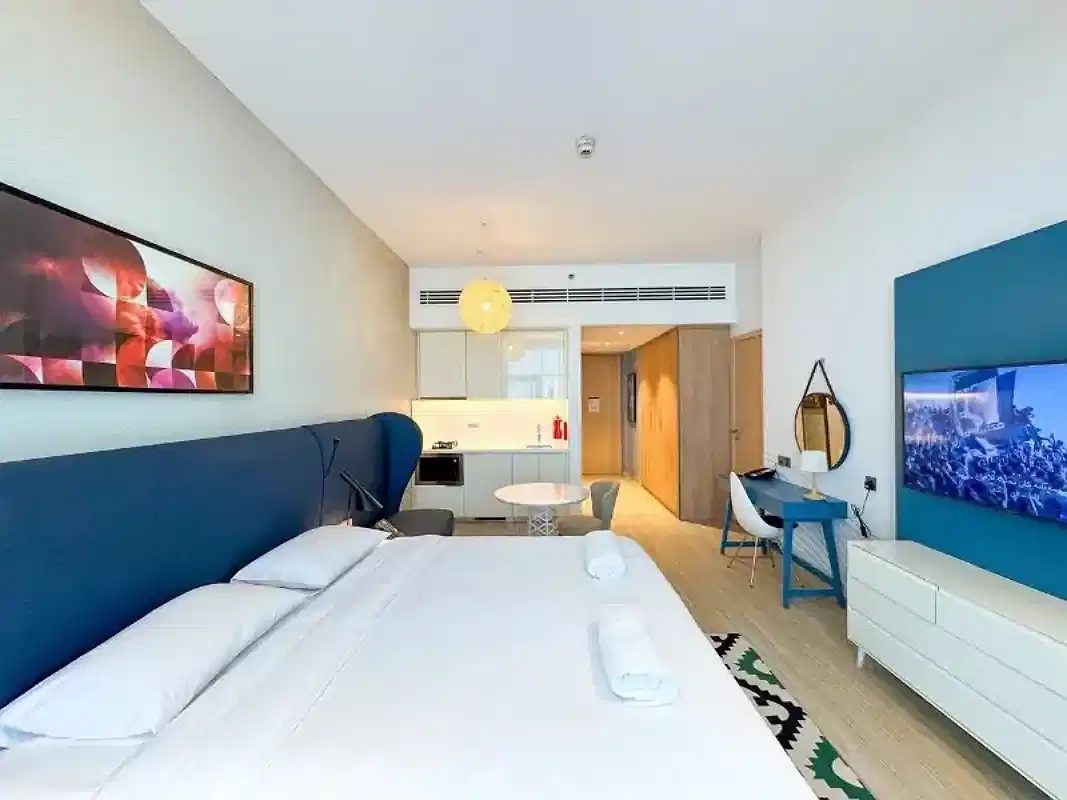
Given that our platform’s data covers only 1 city with student housing listings, the price map focuses on Dubai. Rent levels vary significantly by neighbourhood, distance to university campus, property type, and included amenities. The following overview uses indicative price ranges that reflect typical market conditions in 2026 (all prices are indicative — confirm with the operator).
Dubai – Student Housing Price Indicators (Monthly Rent in AED)
-
Dubai International Academic City (DIAC) – This is the largest university cluster in the region. PBSA properties here are relatively new and offer studios and shared apartments.
- Studio: 3,000–4,500 AED per month
- 1-bedroom apartment: 4,500–6,500 AED per month
- Shared 2-bedroom (per person): 2,000–3,500 AED per month
-
Dubai Knowledge Park / Al Sufouh – Close to universities and with good metro access.
- Studio: 3,500–5,000 AED per month
- 1-bedroom: 5,000–7,500 AED per month
- Shared accommodation: 2,500–4,000 AED per person per month
-
Dubai Silicon Oasis (DSO) – A tech park with some university presence and growing PBSA inventory.
- Studio: 2,800–4,000 AED per month
- Shared: 1,800–3,000 AED per person per month
-
Other popular areas for student renting (less PBSA, more private apartments):
- Al Barsha: 3,000–5,500 AED (studio)
- Jumeirah Lake Towers (JLT): 3,500–6,000 AED (studio)
- Deira / Bur Dubai: 2,000–3,500 AED (studio) – older buildings, fewer facilities
- Villa share in Al Warqa, Mirdif, or Jumeirah: 2,000–3,500 AED per room (all-inclusive sometimes)
Note that these are indicative ranges. Actual rents depend on building age, floor level, furnishing quality, and length of stay. Students are advised to compare multiple options and confirm all costs directly with the operator or landlord.
For students attending universities in Abu Dhabi, the rental landscape is similar but with slightly lower averages for comparable properties. In the absence of platform listings in Abu Dhabi, students typically rely on private rental websites or agents.
Contract and Deposit Norms
Understanding the contract and deposit norms in the UAE is crucial to avoid disputes. The rules differ slightly between PBSA operators and private landlords, but the following points apply generally.
Contract duration
- PBSA: Typically 10–12 months for the academic year. Some operators offer semester-long contracts (6 months) at a premium.
- Private rental: Minimum one year is standard. Early termination is possible but usually incurs a penalty (often 1–2 months’ rent or forfeiture of deposit).
Deposit
- PBSA: Usually one month’s rent as a security deposit. Some operators ask for two months’ rent for furnished units.
- Private rental: Five percent of the annual rent for unfurnished, 10% for furnished (as per RERA regulations in Dubai). However, many landlords demand higher deposits, especially from tenants without a UAE credit history. Refund of deposit is subject to deduction for damages, cleaning, and outstanding bills.
Rent payment
- Most common: Post-dated cheques (PDCs) for 1–4 instalments. A few PBSA operators accept monthly bank transfers or use online payment portals. International students without a local bank account can arrange for a guarantor or use a registered property management company that offers cheque cashing services (at a fee). As of 2026, some operators now accept credit card payments with a processing charge.
Inclusions
- PBSA: All utilities (DEWA, cooling, internet) are included. Some also include a weekly cleaning service. Check whether the rent covers clubhouse access, gym, and parking.
- Private rental: Utilities are almost always extra. Tenants need to open DEWA accounts (security deposit ~2,000 AED) and arrange internet separately (monthly ~300–500 AED). Cooling charges may be billed separately if on district cooling.
Tenancy contract registration (Ejari) In Dubai, rental contracts must be registered with Ejari (online system under RERA). PBSA operators sometimes register the contract as a service agreement rather than a tenancy contract; this may affect your ability to get a Ejari certificate, which is needed for some visa processes. Clarify before signing.
Notice period for moving out
- PBSA: 30–60 days written notice. If you leave early, you may lose your deposit or be charged rent until the room is re-let.
- Private rental: 1–2 months’ notice as per the contract. Early termination penalty applies.
Key advice for international students
- Never sign a contract without physically viewing the property or having a trusted representative inspect it.
- Request a receipt for every payment.
- Keep copies of your passport, visa, and tenancy contract for Ejari registration.
- If possible, join student groups or forums to get recommendations for reputable landlords.
5 Steps to Plan Your Student Housing in UAE
Step 1: Research the University Location and Commute
Begin by identifying the exact campus location of your university. Many universities in Dubai are located in dedicated zones (DIAC, Knowledge Park). Check the nearest metro station (Dubai Metro Red line serves most central areas) or major bus routes. Consider the time and cost of daily commute. A studio in DIAC may cost 3,000 AED, but renting a cheaper room in Deira (2,000 AED) could add 45 minutes each way and 500 AED monthly transport cost. Use mapping tools to evaluate options.
Step 2: Set a Realistic Budget (All-Inclusive)
Your budget should account for:
- Rent (monthly)
- Utilities (if not included): 300–800 AED per month
- Internet: 300–500 AED per month
- Transport: 300–700 AED (metro, taxi, or bus)
- Groceries and dining: 1,500–2,500 AED per month Building a comprehensive budget helps you decide between inclusive PBSA and costing out private rentals. As a rule of thumb, do not spend more than 40–50% of your total monthly allowance on housing.
Step 3: Explore Both PBSA and Private Rentals
Use our platform (which lists the 4 PBSA properties in the UAE) to check availability and pricing. Also search on general rental portals for apartments and rooms. Create a shortlist of at least five options. Contact each operator or landlord to confirm:
- Whether the property is available for your exact move-in date
- Payment terms (cheque or transfer)
- Deposit amount and refund conditions
- Whether the lease can be aligned with the academic calendar
- If the unit is furnished and what is included (e.g., kitchenware, bedding)
Step 4: Arrange Viewings (Virtual or In-Person)
Before committing, you must see the unit. If you are not yet in the UAE, ask for a live video call tour. Pay attention to:
- Condition of furniture and appliances
- Air conditioning (split unit vs. district cooling – the latter may have separate charges)
- Noise level, security, and building maintenance
- Proximity to grocery stores, clinics, and laundry
- Internet connectivity speed (some buildings have limited providers)
- Ask current tenants or students about their experience with the landlord or operator.
Step 5: Understand the Contract and Sign with Confidence
Once you select a property, read the contract thoroughly. Key clauses to check:
- Duration and renewal terms
- Rules on guests, subletting, and pets
- Responsibility for repairs and maintenance
- Penalty for early termination
- Notice period
- Procedure for deposit refund (including an inventory list signed at check-in)
If possible, have a local friend or a student housing advisor review the contract. In Dubai, you can also seek free legal advice from the Dubai Land Department’s rental dispute centre. Only pay the deposit and first rent after the contract is signed by both parties.
After signing, register the tenancy with Ejari (if applicable) and set up utilities. Move in with a checklist to document the condition of the unit.
Frequently Asked Questions
Do I need a UAE-based guarantor to rent a property?
For PBSA properties, no guarantor is usually required — you just need to pay the deposit and first rent. For private rentals, many landlords request a tenant with a valid UAE residence visa and income certificate. International students without a visa or job may be required to pay the entire year’s rent upfront or provide a guarantor who is a UAE resident. Some property management companies offer “guarantee services” for a fee, but this is not standard. Always clarify the guarantor requirement before applying.
Are utilities always included in the rent?
PBSA properties typically include all utilities (electricity, water, cooling, internet) in the rent. Private rental apartments almost never include utilities; you must register for DEWA (in Dubai) or ADDC (in Abu Dhabi) and choose an internet provider. Some villas include DEWA in the rent, but this is rare. Always read the contract to see which utilities (if any) are included. You can expect to pay AED 300–800 per month for DEWA and AED 300–500 for internet in a one-bedroom apartment (indicative — confirm with the operator).
Can I leave my contract early if I change university or return home?
PBSA contracts usually allow early termination, but you may lose your security deposit and need to pay a penalty (often one month’s rent). Some operators will waive the penalty if you find a replacement tenant. Private rental contracts are stricter; early termination without the landlord’s consent can lead to legal action and loss of deposit. Always check the early exit clause in your contract. If you have a valid reason (such as university withdrawal or medical emergency), try to negotiate with the landlord — some may be flexible.
How do I find a compatible roommate in the UAE?
Your university often has a student housing office or a social media group where students post roommate-wanted ads. You can also use platforms designed for roommate matching (but do not rely solely on public forums for safety). When sharing a private apartment, make sure all tenants are listed on the tenancy contract so that each person has equal rights. For PBSA shared apartments, the operator usually assigns roommates of the same gender unless you request a specific roommate. Discuss in advance expectations about cleaning, quiet hours, visitors, and shared expenses to avoid conflicts.
See also: listing details · browse more