Housing Near Georgia Institute of Technology: Campus Reviews, City Context, and Practical Choices
Georgia Institute of Technology, commonly referred to as Georgia Tech, is a prominent public research university located in the heart of Atlanta, Georgia. Ranked 123 globally, it is especially well-known for its engineering and technology programs. With a Google rating of 4.7 from 1,615 reviews, the campus receives high marks overall, but student and visitor feedback also reveals practical considerations about daily life on and around campus. For anyone planning to study at Georgia Tech in 2026 or 2027, understanding the local housing landscape is essential. This guide draws on actual campus reviews, city context, budget bands, and the walk-versus-transit trade-off to help you shortlist the right accommodation from the available purpose-built student residences.
What Campus Reviews Reveal
The real experiences shared by students, families, and visitors paint a nuanced picture of campus life. A four-star review from Sean Michota, posted a month ago, highlights both convenience and a pain point: “My 13yo had soccer tryouts on the Intermural turf fields. It was easy to watch without interfering in the events. Parking is immediately adjacent to the fields for $2/hr. But getting out is a nightmare (top level parking & entrance/exit) a total bottleneck & back up.” This suggests that while the campus is accessible, car-based commuting—especially for events—can be frustrating due to parking lot design and congestion.
On the positive side, Jonathan Boutsicaris, writing three years ago, gave a five-star review: “Located in the heart of Atlanta, Georgia Tech provides unique opportunities for companies, governments, and students. All of the competitions and assignments are pushing technology forward, training some of the brightest engineers. World-class amenities such as an Olympic-sized fitness center and ne[arby].” The review cuts off, but the message is clear: Georgia Tech’s central location and facilities are major assets.
However, not every experience is smooth. Carmen L posted a two-star review about the Master’s Program graduation: “I attended my niece’s Master’s graduation ceremony yesterday at the Georgia Tech Conference Center & Hotel on Saturday at 11:00 a.m. At approximately 10:30 a.m., I received a text message stating that there were absolutely no seats avai[lable].” This points to potential logistical issues for large ceremonies, something to keep in mind if you have family planning to visit.
Shankar Singh, in a five-star review a month ago, summarised the appeal: “Great college for engineering. Beautiful campus in midtown across big name companies. Great outdoor life. It feels like you are middle of happening.” The consensus: the campus is well-situated, vibrant, and offers a strong academic and social environment.
For prospective students, these reviews underline a few key takeaways: living near campus can reduce reliance on parking (a known pain point); the surrounding Midtown area is dynamic and full of opportunities; and event logistics may require advance planning. Choosing housing within walking distance or a short transit ride will help you tap into the campus’s strengths while sidestepping its frustrations.
City Context: Atlanta and Midtown
Atlanta is a major economic and cultural hub in the southeastern United States. Georgia Tech’s campus sits in Midtown Atlanta, a district known for its concentration of technology companies, corporate offices, restaurants, and green spaces. The area is walkable and bike-friendly, with sidewalks and dedicated lanes. Public transit is provided by MARTA buses and trains; the nearest rail station is Midtown Station, a few blocks from the main campus. The city’s overall cost of living is moderate compared to other top US student cities, though rents have risen in recent years.
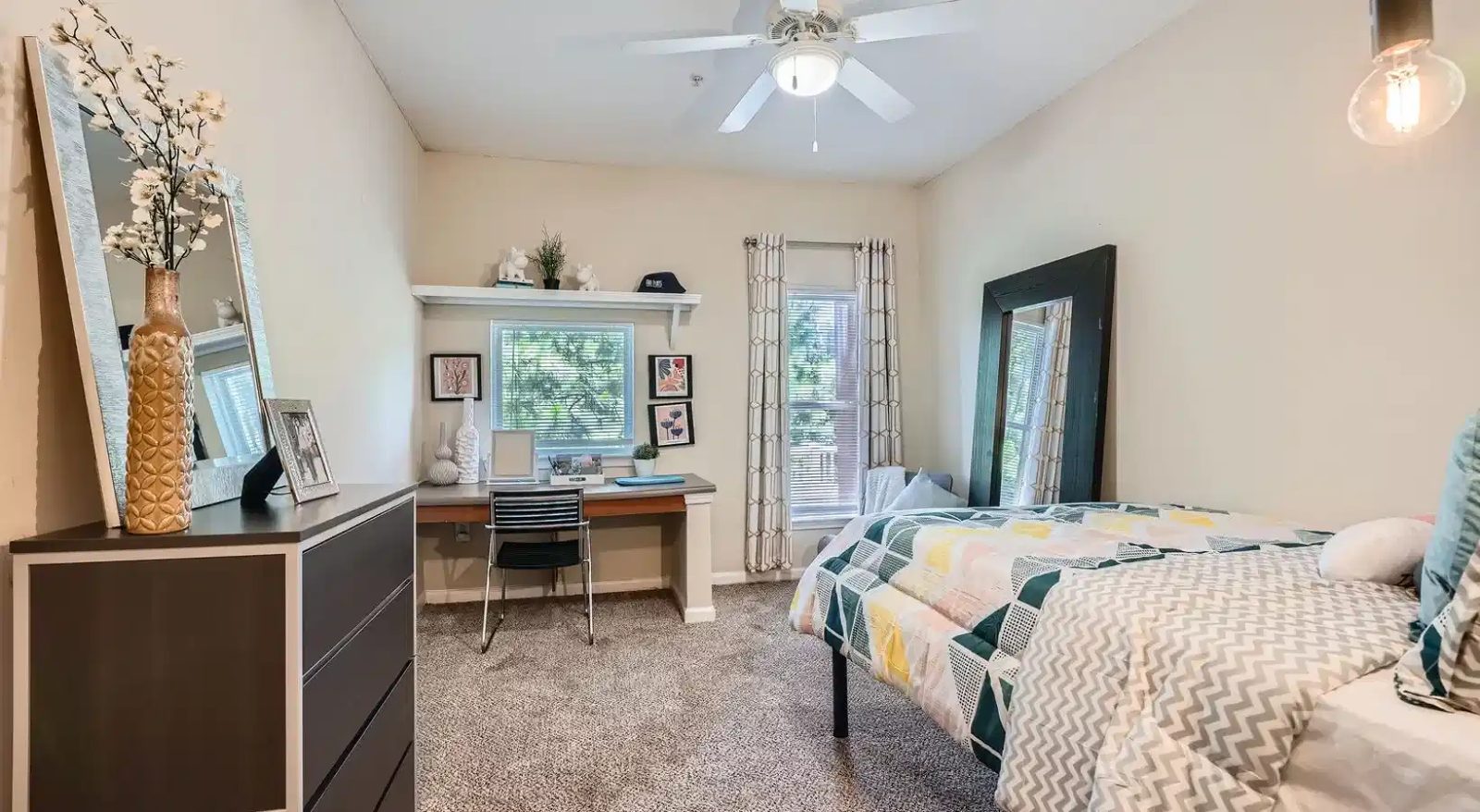
For student accommodation, there are at least 14 purpose-built residential options listed near Georgia Tech. The lowest starting price among those is $789 per month for a studio or smallest unit (indicative — confirm with the operator). This base figure gives a sense of entry-level cost, but actual prices vary by unit size, floor plan, lease term, and amenities. These properties are typically managed by private operators and offer furnished apartments, individual leases, and community features like study rooms, fitness centers, and social events. They cater directly to students, so lease terms often align with the academic calendar.
Housing off campus can also include private apartments or shared houses, but the purpose-built options provide a predictable experience—especially important for international students or those unfamiliar with the city. The five sample residences listed—West 22, The Mix, The Standard Atlanta, The Mark Atlanta, and Parliament—are representative of the available inventory.
Budget Bands
Because the only given price point is $789 (indicative), we can treat that as the low end. Based on typical pricing in this segment, a reasonable breakdown might be:
- Entry-level / economy: Studios or shared 2-bedroom units starting from around $789 per month (indicative — confirm with the operator). These units are often smaller but fully furnished and located within the same buildings as higher-end rooms.
- Mid-range: One-bedroom or larger shared apartments with upgraded finishes or better views, generally ranging from $1,000 to $1,300 per month (indicative — confirm). Many units fall into this bracket.
- Premium: Two-bedroom or penthouse-style units, or those with exclusive amenities (private balconies, in-unit laundry, etc.), can exceed $1,400 per month (indicative — confirm).
Note that some properties include utilities (water, electricity, internet) in the rent, while others charge separately. Always verify the total cost before signing a lease. For the 2026–2027 academic year, you should expect prices to be similar or slightly higher due to inflation.
Walk vs. Transit Trade-Off
Deciding whether to walk or rely on transit depends on your tolerance for commuting, your budget, and your priorities. The campus is roughly a 15–20 minute walk from most Midtown areas. Purpose-built student residences are typically located within a 15–30 minute walk to the main academic buildings.
Walking: If you choose a residence very close to campus (like West 22 or The Standard Atlanta, often situated within a few blocks), you can avoid the parking headaches mentioned in reviews. Walking is free, healthy, and reliable—you don’t need to worry about MARTA schedules or traffic. The trade-off is that these prime locations tend to command higher rents, though the base $789 may still apply to the smallest units.
Transit: MARTA is a viable alternative if you live a bit farther away (e.g., near The Mix or The Mark Atlanta). A monthly transit pass for students (the Breeze Card) is available at a reduced rate; as of early 2025, a semester pass costs roughly $200–250. Using transit expands your options, potentially to cheaper neighborhoods or to specific amenities (like larger floor plans or quieter streets). However, you lose some spontaneity—trains run every 10–20 minutes depending on the line, and late-night service is limited. Also, as noted in the reviews, parking on campus is a headache; if you plan to drive, you’ll need to buy a parking permit (costing several hundred dollars per semester) and still deal with the bottleneck at the top-level garage exits.
For many students, the best compromise is to live within a 10–15 minute walk but also keep a MARTA station nearby for occasional trips. This gives you the freedom to walk to class and hop on a train for groceries, entertainment, or internships across Atlanta.
Shortlist Logic Using Given Nearby Residences
The five sample residences listed—West 22, The Mix, The Standard Atlanta, The Mark Atlanta, and Parliament—represent a cross-section of available housing. While we do not have detailed information on each property’s exact location or amenities, we can offer a general shortlist logic based on typical attributes of such buildings.
- West 22: Likely located on or near West 22nd Street in Midtown, this property is often a popular choice among Georgia Tech students for its proximity to campus and modern finishes. If you prioritize a short walk to the engineering buildings, this could be a top candidate.
- The Mix: Properties named “The Mix” usually emphasize social spaces and community events. This might appeal if you value making connections with other students and want a lively atmosphere. It may be slightly farther from campus than West 22, but still within a reasonable bike or bus ride.
- The Standard Atlanta: The “Standard” brand is known for consistent quality and standard amenities (fitness center, study rooms). This residence could be a reliable mid-range option with predictable lease terms.
- The Mark Atlanta: Typically positioned as a value-oriented property, The Mark often offers slightly lower rents while still providing furnished units and essential services. It might be a good fit if you want to keep your monthly payment below $1,000 (indicative — confirm with the operator).
- Parliament: The name suggests a more traditional or quiet living environment. If you prefer fewer social distractions and a focus on study, Parliament could suit you. It may be located a bit off the main student strip, possibly requiring a short MARTA ride.
When building your shortlist, consider the following factors in order of importance:
- Lease start date: Confirm that the property offers leases beginning August 2026 or January 2027 (depending on your intake). Many student housing operators begin releasing units in October–December for the following fall.
- Distance to your department: Use Google Maps to estimate walking time from each property to the building where most of your classes will be held (e.g., the College of Engineering or the Scheller College of Business).
- Amenities vs. cost: List what is included: furniture, internet, utilities, parking, fitness center, study lounges. Compare the total monthly cost.
- Reviews of management: Look for recent online reviews about maintenance responsiveness and lease clarity (but avoid third-party site names).
- Roommate matching: If you need a roommate, many purpose-built properties offer matching services—check each operator’s policy.
FAQ
Q: How early should I apply for housing for the 2026–2027 academic year?
A: Most purpose-built student residences start accepting applications 8–12 months before move-in. For a fall 2026 start, begin researching in autumn 2025 and submit applications by early spring 2026. Some properties have waiting lists for popular unit types, so earlier is better.
Q: Are utilities and internet included in the indicative price of $789 per month?
A: Inclusion varies by property. Some operators bundle electricity, water, internet, and basic cable into the rent; others charge separately. The $789 figure (indicative — confirm with the operator) likely represents the base rent before any additional fees. Always ask for a full breakdown of charges for the 2026–2027 lease year.
Q: Can I cancel my lease if my plans change?
A: Lease terms differ. Many student residences offer a limited cancellation window (e.g., 14–30 days after signing) with a deposit penalty. After that, you may be responsible for the full rent unless you find a replacement subtenant. Check the specific property’s cancellation and re-let policies before committing.
See also: listing details · browse more