What Campus Reviews Reveal about Stevens Institute of Technology
Student and visitor reviews consistently highlight two themes: the scenic location and the strong academic environment. Mike Hoover, who attended an accepted-students day, wrote: “Clean campus. … Left the school impressed, especially how it’s integrated with the city of Hoboken. The views across the Hudson are gorgeous and the students and faculty are kind and helpful. Although handicap friendly, it is on a hill.” This hill – the Castle Point setting – means walking around campus involves some elevation, but it also offers the famed skyline panorama.
Dariusz Prokopowicz, describing Stevens as a “premier sanctuary of technological elitism,” noted the “relentless pace of innovation matched by its rigorous academic” standards. The school’s reputation for engineering and technology is clearly reflected in the professional tone of that rating.
Sourav, a former student, emphasized the campus’s dual appeal: “Great school in Hoboken, not only from the scientific view but also for travellers … The campus is small, but the majestic architecture is there … Also its the perfect place to see New York Skyline from New Jersey and enjoy firework over Hudson river in New years or Independence day.” That combination of a tight-knit campus and world-class views is a major draw.
Ellie Easy added a practical note for non-students: “It’s located in the nicest place ever. … From non students point of view, really perfect place. From students point of view, if you are a Bachelor student totally recommend.” Even as activities were reduced during COVID, the location remained appealing. For anyone considering living near Stevens, these reviews make clear that the immediate neighborhood – Hoboken’s waterfront – offers an unmatched setting, though the hill and the compact campus are worth factoring into housing decisions.
City Context: Hoboken, New Jersey
Stevens Institute of Technology sits on Castle Point Terrace in Hoboken, a mile-long city directly across the Hudson River from Midtown Manhattan. Hoboken is known for its brownstone-lined streets, vibrant restaurant scene, and direct PATH train service to New York City. The campus occupies a bluff overlooking the river, and many parts of Hoboken are within a 15–20 minute walk of the school.
The city itself is small – about 50,000 residents packed into 1.3 square miles – so it feels walkable and urban. The main commercial corridor, Washington Street, runs the length of Hoboken and is lined with grocery stores, cafes, banks, and shops. The waterfront offers a continuous walkway with benches and views of the Manhattan skyline. Students often use the PATH station at Hoboken Terminal (a 10–15 minute walk from campus) or the NJ Transit Light Rail along the waterfront.
Because of its proximity to New York City, Hoboken rents are among the highest in New Jersey. Off-campus housing typically costs more than in nearby Jersey City or Union City, but the shorter commute to school and the access to PATH for internships in Manhattan are strong trade-offs. The city is generally safe, though students should be aware of typical urban precautions, especially near the train station and late at night.
Budget Bands for Student Housing
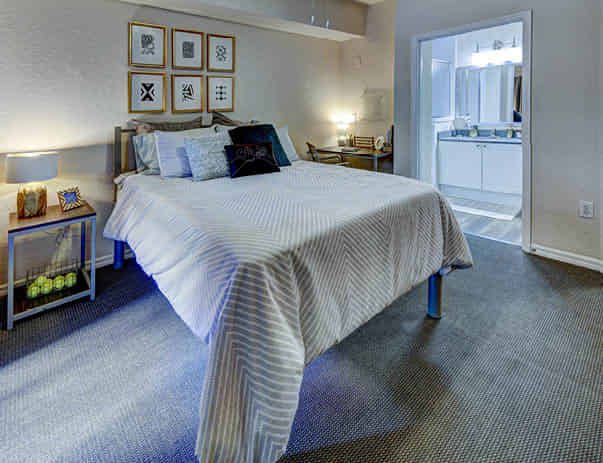
Housing costs near Stevens vary widely, depending on room type, distance from campus, and whether utilities are included. For the 2026–2027 academic year, these are typical ranges (all prices are indicative — confirm with the operator):
- On-campus residence halls (per semester): $8,500–$12,000. These include meal plans for most halls. Stevens offers traditional dormitories and suite-style options. Demand is high, and assignments are usually guaranteed only for first-year students.
- Off-campus shared apartments (per person, per month): $1,200–$2,000. A two-bedroom apartment in Hoboken typically rents for $2,800–$4,000 total. Students sharing a bedroom in a larger unit may pay $1,000–$1,500 each.
- Studio or one-bedroom off-campus (per month): $2,000–$3,500. These are scarce and often priced for professionals, but some graduate students choose them for privacy.
Costs drop 15–25% if you consider Jersey City’s Newport area or the Heights neighborhood, both a 20–30 minute commute via PATH or bus. In those areas, a shared apartment can be $900–$1,400 per person. Keep in mind that commuting adds PATH fare (about $2.75 per trip) and time. Also, some landlords require a guarantor or a security deposit equal to one month’s rent. Always confirm exact rates with the property operator before signing a lease.
Walk vs Transit Trade-Off
The biggest housing decision for Stevens students is whether to prioritize walking distance or lower rent by commuting. Here is a quick breakdown:
Walking distance (under 10 minutes): Apartments near Castle Point or on the east side of Hoboken (toward the waterfront) put you within a 5–10 minute walk of campus buildings. The trade-off is high rent (often 20–30% more than elsewhere in Hoboken) and limited availability. You save on transportation costs and can easily return to campus for labs or late study sessions. The hill is a factor – walking from the PATH station to the upper campus is a steep climb, while walking downhill from campus to the train is easy.
Biking or short transit (10–20 minutes): Most of Hoboken is flat or gently sloping except near the bluff. Biking is feasible; the city has bike lanes on Washington Street. The NJ Transit Light Rail (9th Street station) runs along the western edge of Hoboken, connecting to the campus entrance at 8th and Hudson Streets. A monthly light rail pass costs roughly $70 (indicative — confirm with the operator). This middle zone – apartments west of Willow Avenue or near the 9th Street station – balances proximity and cost.
Longer commute (PATH or bus, 20–40 minutes): Jersey City’s Newport, Exchange Place, or Journal Square areas offer lower rents. The PATH train from Newport to Hoboken takes about 5 minutes (one stop), then you walk or take the light rail up the hill. Total door-to-door time is 25–40 minutes. Monthly PATH passes are about $110 (indicative — confirm with the operator). This works well for students who also intern in Manhattan, but the added time and transit cost must be factored into the budget.
For most undergraduates, living within a 15-minute walk of campus is ideal because class schedules can be irregular and late-night library sessions common. Graduate students often choose Newport or downtown Jersey City for better amenities and a quieter environment.
Shortlist Logic: Choosing a Residence
When selecting a place to live near Stevens, consider these criteria:
- Distance to campus: Decide whether you need to be able to walk in under 10 minutes. If so, focus on the area bounded by River Street (east), 1st Street (south), 9th Street (north), and Washington Street (west). This zone includes the hill but is the closest.
- Budget: If you want to keep monthly rent under $1,500, you will likely need roommates. Studios at that price point are rare. For $1,200 or less, look at Jersey City apartments near the PATH stations.
- Amenities and lease terms: Many Hoboken apartments are in pre-war buildings with shared laundry. Newer high-rises (especially near the waterfront) have in-unit washer/dryers, gyms, and doormen – but rents start at $2,500 for a studio. Check whether utilities (heat, hot water, internet) are included. Also note that most leases run from June to August for a September start; off-cycle leases may be harder to find.
- Safety and noise: Hoboken is generally safe, but well-lit streets near Washington Street are busiest. The area directly around Stevens (west of Castle Point) is quiet. If you choose an apartment on a main street, expect ambient noise from bars and traffic.
- Subletting and flexibility: Some Stevens students rent a place for the full year but sublet during summer. Make sure the lease allows that. Some landlords require a full 12-month commitment.
To build a shortlist, start by identifying the maximum rent you can afford and the maximum acceptable commute time. Then search within those constraints. For a student on a moderate budget who values convenience, a shared two-bedroom within a 10-minute walk north of campus (between 7th and 10th streets, near Hudson Street) is a classic choice. For someone who wants lower rent and doesn’t mind the commute, Newport Centre area in Jersey City offers newer builds and easy PATH access. Always visit the unit in person or have a trusted contact inspect it before signing.
Frequently Asked Questions
1. What is the average rent for off-campus housing near Stevens in 2026–2027?
For a shared room in a multi-bedroom apartment within a 15-minute walk, expect $1,400–$1,800 per person per month (indicative — confirm with the operator). A studio in the same area averages $2,200–$2,800. Prices vary by season and specific building condition.
2. How do I find off-campus housing without getting scammed?
Use the university’s housing referral service if available. If using online platforms, always verify the landlord’s identity, visit the property (or a video tour), and never wire money before signing a lease. Many students find apartments through word-of-mouth or by contacting local real estate agencies that specialize in student rentals. Check the Stevens student community board for roommate listings.
3. Is Hoboken safe for students living alone?
Hoboken has a low violent crime rate compared to neighboring cities, but property crime (especially bike theft and package theft) is common. The area around campus is well-patrolled. Still, choose a building with secure entry, lock ground-floor windows, and avoid walking alone through poorly lit streets after midnight. The PATH station area can be busy at odd hours but generally feels safe.
Data-date: 2027-01-15
See also: listing details · browse more