Campus Reviews: What Students Say About Ruhr-Universität Bochum
Ruhr-Universität Bochum (RUB) holds a global QS rank of 395 and a Google rating of 4.3 from 1,342 reviews — a score that suggests broad satisfaction but hides sharp contrasts. Reading through student comments reveals a split between strong praise for the overall environment and specific frustration with one graduate program.
Positive voices highlight the campus atmosphere and facilities. Muhammad Uzair wrote three months ago:
“Ruhr-Universität Bochum is truly an exceptional place! I’m so impressed with everything it has to offer. My experience here has been nothing short of amazing, and I genuinely believe it’s one of the finest institutions around.”
A visitor, Dr. Abdul Ghaffar, noted a pleasant stay two years ago: “Visited labs, university premises, top view and university centre. Also visited botanical garden.”
Negative feedback concentrates on the Molecular and Developmental Stem Cell Biology (iSTEM) program. SCM 2526 gave a 1-star rating five months ago:
“worst university experience the faculty is so bad especially stem cell medicine. no management, disrespectful, theirs one instructor who’s a woman and she’s very old , as students we felt she makes fun of us and always thinks our questions are silly. lectures and notes are just the worst.”
Azil_88 echoed this three weeks ago:
“I would not recommend the Molecular and Developmental Stem Cell Biology (iSTEM) program at Ruhr University Bochum. The main problem is the extremely poor organization and administration. Lectures are regularly postponed or canceled at short notice; emails to the secretariat often go unanswered for w”
Takeaway for prospective students: If you are not enrolling in that specific program, RUB’s general reputation is positive. But if the iSTEM programme is your target, the reviews suggest serious organisational issues. Housing decisions should account for whether you will need to be close to specific institute buildings, as administrative disorganisation may also affect lab schedules.
City Context: Bochum as a Student Hub
Bochum is part of the Ruhr region, a former industrial heartland that has reinvented itself as a university and cultural centre. The city has around 365,000 residents, with a large student population spread across several higher education institutions. RUB’s address is Universitätsstraße 150, 44801 Bochum, about 5 km southeast of the city centre.
Cost of living in Bochum is notably lower than in Munich, Frankfurt, or even Düsseldorf. A student budget for rent, food, transport, and health insurance typically ranges from €850 to €1,100 per month. Rent is the largest variable: a room in a shared flat (WG) can cost between €400 and €600, while a studio apartment may run €600 to €850. Utilities (heating, electricity, internet) add roughly €100–€150.
Transport: Bochum has a well-integrated tram and bus network (operated by BOGESTRA and part of the VRR regional system). RUB is served by tram lines 302 and 310, plus bus lines. A semester ticket for students covers unlimited travel within North Rhine-Westphalia (NRW) — the current fee is included in the semester contribution (about €350 per semester, as of 2026, indicative — confirm with the university). This gives you free access to trains, trams, and buses throughout the state for the entire semester.
Cultural and daily life: The city centre has shopping, restaurants, and nightlife. The university campus itself includes a botanical garden, numerous cafeterias (Mensen), and sports facilities. Many students live in the districts of Querenburg (adjacent to the campus) or the city centre (Stadtmitte). The botanical garden mentioned in reviews is a real asset for relaxation.
Budget Bands: Walk vs. Transit Trade‑Off
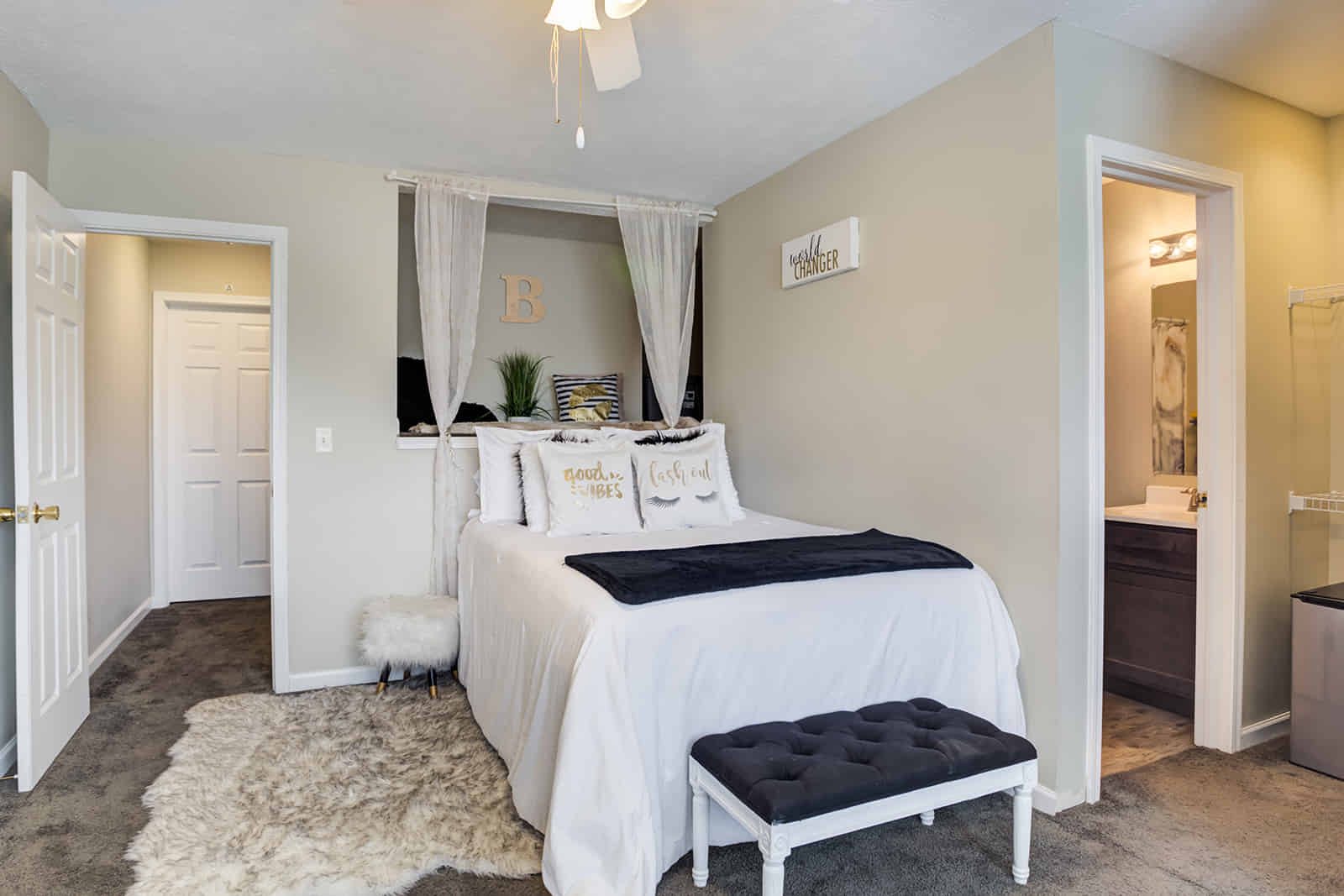
Your housing budget and tolerance for commute time will determine where you look. Below is a rough guide based on typical 2026 rents in Bochum (indicative — confirm with the operator at time of search).
Low Budget: €350–€450 per month (room in WG or student residence)
- Walkable option: Some student dormitories run by Studierendenwerk are within 10–15 minutes’ walk from the campus. Waiting lists can be long (6–12 months). Rent includes utilities often.
- Transit option: Shared flats in Gerthe, Langendreer, or Wiemelhausen, which are 20–30 minutes by tram or bus. You gain lower rent but lose time and flexibility.
- Trade‑off: Walking saves time and transport costs; transit saves money but adds 30–40 minutes daily round trip.
Mid Budget: €450–€600 per month (WG or small studio)
- Walkable: Private rooms or small apartments in Querenburg or along Universitätsstraße. Many are within a 15-minute walk. Some older buildings have basic amenities.
- Transit: Studios in the city centre (Stadtmitte) cost €500–€600 and give you access to all shops and nightlife. Commute to RUB is about 20 minutes by tram.
- Trade‑off: Mid budget gives you real choice. Walking in Querenburg means you roll out of bed to class; city centre living means you can walk to restaurants and avoid late‑night bus schedules.
High Budget: €600–€850+ per month (upgraded studio or 1-bedroom)
- Walkable: Modern apartments near the campus, often with balcony, parking, and newer appliances. Rent can exceed €700.
- Transit: Spacious flats in quieter suburbs like Altenbochum or Stiepel, 15–25 minutes by tram. You get more space for the same money.
- Trade‑off: High budget frees you from trade‑offs: you can have both proximity and comfort, though you pay a premium for short lease terms if renting privately.
Key rule: Always calculate total cost including utilities and internet. A cheap room with high heating costs in winter can exceed a mid‑price all‑inclusive studio.
How to Shortlist Nearby Residences: A Logical Approach
Given the campus location at Universitätsstraße 150, you want to maximise study efficiency while keeping costs manageable. Follow these four steps:
1. Define maximum acceptable commute
RUB is large; lecture halls are spread. A 10-minute walk from the central campus becomes 20 minutes if your faculty is at the far end. Decide: 15-minute walk maximum? Or 30 minutes with transit? For students in the iSTEM program, the reviews reveal last‑minute changes — a longer commute would compound the stress.
2. Filter by housing type
Two main categories:
- Student residences (Wohnheime) — run by Studierendenwerk or private organisations. Cheaper, often furnished, with communal kitchens. Contracts are typically 1–2 semesters. Waitlists apply.
- Private flats (WG or single apartment) — sourced through local platforms or Facebook groups. More flexible but require you to handle utilities, deposit, and landlord relations.
3. Check transport links
All residences near tram lines 302, 310, or buses 350, 356 get you to campus quickly. The semester ticket makes transit free after the initial fee, so distance from campus matters less than travel time. Use Google Maps public‑transit feature to estimate door‑to‑door time.
4. Read reviews of the building/area
Before signing, search for reviews of the specific street or building. Some areas in northern Bochum (e.g., Wattenscheid) have longer travel times and fewer student amenities. Querenburg is purpose‑built for students, with grocery stores, bakeries, and laundromats within walking distance.
Example shortlist logic for a mid‑budget student (€500):
- Prioritise Querenburg for walkability → you avoid all transport delays.
- If Querenburg has no vacancies, expand to Langendreer (20 min by tram) and filter apartments that mention “well connected” and “furnished.”
- Exclude Wattenscheid and Bochum‑Mitte (unless you want nightlife) because your daily walk to campus would be 25+ minutes by transit.
- Verify lease length: some private landlords require 12+ months, which may conflict with a one‑year master’s programme.
FAQ
Q1: Is it better to live near campus or in the city centre of Bochum?
It depends on your priorities. Campus‑adjacent districts like Querenburg let you walk to class in under 10 minutes and give you easy access to university sports and libraries. The city centre offers more cafes, shopping, and social life, but adds a 20‑minute tram ride each way. For students with a packed timetable or those enrolled in the troublesome iSTEM program (where schedules change), walking is safer.
Q2: How much should I budget for rent in 2026 if I want a single apartment near Ruhr-Universität Bochum?
A single apartment (studio or 1‑room) near campus typically costs €600–€850 per month, including utilities (indicative — confirm with the operator). A shared flat (WG) room can be found for €400–€550. The exact price depends on size, condition, and how close it is to Universitätsstraße. Always ask whether heating and electricity are included.
Q3: Do I need a car to live comfortably near RUB?
No. Bochum has excellent public transport, and your semester ticket covers all buses and trams in NRW. A bicycle is a practical supplement: the campus has bike racks, and many students use bikes for short trips to the supermarket. Car parking on campus is limited and permit‑based. Most students manage without a car.
Data as of early 2026. Prices and availability are indicative — confirm with the operator or landlord when searching.
See also: listing details · browse more