Understanding Auckland’s Housing Landscape
Auckland is New Zealand’s largest city and a major study destination, home to three universities with different campus locations. As of 2026, the student accommodation market in Auckland offers roughly 6 dedicated student properties, with weekly rents starting from 280 NZD (indicative — confirm with the operator). This guide helps you match your choice of neighbourhood to your daily commute, budget, and university affiliation. All prices mentioned are indicative and should be verified directly with the operator before committing.
Neighbourhoods by Commute Logic
Auckland’s geography is spread around a central isthmus, with the main university campuses concentrated in the central city and a few suburban hubs. Commute time, public transport availability, and walkability are the key factors when choosing a neighbourhood.
Walk-to-Campus Zones (0–15 minutes)
- Auckland CBD (Central Business District): The University of Auckland’s City Campus and Auckland University of Technology (AUT) are located within the CBD. Living here means a 5–10 minute walk to lectures. This area is dense with apartments, some converted into student housing. Rent is generally higher, but you save on transport costs. The CBD also has supermarkets, eateries, and public transport hubs.
- Symonds Street / Grafton: Just south of the CBD, this area is within walking distance to both University of Auckland’s Grafton Campus (medical and health sciences) and the City Campus. The hill walk is manageable, and there are several older apartment buildings offering affordable studios.
Short Commute (15–30 minutes by bus or train)
- Newmarket: A commercial and retail hub about 3 km south of the CBD. Frequent buses and trains connect to Britomart (the main train station) and AUT. Newmarket has a mix of purpose-built student accommodation and shared houses. Commute: 15–20 minutes by bus.
- Ponsonby / Grey Lynn: Trendy inner-west suburbs with a lively café scene. Buses run regularly to the CBD (approx. 20 minutes). These areas are popular with postgraduate students and those who prefer a more residential feel. Rental prices vary but are generally mid-range.
- Eden Terrace / Mount Eden: Near Auckland Domain, these suburbs are 20–25 minutes by bus from the university. Mount Eden has a village atmosphere and is close to the Auckland University of Technology’s South Campus (in Manukau, further away), but for the main campuses it requires a bus or train connection.
Longer Commute (30–60 minutes)
- Parnell: An upmarket suburb just east of the CBD, with direct buses to the city centre (15 minutes). It is close to the University of Auckland’s City Campus but has limited student housing options; many are private rentals.
- Ellerslie / Penrose: Suburban areas with train stations connected to Britomart. Commute to the CBD takes 25–35 minutes. These areas offer more space and lower rents, but require a transport pass.
- Manukau / Otahuhu: Southern suburbs near AUT’s South Campus. For students at AUT South, living here is ideal. For those at City Campus, the commute by train is 40–50 minutes. Budget-friendly, but consider total travel time and costs.
Price Bands from Given Data
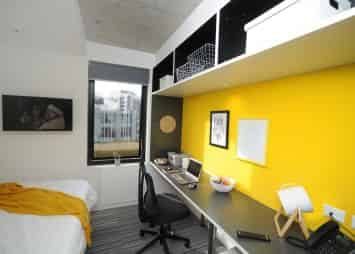
The data shows a minimum price of 280 NZD per week across 6 student properties. This is the entry-level rent, likely for a single room in a shared apartment in the CBD or a basic studio in a low-cost building. Keep in mind that 280 NZD/week is indicative — confirm with the operator.
For Auckland generally, rent bands (indicative) for dedicated student accommodation (2026) are:
- Budget Band (280–350 NZD/week): Single rooms in shared apartments or basic studios in older buildings, usually in the CBD or near the university. Amenities are shared kitchens and bathrooms. Examples include some halls of residence managed by the universities themselves or private providers. Only a small number of properties fall in this range.
- Mid Band (350–450 NZD/week): En-suite rooms in purpose-built student accommodation (PBSA) with shared living areas. These often include utilities, Wi-Fi, and sometimes a meal plan. Many PBSAs are located in the CBD or inner suburbs. This is the most common price bracket for students coming from the given six properties.
- Premium Band (450+ NZD/week): Studio apartments with private kitchen and bathroom. These are found in newer developments in the CBD, Parnell, or Newmarket. They come with gym, common rooms, and 24/7 security. Suitable for those who prioritise privacy and convenience.
Note that the data only shows 6 properties total, meaning the market is relatively small. Most purpose-built student housing is concentrated in the CBD. Shared flats (private rentals) are also common and can start from 220 NZD/week for a room in a house, but these are not included in the property count.
How the Listed Universities Map to Areas
The University of Auckland (QS World Rank 65)
- Main Campus (City Campus): Located at 22 Princes Street, in the heart of the CBD. Most lectures are here. Suitable neighbourhoods: CBD, Symonds Street, Grafton, Newmarket (short bus ride), Parnell (walkable but pricey), Mount Eden (bus).
- Grafton Campus: For medical, health sciences, and some postgraduate courses. Located just south of the CBD. Living in Grafton or the CBD provides a short walk.
- Epsom Campus (Education and Social Work): About 4 km south. Buses from the CBD take 25 minutes. Newmarket or Epsom itself are good options.
- Tamaki Campus (Auckland Bioengineering Institute): In Glen Innes, east Auckland. Requires a bus or car from the CBD (30 minutes). Living closer to Glen Innes is rare for student housing; most students commute.
Massey University (QS World Rank 230)
- Albany Campus: Massey’s main campus in Auckland is in the northern suburb of Albany, about 20 km from the CBD. There is limited purpose-built student accommodation near Albany; most students live in Albany or nearby suburbs like Rosedale, Oteha, or Pinehill. Commute from the CBD is around 45 minutes by bus. The six counted properties in the data are all likely in the CBD or inner suburbs, so Massey students would need to rely on private rentals or commute from the city. Off-campus flats in Albany are typically cheaper than CBD.
- Note: Massey also has a campus in Palmerston North (not in Auckland), but for the Auckland location, Albany is the only one.
Auckland University of Technology (AUT) (QS World Rank 410)
- City Campus: On Wellesley Street in the CBD, adjacent to the University of Auckland. The same CBD and inner suburbs apply: CBD, Symonds Street, Newmarket, Ponsonby, Grey Lynn.
- South Campus: In Manukau, a major southern suburb. Students attending lectures here should live in Manukau, Papatoetoe, or Otara for a short commute. Purpose-built student accommodation in Manukau is scarce (none in the six properties counted), so private rentals are common. Commute from the CBD by train is about 40 minutes.
Summary mapping: The six counted student properties are all likely in the CBD area because that is where the market is concentrated. Students at University of Auckland and AUT City Campus will have direct access; those at Massey Albany or AUT South will need to travel further or seek off-site housing.
3 Pitfalls to Avoid
1. Overlooking Commute Costs and Time
Many students choose a cheaper room in the outer suburbs without calculating the total cost of daily travel. Auckland’s public transport uses the AT HOP card, with a weekly cap of around 50 NZD for CBD zone travel, but longer commutes can double that. If you are attending the City Campus and rent a flat in Manukau for 250 NZD/week, your total housing + transport may exceed a 350 NZD studio in the CBD. Always factor in the cost of a monthly transport pass and the opportunity cost of 10+ hours of commuting per week.
2. Assuming All Listed Properties Are Available Year-Round
The six student properties in the data may have limited capacity and high demand, especially for the budget band (280 NZD/week). Many require a full academic year contract (40–50 weeks). If you arrive mid-semester or for a short programme, you might not find a slot. Always confirm availability for your exact move-in date and lease length. Some operators advertise early-bird discounts but this is not a guarantee.
3. Ignoring the Lease Terms and Inventory Rules
In New Zealand, rental agreements for student housing often include a bond (typically 4 weeks’ rent), a letting fee (may be charged by agents), and rules about early termination. If you need to leave before the contract ends, you may be liable for the remaining weeks or a penalty. Check whether the property is bonded with the Ministry of Business, Innovation and Employment (MBIE) – this is a legal requirement for private rentals but not always for PBSA. Also, inspect the room for mold, dampness, and heating quality – Auckland’s climate is humid, and poorly insulated rooms can cause health issues.
Booking Calendar for 2026 and 2027
Planning your housing timeline is crucial because supply is low relative to demand in Auckland.
For 2026 Intake (semester 1 starting February/March)
- September–October 2025: Start researching. List the 6 properties (though names are not disclosed here) and check their websites. Early bird applications for some PBSA open.
- November–December 2025: Submit applications for your preferred properties. Many require a deposit (1–2 weeks’ rent) to hold a room.
- January–February 2026: Confirm your tenancy agreement, pay bond, and arrange move-in. If you haven’t secured a place, consider private rental platforms (not named) or flatmate listings.
- Mid-semester intake (July 2026): Start looking in April. There are fewer vacancies mid-year, so be flexible on location or price.
For 2027 Intake
- Late 2026: Same timeline one year later. The market may expand or shrink; keep an eye on the total property count (currently 6). If you are planning for 2027, the earliest booking window is around September 2026.
- Note: The data is current as of early 2026. Prices and availability may change. Always confirm with the operator.
General advice: For any intake, secure housing at least 2–3 months ahead. Auckland’s rental market moves fast in February. If you are coming from overseas, consider a short-term Airbnb for the first 2 weeks while you inspect properties in person.
Frequently Asked Questions (FAQ)
Q1: I see the minimum rent is 280 NZD/week. Is that realistic for a decent place?
A: 280 NZD/week is the lowest listed price among the six properties, but it is indicative — confirm with the operator. At this price, you can expect a basic room in a shared apartment or a very small studio without private facilities. Many rooms in this band are in older buildings with limited amenities. If you want a higher standard, budget at least 350–400 NZD/week.
Q2: Which neighbourhood is best for a student at Massey University Albany?
A: The six properties in the data are likely in the CBD, so commuting to Albany takes about 45 minutes by bus. For a shorter commute, consider private rentals in Albany itself (North Shore). There are no dedicated student properties counted in the data near Albany, but you can find flat-sharing options on general rental platforms. The Albany area is safe and has shops, but it is quieter than the CBD.
Q3: Is it safe to find private rentals instead of student properties?
A: Yes, many students in Auckland rent flats through online marketplaces. The advantages are wider choices and often lower prices (from 220 NZD/week for a room). The pitfalls include higher deposit (4 weeks), potential letting fees, and less legal protection if the landlord is not registered. Always use the official Tenancy Services website (not named) for advice. The six student properties are likely managed by reputable providers and include utilities, furniture, and support.
Q4: I need housing for only one semester (5 months). Do the six properties offer short-term leases?
A: Most student accommodation contracts are for 40–50 weeks. Short-term leases (20 weeks) are less common and may be available only if there is off-peak availability. You may need to pay a premium or seek a private rental with a fixed-term agreement. Check with each operator directly. If you cannot find a short lease, consider subletting from another student (common on campus noticeboards).
Data as of early 2026. All prices are indicative and subject to change. Confirm directly with the accommodation operator before making any financial commitment.
See also: listing details · browse more