Housing Near the University of the Philippines: A Student Guide
University of the Philippines Diliman, located in Quezon City, Metro Manila, ranks 362 globally in QS rankings and holds a Google rating of 4.7 from over 2,010 reviews. The campus sits at M339+H94, Roxas Ave, Diliman, a sprawling 493-hectare property that functions almost like a self-contained city. Reviews consistently highlight its peaceful, green atmosphere and excellent facilities. “University of the Philippines is truly an iconic institution and a place rich in history, academic excellence, and national pride,” writes reviewer Charmaine B. “Visiting the campus was an inspiring experience — spacious grounds, beautiful greenery, and an atmosphere filled with intellect, purpose, and tradition.” Another reviewer, Anjo Saber Salmorin, notes: “University of the Philippines Diliman is a peaceful and refreshing place that feels open and welcoming to everyone. The campus is spacious, filled with trees, and perfect for walking, jogging, biking, or even simple family picnics during weekends.”
For incoming students or visiting scholars, finding suitable accommodation near UP Diliman is a practical priority. This guide covers what campus reviews reveal about the area, the city context of Quezon City, typical budget ranges, the trade‑off between walking and using public transit, and a logical approach to shortlisting available housing options.
What Campus Reviews Reveal
Student and visitor reviews paint a clear picture of life on and around campus. The recurring themes are openness, greenery, and convenience.
- A walkable, relaxing environment: Multiple reviewers mention that the campus is “perfect for walking, jogging, biking” and serves as a “stress‑relieving go‑to place.” This suggests that housing within walking distance — say, 10–20 minutes from the main academic buildings — would be highly desirable for students who value a calm daily routine.
- Self‑contained amenities: Algezon writes: “It already looks like a mini city. Complete with health service, mini malls with food stalls and print service, and another food park in a different area, post office, football field and other necessities for student life.” Students who live close to campus can rely on these on‑site facilities, reducing the need to travel out for errands.
- Accessibility within Metro Manila: Despite being in the middle of the metropolis, the campus feels “open and welcoming.” The presence of jeepneys, buses, and the MRT‑2 line nearby means that students who live slightly farther can still commute conveniently.
These observations directly affect housing choices: proximity to campus gates, availability of nearby eateries and shops, and access to public transportation lines are key factors.
City Context of Quezon City
Quezon City is the largest city in Metro Manila by population and land area. It serves as a major hub for education, government, and commerce. The Diliman area, where UP sits, is a well‑established university district.
- Public transportation: The campus is served by jeepneys (common local mini‑buses), city buses, and the MRT‑2 line (Katipunan Station is a short ride away). Tricycles are widely used for short distances within nearby barangays.
- Daily essentials: Along Katipunan Avenue and nearby streets (e.g., Maginhawa, Teacher’s Village), there are numerous affordable eateries, convenience stores, laundromats, and markets. The UP Shopping Center and other mini‑malls inside the campus also provide basics.
- Cost of living: Quezon City is generally more affordable than Makati or BGC, but prices can vary. Food, utilities, and transportation costs are moderate. Students often share apartments to reduce expenses.
Understanding this context helps set realistic expectations for housing search: you do not need to live on campus to have a comfortable student life, but living closer to the main gates (especially the University Avenue entrance) can save significant daily travel time.
Budget Bands
Housing near UP Diliman spans a wide range of prices. Note that all figures below are indicative — confirm with the operator before making any commitment. Since no specific pricing data was provided for individual residences, the bands below reflect typical market observations in the area (as of 2026).
- Economy / Shared accommodation: ₱3,000–₱6,000 per month per person. This usually means a bed in a shared dormitory room, often with basic furniture and common kitchen/bathroom facilities. Popular in areas like Pook del Monte, Krus na Ligas, and inside the campus’s own dormitories (e.g., Ilang‑Ilang Dorm, though availability is limited).
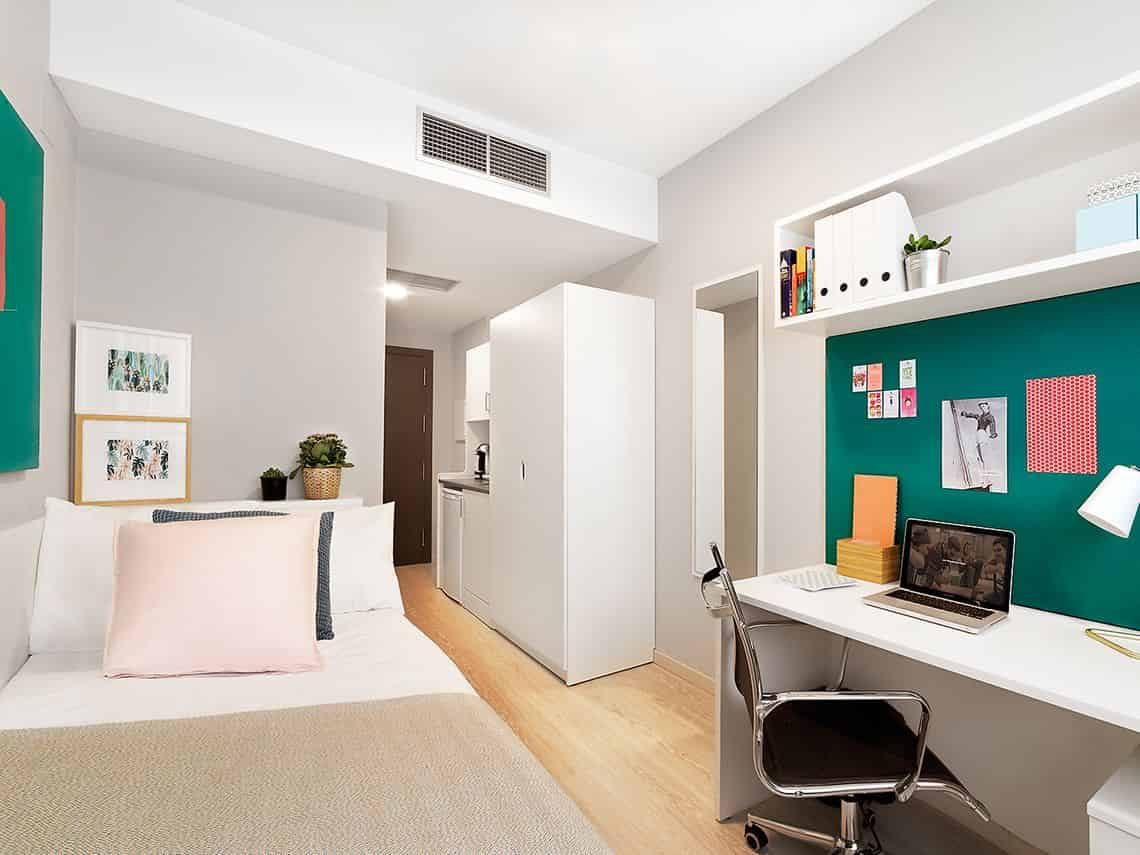
- Mid‑range / Private room or studio: ₱6,000–₱12,000 per month. A private room in a shared apartment or a small studio unit with a private bathroom and kitchenette. Common in sub‑divisions near the campus (e.g., Teachers Village, Sikatuna Village, U.P. Village). These offer more privacy and often include internet and water.
- Higher‑end / Apartment or condo: ₱12,000–₱20,000+ per month. Fully furnished apartments or condominium units within walking distance (e.g., along Katipunan Avenue). Suitable for couples or students who prefer a quieter, more independent living arrangement.
Always verify the inclusion of utilities (electricity, water, internet) in the rent. Some operators charge separately.
Walk vs. Transit Trade‑off
Choosing between walking and using public transit depends on where you live and your daily schedule.
Walking distance (within 1 km of campus gates): Areas like U.P. Village, Pook del Monte, and parts of Katipunan Avenue are within a 10–20 minute walk to the main academic buildings. The benefit is zero transit cost, no waiting, and the ability to pop home between classes. The campus itself is pedestrian‑friendly — wide paths, shade, and benches. You can also enjoy the green spaces noted in reviews. The trade‑off is that rent tends to be higher in these immediate zones, and availability can be tight during the start of the academic year.
Short transit ride (jeepney, tricycle, or bus): Living in areas such as Old Balara, Barangay Vasra, or parts of Maginhawa may require a 10–15 minute ride to the campus. The fare is low (₱9–₱20 per trip), and jeepney routes run frequently along major roads. Some students use bicycles or e‑scooters to cover the 2–3 km distance. The advantage is often lower rent and more housing options. The trade‑off is the daily time spent commuting, plus occasional delays during rush hours.
Longer commute (MRT‑2 + jeepney): Students who choose to live farther, e.g., in Cubao or even Pasig, can take the MRT‑2 to Katipunan Station and then a jeepney or tricycle to campus. Total travel time may be 30–45 minutes one way. Rent can be significantly cheaper, but the trade‑off is less flexibility and reliance on train schedules, which can be crowded.
For most students, the sweet spot is a 15‑minute walk or a 10‑minute jeepney ride. Reviewers describe the campus as a “mini city,” so once you arrive, you rarely need to leave. Therefore, housing that allows you to walk to the entrance reduces the need for additional transit.
Shortlist Logic for Choosing Housing
Since no specific nearby residences were provided in the dataset, the following logic can help you evaluate any listing you encounter.
-
Define your must‑haves. How far can you walk? Do you need a private bathroom? Is internet included? List these in order of importance.
-
Map the location. Use a mapping service (not linked here) to calculate the walking time from the address to the nearest campus gate (Roxas Avenue entrance or University Avenue gate). If it’s over 20 minutes, factor in transit frequency and cost.
-
Check the neighborhood. Visit the area during both day and evening to assess noise levels, safety, and nearby stores. Reviews of UP note that the campus feels safe and peaceful; the surrounding areas generally feel the same, but always check.
-
Verify utilities and lease terms. Ask whether electricity, water, and internet are included or billed separately. Understand the deposit and notice period.
-
Talk to current tenants or use student forums. Often, students leaving UP pass on leads to incoming students. Since no external websites are allowed here, search for unofficial student groups on social media (use your own judgment).
-
Compare indicative prices. As a rule, a private room near campus should fall within the mid‑range band above. If a listing seems too cheap, ask about hidden fees.
Applying this logic will help you shortlist 3–5 options before deciding.
Frequently Asked Questions
1. What are the most affordable housing options near UP Diliman?
The most budget‑friendly options are shared dormitory beds in areas like Krus na Ligas and Pook del Monte. Some on‑campus dormitories offer rooms at very low rates (e.g., ₱500–₱1,500 per month), but demand is high and waiting lists are long. Off‑campus shared apartments in Teachers Village or U.P. Village can also be competitive. Always confirm the price and terms with the operator before moving in.
2. How easy is it to commute from the campus to other parts of Metro Manila?
Very easy. The campus has multiple jeepney terminals that connect to major roads. The MRT‑2 Katipunan Station provides direct access to Cubao, Recto, and beyond. Buses along Commonwealth Avenue and Aurora Boulevard also pass near the campus. For example, you can reach Makati in about 45 minutes by bus (via EDSA). Reviews note that despite being “in the middle of Metro Manila,” the campus feels secluded because of its greenery — but the transportation links are robust.
3. Is the neighborhood around UP Diliman safe for students?
Generally, yes. The reviewer Anjo Saber Salmorin describes the campus as “peaceful and refreshing” and “welcoming to everyone.” The surrounding residential villages (e.g., Teachers Village, U.P. Village) have low crime rates and are popular with students. However, as with any urban area, it is wise to lock doors at night, avoid isolated shortcuts after dark, and stay in well‑lit areas. Many dorms have security guards and CCTV. Always inspect the building’s security measures before signing a lease.
Data date: 2026
See also: listing details · browse more