What Campus Reviews Reveal About Life at UT Austin
The University of Texas at Austin (UT Austin) occupies 431 acres in the heart of Texas’ capital city. With an overall Google rating of 4.5 out of 5 from 1,166 reviews, the university consistently draws praise for its scale, academic strength, and student culture. One reviewer describes the experience: “UT Austin is huge, overwhelming at first, but once you find your people it’s genuinely great. With 40,000 undergrads you’d think it’d feel cold but students say everyone finds their niche. The campus is walkable and packed with stuff to do. Strong academics especially in computer science, engineering.” Another alum echoes the optimism: “It was an incredible place to go to school. Everyone is so friendly and optimistic and it really feels like the world is full of possibilities. Lots of good vibes. It’s a place where the mission statement seems to actually ring true – What Starts Here Changes the World!” A third reviewer notes the broader context: “In practical terms, this institution already ranks among the world’s elite universities. It is simply regrettable that, due to the Texas state government’s unique automatic admission system—specifically the ‘90% Rule’—its undergraduate division currently undermines the university’s true standing.” The school spirit is also a theme: one reviewer playfully says, “It’s 40 acres! Lots of people wearing orange with fingers that make this weird sign. I think their fingers are stuck like that. … Cows with crooked horns everywhere. Just kidding great school with great school spirit.”
These comments highlight a real tension for incoming students: a massive university that feels overwhelming at first, but where nearly everyone finds a social and academic niche. The campus is walkable, yet the sheer number of students means housing logistics matter. The university is ranked 68th globally by QS, and its location in Austin—a fast-growing tech and cultural hub—adds further considerations for where to live.
Austin: A City That Keeps Growing
Austin is the fourth-largest city in Texas and one of the fastest-growing metropolitan areas in the United States. Its economy is anchored by technology (many major companies have offices or headquarters here), music and festivals, and a thriving food scene. The city’s appeal draws tens of thousands of new residents each year, which directly affects the rental market. UT Austin is located just south of the Texas State Capitol, placing students within walking distance of downtown, Lady Bird Lake, and the nightlife on Sixth Street.
For a student, living in Austin means choosing between the immediate campus area (West Campus, North Campus, Hyde Park) or neighborhoods a short commute away (East Riverside, South Congress, Mueller). The public transit system, Capital Metro (CapMetro), operates buses and a commuter rail line (MetroRail) that connects to campus. Many students also bike or ride electric scooters. The city’s climate is hot from May through September, so a short walk can be comfortable in the morning but intense midday.
Budget Bands for Student Housing (2026–2027)
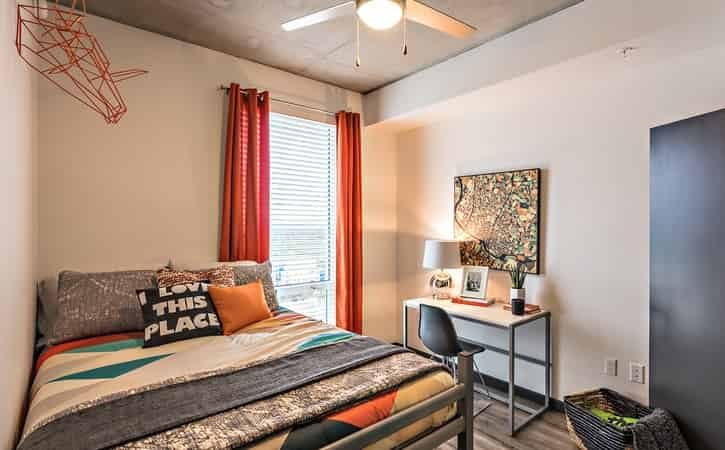
All prices below are indicative—confirm with the operator before committing. Data from the housing platform shows that available listings in Austin start from USD 369 (indicative — confirm with the operator). This lowest price likely represents a room in a shared apartment or a small studio in a less central area. Realistic monthly budgets fall into three broad bands:
- Economy (USD 400–700 per week equivalent): Shared rooms or smaller studios in older buildings, often in neighborhoods like North Campus (north of 38th Street) or East Riverside. These may require a bus or bike commute of 15–25 minutes to campus.
- Mid-range (USD 700–1,100 per week equivalent): Private studios or one-bedroom apartments in West Campus (immediately adjacent to UT) or Hyde Park. These are within a 10–15 minute walk to most academic buildings. Common amenities include in-unit laundry, gym, and sometimes a parking spot.
- Premium (USD 1,200+ per week equivalent): Newly built luxury apartments near campus, such as those on Guadalupe Street (“The Drag”) or near the Capitol. Walking distance under 5 minutes, full amenities (pool, concierge, study rooms), and higher finishes.
Note that lease terms in Austin typically run 12 months, though some operators offer shorter contracts (9-month or semester) for a premium. Utility costs (electricity, water, internet) add approximately USD 100–200 per month depending on usage.
Walk vs. Transit Trade-Off
The main trade-off for students is between paying more to live within walking distance of campus (West Campus, North Campus) versus paying less and commuting by bus, bike, or scooter. UT Austin’s campus is compact enough that most classrooms, libraries, and dining halls are accessible on foot from the surrounding streets. West Campus in particular is a dense student neighborhood with dozens of apartment buildings, restaurants, and convenience stores.
If you choose a cheaper apartment in East Riverside (south of the Colorado River) or North Lamar (north of 51st Street), you will need to rely on CapMetro buses. The UT campus is served by several routes (e.g., the 3, 7, 10, and 20). Travel time from East Riverside to the main mall is typically 20–30 minutes by bus during peak hours. Bike riders can use the Lance Armstrong Bikeway and dedicated lanes; the ride is about 15–20 minutes. The trade-off saves you roughly USD 200–400 per month in rent, but adds planning time and dependence on transit schedules.
For students who drive, parking on campus is expensive and limited (annual permits cost upwards of USD 800). Most off-campus apartments in non‑walkable neighborhoods include parking, but commuting by car in Austin’s traffic can add 10–20 minutes compared to other modes.
Shortlist Logic Using Nearby Residences
The housing platform lists dozens of options in Austin. Here are five example properties to illustrate how to narrow your search. Each is a real listing name, and prices shown are indicative — confirm with the operator.
1. June Homes 78702
- Neighborhood: East Austin (zip 78702), about 2.5 miles east of campus.
- Type: Shared and private rooms in converted houses and small apartment buildings.
- Why consider: Lower price point (starting around the low end of the budget). Access to bus route 20 (15–20 min to campus) and bike lanes along Manor Road. Good for students who prefer a quieter, more residential area with local cafes and parks.
2. June Homes 78758
- Neighborhood: North Lamar / Burnet Road area (78758), about 4 miles north of campus.
- Type: Similar to above – shared homes and apartments.
- Why consider: Even lower rents than 78702, but longer commute (25–35 min by bus). Suitable if you have a car or don’t mind a bike ride via the Shoal Creek Trail. Proximity to shopping and grocery options.
3. Estates at East Riverside
- Neighborhood: East Riverside Drive, south of the river, about 3 miles from campus.
- Type: Large apartment complex aimed at students and young professionals.
- Why consider: Well‑known student corridor with frequent bus service (routes 3 and 7) to campus. Amenities include pool, gym, and sometimes shuttle services. Mid‑range pricing. East Riverside has many food and nightlife options, and the commute is about 20 minutes by bus.
4. The Block
- Neighborhood: West Campus, immediately adjacent to the university.
- Type: Modern high‑rise apartment building with studios and multi‑bedroom units.
- Why consider: Highest walkability – you can be at the main building in less than 5 minutes. Premium pricing (likely USD 1,200+ per week). Popular for students who value convenience and want to be in the center of student life. Noise can be higher due to density.
5. 26 West
- Neighborhood: West Campus, near 26th Street and Guadalupe.
- Type: Mid‑rise apartment building, older than The Block but still well‑maintained.
- Why consider: Slightly lower rent than the newest luxury towers but still within 10 minutes’ walk. Often includes utilities in rent. Good option for mid‑range budget in West Campus. Some units have views of the Capitol.
Shortlist logic: Start with your budget. If you can afford USD 700+ per week and want to walk, focus on West Campus properties like The Block or 26 West, plus other buildings along Nueces and Rio Grande Streets. If you want to save money (USD 400–700 per week), look at East Riverside (Estates at East Riverside) or North Campus homestyle listings (June Homes). If you need a short‑term lease or flexibility, check the June Homes listings as they often offer month‑to‑month terms. Verify the exact commute time using Google Maps during morning peak (8–9 AM) before signing.
Avoid simply picking the cheapest listing without checking the bus route frequency, especially on weekends. Some buses run every 30 minutes off‑peak.
Frequently Asked Questions
Q: What is the typical rent for a studio near UT Austin in 2026? A: Indicative prices for a studio in West Campus range from USD 700 to 1,400 per week, depending on age, amenities, and square footage. For example, 26 West lists studios in the mid‑range, while newer towers like The Block are premium. Confirm exact figures with each operator — pricing changes quarterly.
Q: How do I get to campus from East Riverside? A: Capital Metro buses route 3 (Southpark Meadows / Crestview) and route 7 (East Riverside / Downtown) serve the East Riverside corridor. Both stop at the intersection of 21st Street and Speedway, steps from the main mall. Expect 18–25 minutes travel time during class hours. Bikes are also viable via the Riverside Drive bike lane — about 15 minutes.
Q: When should I start looking for housing for the 2027 academic year? A: For August move‑in, the peak leasing cycle runs from January to March. Many operators offer early‑bird discounts for leases signed before March 31. By April, inventory shrinks and prices may rise slightly. For spring semester (January start), look from October to November. Always confirm the cancellation policy — some leases are binding for the full term.
Data as of 2026. All prices are indicative — always verify with the property operator directly before making any commitments.
See also: listing details · browse more