Finding Student Housing Near the University of St Andrews
The University of St Andrews is ranked 113th globally (QS 2025) and sits in the small coastal town of St Andrews, Fife, on the east coast of Scotland. Founded in 1413, it is Scotland’s oldest university and the third-oldest in the English-speaking world. The town’s population of roughly 18,000 swells with around 11,000 students, making it a true university town where student life and local life are tightly interwoven. For anyone looking for accommodation near campus, understanding the town’s layout, transport options, and typical rental costs is essential.
What Campus Reviews Reveal
Google reviews of the University of St Andrews give a 4.5 rating from 491 reviews. Recurring themes in student and visitor feedback include the town’s historic beauty, the strong sense of community, and the convenience of having the beach and golf courses nearby. One reviewer, Catherine Hunt, wrote: “We were visiting St Andrews for a day trip from Stirling and walked around town. It was founded in 1413 (the oldest university in Scotland and 3rd oldest in the English-speaking world). Prince William and Kate Middleton met here. The architecture of the buildings were beautiful.” This highlights the charm and compactness of the town – most academic buildings are within a 20-minute walk of each other.
Another reviewer, Hadi Hassan, said: “Come and learn here. St andrews is a historical place with lot of attractions. Nice golf field, good hotels, many students and clean city. A nice beach is right there.” This reinforces the idea that St Andrews is a walkable, pleasant environment where daily life can revolve around a small footprint. For students, this means that housing choices often come down to which side of the town you prefer – nearer the medieval centre or closer to the scientific facilities on the North Haugh.
A third review from Sweat Less Travel notes: “No golfer can resist a trip to Saint Andrews. But if you only go to the old course, you’re missing out on one of the loveliest towns there is and did the heart of it is the University of St. Andrews. The ancient university sometimes better known as the place where the Prince and Princess of Wales at…” This again underscores the town’s intimacy and the central role of the university.
City Context: A Compact, Historic Town
St Andrews is not a large city – it is a town of narrow streets, grey stone buildings, and a rugged coastline. The university’s main teaching buildings are split across several sites: the central area around North Street, South Street, and Market Street (home to arts, humanities, and social sciences), and the North Haugh (science, medicine, and mathematics) about 15 minutes’ walk north of the town centre. There is also the St Katharine’s West (business school) and the Sports Centre on the outskirts. Because the entire town is only about 3 km from end to end, nearly everything is within walking or cycling distance.
Public transport is limited: Stagecoach buses run to and from Dundee (about 45 minutes) and Leuchars railway station (10 minutes), but within town most students rely on walking or cycling. There is no metro or tram. Parking is restricted, and many streets are pedestrianised. For housing, this means that anywhere within a 25-minute walk of the central library (on North Street) is considered convenient.
Budget Bands for Student Housing (Indicative Prices for 2026/2027)
Rental prices in St Andrews are high relative to other Scottish towns because supply is limited and demand is strong. As a guide, typical weekly rents for student accommodation fall into these bands. All figures are indicative – confirm with the operator or landlord before committing.
- University-managed halls (catered or self-catered): £150–£230 per week. These are mostly for first-year undergraduates and are allocated by the university. Contract lengths are typically 38–40 weeks.
- Private shared houses (3–6 bedrooms): £120–£170 per week per person, excluding bills. Most tenancy agreements run from July/August to June (51–52 weeks). Houses near the town centre command higher rents.
- Private studio flats or one-bedrooms: £180–£280 per week. Limited supply, often snapped up early.
- Unfurnished flats (less common): £100–£130 per week, but you need to buy furniture and set up utilities.
Bills (electricity, gas, water, broadband) add roughly £20–£35 per week if not included. Some private providers offer “bills included” packages for a premium.
Walk vs Transit Trade-off
Given the town’s size, walking is the primary mode of travel. You can walk from one end of the main campus to the other in about 20 minutes. Living closer to the centre (e.g., within 5 minutes of the quadrangle) means you can roll out of bed and be in a lecture in under 10 minutes. The trade-off is that central properties are more expensive, often older buildings with higher heating costs and sometimes no double glazing. Noise from late-night venues on South Street can also be an issue.
Living 20–30 minutes’ walk from the centre typically means cheaper rent and quieter streets, but you lose convenience. For example, houses in the eastern parts of town (e.g., near the Old Course golf links) or beyond the North Haugh (e.g., on Hepburn Gardens or Largo Road) offer more space and parking but require a longer walk or a bicycle. Bicycle ownership is high: around 40% of students cycle regularly. Folding bikes are popular because bike storage in flats can be tight. The town also has a limited bus service – the number 99/99A runs a loop through the main residential areas to the university, but during peak times buses can be crowded and unreliable.
For students with early morning labs at the North Haugh (e.g., biology, chemistry), living on the northern side of town (e.g., Buchanan Gardens or Langlands Road) can cut the walk to 10 minutes, whereas from the town centre it’s a 15–20 minute walk each way. Those with classes mainly in the central area (e.g., English, history, economics) will benefit from renting on South Street or North Street.
Shortlist Logic: How to Choose Where to Live
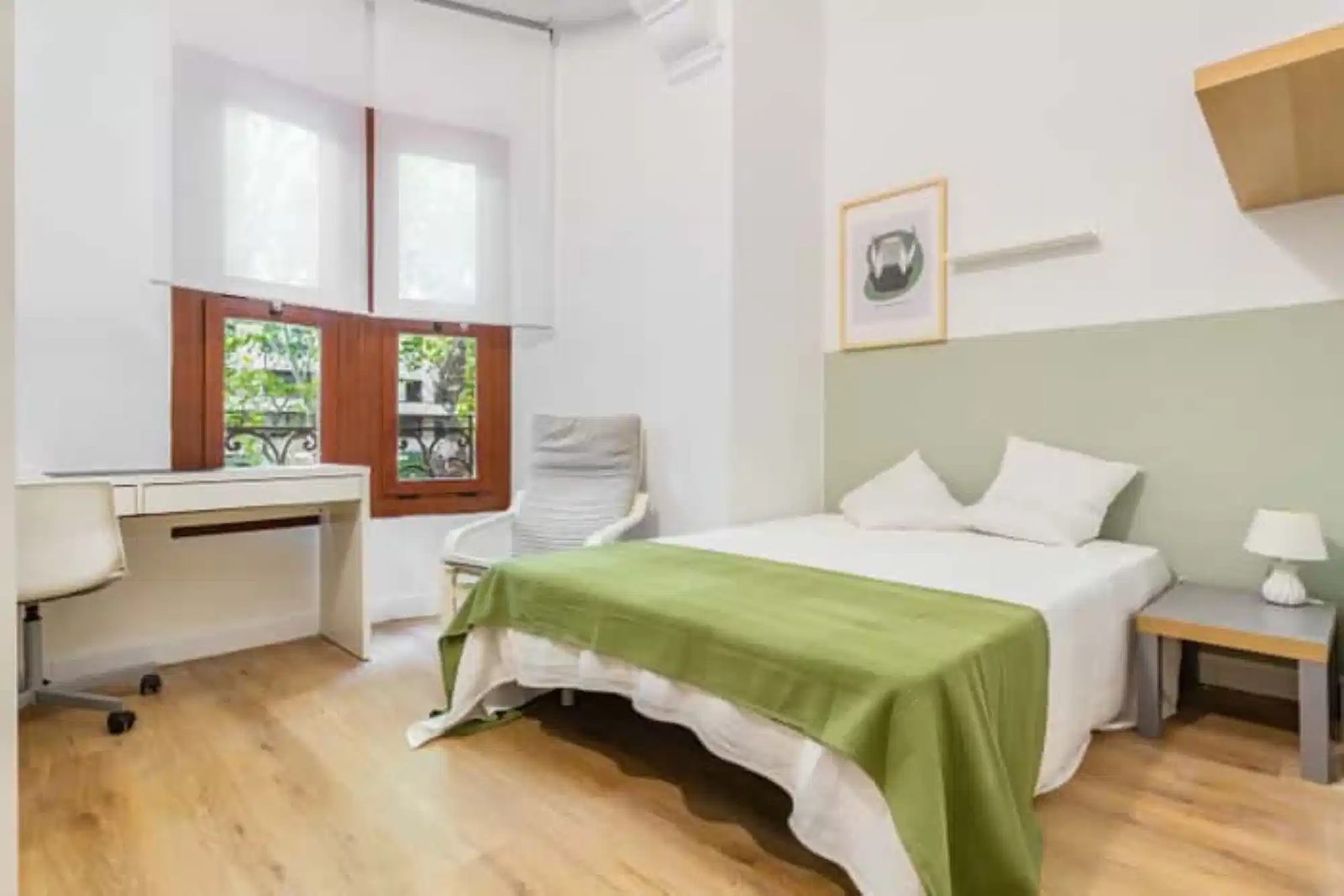
When building a shortlist of properties, start with your teaching location. The university provides a “My St Andrews” app with maps of building locations. Identify your primary department building and then search within a 4–5 minute walk (for ideal convenience) or up to 20 minutes (for lower cost). Because St Andrews is small, you can almost always find a property within a comfortable walking range.
The most popular student residential areas are:
- Town centre (North Street, South Street, Market Street, Church Street): Highest density of students, pubs, shops, and libraries. Many Georgian and Victorian flats. Noise can be high on weekends.
- The Scores & The Links (west of the town centre): Scenic, near the coast and Old Course. Premium apartments, quieter, but pricier.
- Canongate & Murray Park (south of the centre): Mix of student houses and family homes. Good balance of cost and distance.
- Lade Braes, Buchanan Gardens (north-west): Closer to North Haugh science buildings. Popular with STEM students. Often ground-floor flats or houses with gardens.
- Clayton, Hepburn Gardens, Kilrymont Road (north-east): More suburban, cheaper but a 20–30 minute walk to centre. Cycling is recommended.
When narrowing down options, consider:
- Contract length: University halls usually end in May/June; private tenancies often run until August. If you plan to stay in St Andrews over summer (e.g., for work or research), you’ll need a 12-month lease.
- Bills included vs. separate: “All inclusive” rents are easier but may be £20–30/week more. Separating bills can lower costs if you are thrifty, but you must set up accounts and cope with seasonal spikes.
- HMO regulations: Shared houses are typically licensed as Houses in Multiple Occupation (HMO). Check the property has a valid HMO licence (required for 3+ unrelated tenants). The council list is public.
- Viewing tips: In St Andrews, many student houses are let by word-of-mouth before the academic term. Start searching in January for the following September. Websites like Rightmove and Zoopla list private rentals, but the local letting agencies – such as Citylets Fife, Paton & Connelly, or Grant Property – dominate the market. Be cautious of deposits: the maximum is five weeks’ rent (for tenancies under 5/6 people), and deposits must be protected in a government scheme.
Frequently Asked Questions
1. When should I start looking for student housing in St Andrews for the 2026/27 academic year?
For university-managed halls, applications open in March/April 2026 (for the following September) and you must apply by a deadline in May. For private sector housing, the market moves quickly: many students secure houses in October/November of the previous year (e.g., October 2025 for September 2026). By January, the best options are often taken. Start at least 9–12 months before your move-in date.
2. Is it cheaper to live in St Andrews or commute from Dundee?
Commuting from Dundee (about 12 miles away, 45 minutes by bus or train) can reduce rent by 30–50% – a Dundee room might cost £80–£120/week compared to St Andrews’ £130–£170. However, transport costs (bus pass ~£25/week) and time add up. For a 2026/27 budget, compare: a St Andrews room at £150/week (including all bills) versus a Dundee room at £90/week plus bus pass £25/week = £115/week saving, but you lose 1.5 hours daily commuting. For students with few lectures, commuting might work; for those with labs or a heavy timetable, living in St Andrews is more practical.
3. Do I need a guarantor to rent a private property?
Most letting agencies and landlords in St Andrews require a UK-based guarantor (someone who earns at least £20,000–£25,000 yearly) to cover rent if you fail to pay. International students without a UK guarantor may be asked to pay 6–12 months’ rent upfront. Some agencies accept alternative schemes like Housing Hand or Guarantor My Student Rent (for a fee). Alternatively, you can use a parent’s income if they meet the threshold. Check with each agency before signing.
Data date: This guide was written using information updated to February 2026. Prices and regulations may change. All rental figures are indicative – confirm with the operator or landlord.
See also: listing details · browse more