What Campus Reviews Reveal: Student Perspectives on USTC
The University of Science and Technology of China (USTC) consistently ranks among China’s top research universities (QS World University Rankings 2025: #132), with a Google rating of 4.8 from 62 reviews. Student feedback offers a practical window into daily life, which directly affects housing decisions.
Reviewer Guanlong Zhao noted: “One of the best STEM-focused universities in China, although if you are not a tech nerd or 学霸, you’re gonna have a very hard time here.” This highlights the intense academic atmosphere – housing that minimises commute and supports quiet study becomes essential. Another student, Khalid Khan, wrote: “One of the top university in china, I have too many memories in USTC specially in life sciences (one of the best department of USTC).” The mention of the life sciences department suggests that researchers and graduate students in specific faculties may prefer housing near their lab buildings, which are often clustered on the eastern side of campus.
Christophe RUKUNDO commented: “One of the top schools in China. Glad I attended this school.” Positive satisfaction is common, but a practical frustration emerged from Jr Sun: “why is this place so hard to find on google maps.” This hints at a real‑world challenge: the campus address (1129 Hui Zhou Da Dao, Bao He Qu, He Fei Shi) is not always accurately pin‑pointed by mapping apps. Students searching for rental properties should verify distances by visiting the actual location or using local navigation apps such as Baidu Maps, which tend to have better coverage in Hefei.
Overall, reviews reveal that USTC students prioritise proximity (because of heavy workloads), a quiet environment (due to the competitive culture), and reliable internet for research. Housing choices should reflect these needs.
City Context: Hefei and Baohe District
Hefei, the capital of Anhui Province, is a rapidly growing city with a population of over 9 million. It is not as internationally known as Beijing or Shanghai, but it offers a lower cost of living and a developing public transport network. USTC’s main campus lies in Baohe District, south of the city centre. The area around Hui Zhou Da Dao is a mix of older residential compounds, newer apartment blocks, and university‑adjacent commercial streets.
Baohe District is served by Hefei Metro Lines 1 and 5. The nearest metro station to USTC’s main gate is approximately 1.5 km away (depending on which entrance you use). Buses run frequently along Hui Zhou Da Dao. The campus itself is largely self‑contained – many students live in university dormitories (on‑campus housing is available for undergraduates and many postgraduates). International students and researchers often look for off‑campus rentals to have more space or independence.
Local amenities include supermarkets, small restaurants, and convenience stores within walking distance of the campus. For larger shopping centres, the Baohé Wanda Plaza and the area near Hefei South Railway Station are short bus or metro rides away. The climate features hot, humid summers and cold, dry winters – air conditioning and heating are important considerations when choosing a rental.
Budget Bands for 2026–2027 (Indicative – Confirm with Operator)
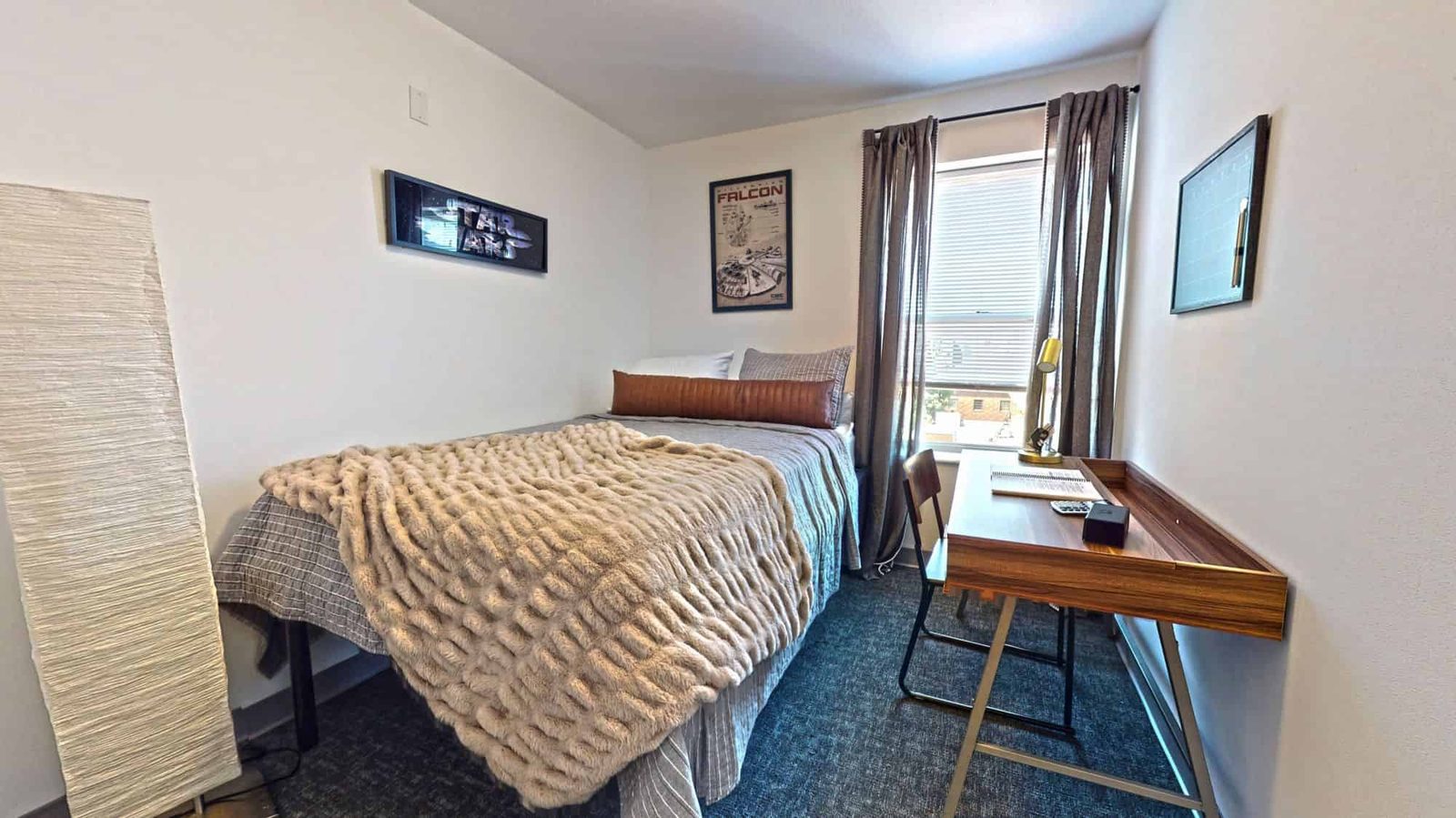
The dataset does not include specific rental prices. General market rates for student housing near USTC in 2026–2027 are indicative and can vary significantly based on size, condition, and distance. Below is a typical band structure based on common Hefei rental patterns. Always verify current prices with property managers or landlords before signing any contract.
- Shared room in a nearby apartment (合租) – Typically 500–1,000 RMB per month per person. Most common among graduate students. May include utilities or not; confirm.
- Single studio or one‑bedroom apartment (整租) – Typically 1,500–2,500 RMB per month. More privacy, but higher cost and often requires a longer lease (12 months).
- Two‑bedroom apartment for couples or small families – Typically 2,500–4,000 RMB per month. Splitting with a partner can be cost‑effective.
- Serviced apartment or short‑term rental – 3,000–6,000 RMB per month. Suitable for visiting scholars or those staying one semester.
All these figures are indicative and reflect typical pre‑2025 listings; inflation and market changes may apply for 2026–2027. Confirm with the operator.
Walk vs Transit Trade‑Off
Choosing between walking distance and relying on public transport involves several trade‑offs specific to USTC.
Walking zone (≤15 minutes on foot) – Properties within 1 km of the campus gates allow you to attend classes, labs, and library sessions without depending on buses or metro. This is particularly valued by STEM students who often have long hours in labs or need quick access to the campus network. The trade‑off: rent in the immediate vicinity tends to be higher per square metre, and the available stock consists largely of older residential compounds (built in the 1990s–2000s). Noise from Hui Zhou Da Dao can be an issue for rooms facing the main road.
Transit‑dependent zone (15–45 minutes by bus/metro) – A wider range of modern apartments are available in areas like Wuhu Lu, Fanhua Avenue, or near Hefei South Railway Station. Rents are often 10–20% lower than in the walking zone, and you can get newer buildings with better amenities (gym, parking, 24‑hour security). The cost of a monthly metro/bus pass (roughly 100–150 RMB) should be factored in. The main downside: time lost in transit – especially during rush hours when bus frequency drops. Also, if you need to return to campus late at night, metro service ends around 22:30.
Hybrid approach – Many students live within a 2–3 km radius (15–20 minutes by shared bicycle or electric scooter). Hefei has a public bike‑sharing system (Meituan, Hellobike) that covers the Baohe area. A scooter can cut a 30‑minute walk to 10 minutes. However, parking on campus may be restricted, and you must comply with local e‑bike registration rules (licence plate, helmet). This option balances cost and convenience.
Shortlist Logic: How to Evaluate Housing Options Near USTC
When reviewing potential residences (whether from online listings or agent recommendations), apply a consistent logic rather than relying solely on photos or price. The following criteria are based on feedback from USTC students and practical considerations in Hefei:
-
Proximity to your specific building – USTC’s campus is large. A rental near the east gate may be far from the life sciences building if that is your department. Ask the landlord for a precise walking time to the entrance you will use most. Use Baidu Maps to simulate the route.
-
Lease duration and flexibility – Many landlords require a 12‑month contract. If you are a visiting scholar or a one‑year master’s student, confirm whether early termination is allowed (usually a one‑month deposit penalty). Short‑term rentals (6 months) are possible but often at a 10–15% premium.
-
Utilities – In older compounds, utilities (water, electricity, gas) may be billed separately at commercial rates. Ask the current tenant or landlord for average monthly costs. In winter, electric heating can push bills above 300 RMB per month.
-
Noise and neighbour quality – USTC reviews mention a studious atmosphere. Avoid apartments above a KTV, restaurant, or busy intersection. Visit at different times of the day (evening and weekend) to gauge noise.
-
Furniture and appliances – Most student rentals come partly furnished (bed, desk, air conditioner, washing machine). Confirm that the air conditioner works (essential for summer). Some apartments may lack a refrigerator or water heater – factor in the cost of buying your own.
-
Internet – China’s internet is censored, and international students often need a VPN. Check if the building has a fibre‑optic connection (China Telecom or China Unicom are common). Speed may affect your ability to access research databases.
-
Security – Gated compounds with a 24‑hour security guard are generally safer. Ask about visitor registration and whether the main gate is locked at night.
-
Deposit and agency fees – Standard deposit is one month’s rent. Some agencies charge a half‑month commission. Always get a written contract in Chinese and an English translation if possible.
Since the dataset does not list specific nearby residences, the above logic forms the framework you can apply to any listing you find on platforms like 58.com, Beike, or through university bulletin boards.
Frequently Asked Questions (FAQ)
1. Is it better to live on campus or off campus near USTC?
On‑campus dormitories are the most affordable option (typically 400–800 RMB per semester) and are within a few minutes’ walk to classrooms and labs. However, availability is often limited to enrolled students, and rules (curfew, guest restrictions, shared rooms) may not suit everyone. Off‑campus housing offers more privacy and independence but requires a higher budget and careful vetting of landlords. For graduate students and international researchers, off‑campus is common. If you need a quiet environment for intensive study, a single studio off‑campus may be worth the extra cost.
2. How do I find a rental if I don’t speak Chinese?
Several strategies help: ask your department’s international office for a recommended agent; use English‑speaking platforms such as SmartShanghai or TheBeijinger (though Hefei listings are fewer); join WeChat groups for USTC international students (search “USTC housing” on WeChat). When viewing apartments, bring a Chinese‑speaking friend or use translation apps. Always insist on a written contract and take photos of the unit condition before moving in. Avoid paying any deposit without seeing the property in person.
3. What should I look for in a lease contract to avoid problems?
Pay attention to: the exact address and room number, the rental period (start and end dates), the deposit amount and conditions for its return (e.g., “normal wear and tear excluded”), the monthly rent and whether utility fees are included, the notice period for termination, and which party is responsible for repairs (air conditioning, water leaks, electrical issues). If the landlord asks for a deposit exceeding two months’ rent, be suspicious. Also clarify whether subletting is allowed – some contracts forbid it. Have the contract reviewed by a trusted Chinese speaker or a legal aid clinic (USTC’s law school may offer assistance).
Data as of 2026. Review quotes reflect opinions expressed between 2018 and 2021; they remain indicative of student experiences. All prices are indicative – confirm with the operator before making any financial commitment.
See also: listing details · browse more