Housing Near Universiti Malaysia Pahang Al-Sultan Abdullah (UMPSA): What Students Say, City Context, and Practical Choices
Finding the right place to live while studying at Universiti Malaysia Pahang Al-Sultan Abdullah (UMPSA) means understanding the campus layout, local transport, and your budget. The university is located in Pekan, Pahang, on the east coast of Peninsular Malaysia. With a QS global rank of 609 and a Google rating of 4.3 from 345 reviews, UMPSA draws students from across Malaysia and abroad. This guide uses real student feedback, practical observations, and general housing bands to help you make an informed decision — without marketing fluff.
What Campus Reviews Reveal: Quotes and Insights
Student reviews paint a mixed but informative picture. The campus itself is large and spread out. One reviewer noted: “The campus is situated across a large area. Different faculties are at different parts. Need transport to hop around the campus. Hoping by walk may be tiresome.” (5 stars, 3 years ago). Another added: “The infrastructure was quite stunning, frankly. Although the place is seemingly far from any general point of interests in Pekan, the campus was enormous” (4 stars, 8 years ago). This suggests that walking between buildings is impractical — a bicycle, scooter, or car is almost essential. The distance from Pekan town centre also means that amenities like grocery stores, eateries, and medical clinics are not within easy walking distance.
Not all feedback is positive. A 1-star review from 2 months ago stated: “I would say that most of the staff in the management department, certain laboratory departments, IPS, and PNI are not professional. I have previously made a report regarding this issue. Not only that, some lecturers have also shared similar concerns, which is quite embarrassing.” While this comment focuses on administration rather than housing, it hints at potential communication challenges when dealing with university services — something to keep in mind when applying for on-campus accommodation or requesting maintenance.
A third review mentions road design: “This place has a really nice view, but seriously, the road planning or design is just awful. There are far too many roundabouts. We had to make two big U-turns just to get to the other side. The management here is also…” (3 stars, 11 months ago). This reinforces that navigating the campus and its surrounding roads by vehicle can be frustrating. When choosing a residence, proximity to a direct access point to the main campus (rather than a circuitous route) becomes important.
Overall, the reviews highlight three housing-relevant points: (1) the campus is large and requires transport, (2) the area is far from Pekan’s points of interest, and (3) road infrastructure can be cumbersome. Any housing decision should factor in commute time and convenience.
City Context: Pekan, Pahang
Pekan is a small royal town on the Pahang River. It is not a bustling student city like Kuala Lumpur or Penang. Amenities are limited but sufficient for daily needs: there are local markets, a handful of supermarkets, clinics, and basic dining options. The nearest larger city is Kuantan, about 45–60 minutes by car. Students who prefer urban entertainment often commute to Kuantan on weekends or live closer to the Kuantan area if they have their own transport — but that adds significant travel time to UMPSA (nearly 50 km).
Most on-campus housing at UMPSA is provided in the form of residential colleges (kolej kediaman). Off-campus private accommodation exists in nearby housing areas such as Taman Pekan, Taman Tas, or along Jalan Tun Razak. However, availability is limited compared to big cities, and options tend to be basic terrace houses or small apartments. Rents are generally lower than in Kuantan or the Klang Valley.
Given the campus’s remote location, many students choose to live on campus, especially in their first year. Those who prefer more independence or quieter study environments may rent a room or a whole house off campus — but must arrange reliable transport.
Budget Bands (Indicative — Confirm with the Operator)
Housing costs around UMPSA fall into three broad bands. All figures are indicative and should be confirmed directly with the property operator or landlord.
-
On-campus residential college (shared room): RM 100 – RM 250 per month. Includes basic furniture, shared bathroom, and sometimes meals in the college cafeteria. This is the most affordable option and eliminates commuting worries. Availability is usually limited to students enrolled in specific programs and may require early application.
-
Off-campus shared house (room in a terrace house or apartment): RM 250 – RM 500 per month per person. Houses are often older, with basic furnishings. Utilities (water, electricity, internet) are typically paid separately, adding RM 50 – RM 100 per month. Transport — either a motorcycle (petrol RM 30 – RM 60 per month) or a car (petrol RM 100 – RM 200 per month) — is necessary. Some houses are located 2–5 km from campus, requiring a short drive.
-
Whole house or small apartment (private rental): RM 600 – RM 1,200 per month for a unit. Suitable for couples, families, or groups of friends sharing. More likely to have dedicated parking and better facilities like air conditioning and water heater. Additional costs: utilities and transport.
These prices are generally lower than in Kuantan. However, always verify with current tenants or the housing office before committing. Leases are usually 6 to 12 months, with a deposit of one to two months’ rent.
Walk vs. Transit Trade-off
Given the campus size and the surrounding road network, walking is not a realistic primary mode of transport for most students. The university itself is spread over a large area, and many lecture halls, labs, and libraries are far apart. The campus does have some internal shuttle services, but frequency and routes may be limited. Some students rely on ride-hailing (e.g., Grab) for short trips within the compound, though this can add up.
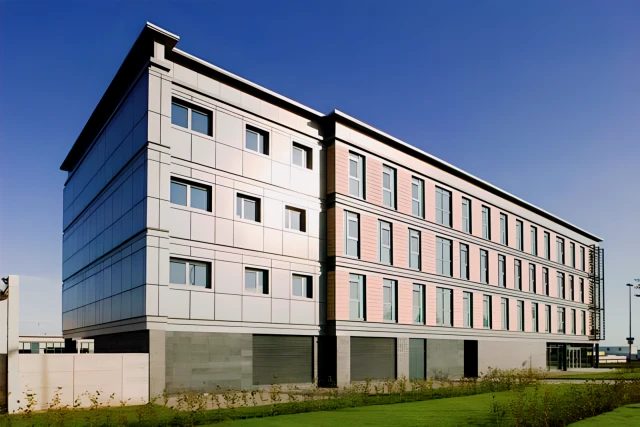
For off-campus residents, walking to campus is almost impossible unless the rental is within the immediate campus boundary (which is rare). Most off-campus housing is located 1–3 km away along roads with no pedestrian-friendly infrastructure. The roundabout-heavy road design mentioned in one review also makes walking hazardous.
The most practical options are:
- Bicycle – cheap (RM 100–300 for a basic model) but requires fitness; not ideal in heavy rain.
- Motorcycle – very popular among Malaysian students. A used bike costs RM 1,500 – 3,000; petrol is cheap. Parking is free on campus.
- Car – more expensive to buy and maintain (RM 5,000 – 15,000 for a used vehicle), but offers comfort and the ability to go to Kuantan easily. Parking permits may be needed.
- Campus shuttle – check the schedule; it may not cover all hours or all off-campus areas.
If you plan to rely on the campus shuttle or ride-hailing, live on campus. If you prefer a private vehicle, off-campus housing becomes more viable, but you must budget for monthly transport costs.
Shortlist Logic: How to Choose Housing Near UMPSA
Since no specific nearby residences were provided in the dataset, a general shortlist logic can be applied based on student feedback and typical local options. When evaluating housing, consider these factors in order:
- Commute time – Prioritise housing within a 10-minute drive or 15-minute cycle to the main campus entrance. Avoid areas requiring multiple U-turns or long detours.
- Transport mode – If you don’t own a vehicle, on-campus residence is strongly recommended. If you have a motorcycle, you can look in Taman Pekan or Taman Tas.
- Budget – On-campus shared rooms are the cheapest. Off-campus shared houses offer more privacy at RM 250–500. Whole houses are for families or groups.
- Amenities – Check proximity to a minimart, clinic, and food stalls. Many off-campus areas have a few shops, but you may still need to drive to Pekan town for a full grocery run.
- Safety and maintenance – Visit the property during the day and evening. Ask about locks, lighting, and pest control. Some reviews mention management issues; ensure the landlord is responsive.
- Lease flexibility – Short-term leases (month-to-month) are rare. Most require a 6-month commitment. If you are unsure, start with on-campus housing for the first semester.
A recommended approach: apply for on-campus housing as a backup, then explore off-campus options once you secure a vehicle. Visit the area before signing anything. Because the university is in a small town, word-of-mouth from senior students is often more reliable than online listings.
FAQ — Housing Near UMPSA
Q: Is it better to live on campus or off campus?
A: On-campus housing is simpler and cheaper (RM 100–250 per month), with no transport worries. However, rooms are basic and shared. Off-campus housing gives you more space and independence but requires a personal vehicle. If you have a motorcycle or car and prefer quieter surroundings, off-campus can work well. For first-year students without transport, on-campus is usually the better choice.
Q: How do I find off-campus rental listings without using a website domain?
A: The most practical way is to join student groups on social platforms (e.g., Facebook groups for UMPSA students) and ask for recommendations. You can also check physical noticeboards at the campus. Approach local real estate agents in Pekan — just note that agents may charge a fee equivalent to one month’s rent. Always inspect the property in person and verify that the landlord or operator is legitimate.
Q: What additional costs should I budget for if I live off campus?
A: Beyond rent, plan for utilities (RM 50–100 per month), internet (RM 40–80), and transport fuel (RM 30–200 depending on vehicle). If you buy a motorcycle, factor in RM 400–600 per year for insurance and road tax. A car will cost more. You may also need to buy basic furniture (bed, desk, fan) if the rental is unfurnished. Total off-campus monthly living cost (excluding food) can be RM 400–800, versus on-campus where utilities are included in the college fee.
Data as of January 2027. All prices and reviews are indicative — confirm with the operator or landlord before making any financial commitment.
See also: listing details · browse more