Housing Near Università Vita-Salute San Raffaele: A Student Guide
Università Vita-Salute San Raffaele (UniSR) is a private university located in the north-eastern outskirts of Milan, Italy. It ranks 461st in the QS World University Rankings and holds a Google rating of 4.3 out of 5 from 501 reviews. The campus is situated at Via Olgettina, 58, 20132 Milano MI, within the larger San Raffaele Hospital complex. This location shapes the housing options for students: a mix of suburban residential areas, commuter-friendly transit links, and a handful of dedicated student accommodations.
What Campus Reviews Reveal
Student feedback often highlights the university’s connection to the hospital and its professional environment. One reviewer, Dr. HareKrishna Mandal, gave a 5-star rating and noted: “Vita-Salute San Raffaele University, also known as Università Vita-Salute San Raffaele in Italian, is a private university in Milan, Italy. Here are some critical points about Vita-Salute San Raffaele University: 1. Foundation: Vita-Salute San Raffaele University was established in 1996 as a private.” This indicates that the institution is relatively young but well-established within a medical and research context.
Another reviewer, Alice .Gold, also 5 stars, wrote: “Huge hospital, with a very professional and attentive specialists.” While this comment refers to the hospital, it reflects the immediate environment around the campus – a large medical hub that dominates the area. Students may find the atmosphere clinical but efficient, with access to medical facilities and research labs.
The high overall rating (4.3) suggests general satisfaction, though the relatively low number of reviews (501) means the sample is limited. No negative comments were provided in the dataset, but prospective renters should still look at other independent platforms for a fuller picture.
Milan Context: Suburban Campus, Urban City
Milan is Italy’s financial and fashion capital, with a population of about 1.4 million and a dense public transport network. The university is not in the historic centre; it sits in the Municipio 2 area, near the town of Segrate. The immediate neighbourhood is mostly residential and dominated by the San Raffaele Hospital. While quiet, it lacks the vibrant student nightlife of central districts.
The city centre (Duomo, Brera, Navigli) is around 8–10 km away. Students who choose to live near campus enjoy a quieter lifestyle, shorter commutes, and lower rents compared to central areas. Those who prefer urban energy often opt for a longer commute using Milan’s metro and bus system.
Budget Bands: Indicative Ranges for 2026–2027
All prices below are indicative – confirm with the operator before committing. Rents in Milan have been rising, and the 2026–2027 academic year is likely to continue this trend. The following estimates are based on typical market rates for private rentals and student housing near the San Raffaele campus.
-
Shared room in a private apartment (€450–€600 per month): The most affordable option. A room in a shared flat within a 2–3 km radius of the university (e.g., Segrate, Cologno Monzese, or along the M2 metro line) usually costs between €450 and €600 per month, inclusive of basic utilities. Expect older buildings, some with shared bathrooms.
-
Single room in a shared apartment (€550–€750 per month): A private room with shared living spaces. Prices depend on condition, distance to the metro, and whether bills are included. Near the campus, a single room can be €550–€650. Closer to the city centre, expect €650–€750.
-
Private studio or one-bedroom (€800–€1,200 per month): A studio within walking distance (15–20 minutes) starts around €800. In the city centre, studios often exceed €1,100. Newer, purpose-built student residences, if available, may charge €900–€1,200 for a single occupancy unit.
-
Two-bedroom apartment (€1,000–€1,500 per month): Suitable for two sharers. In the suburbs, a two-bedroom can be around €1,000–€1,200; in more central zones, up to €1,500.
Keep in mind that utility costs (electricity, gas, internet, waste) can add €80–€150 per month. Contracts for students often require a deposit of two to three months’ rent.
Walk vs. Transit Trade-Off: Which Strategy Works for You?
Walking Distance (Under 30 Minutes)
Living within a 20–30 minute walk of the university means you can avoid public transport costs entirely. The immediate area around Via Olgettina includes residential streets in Segrate and the Olmi district. These are mostly quiet, family-oriented neighbourhoods with basic amenities (supermarkets, bakeries, a pharmacy). The trade-off is a lack of bars, clubs, or major shopping streets. Your social life would largely depend on activities at the campus or planned trips into Milan.
Walking is feasible if your housing is on the north side of the hospital, near the bus stops at Via Olgettina. Google Maps shows that from Segrate town centre (Piazza della Repubblica) it takes about 15 minutes on foot. From the Cascina Gobba metro station (M2, green line) it is roughly a 10–15 minute walk, depending on your exact destination.
Public Transport Commute (30–50 Minutes)
Many students choose to live along the M2 line, which runs from the centre (e.g., Porta Garibaldi, Loreto) towards Gessate. The nearest metro stop to UniSR is Cascina Gobba. A monthly public transport pass for Milan costs about €39 (reduced for under-27s) or €50 (standard, as of 2025; expect slight increases in 2026–2027). This pass covers all buses, trams, and metro within the city.
Living in central districts such as Porta Venezia, Buenos Aires, or Isola allows you to enjoy Milan’s social and cultural offerings. The metro ride from Loreto to Cascina Gobba is about 10 minutes; from Porta Garibaldi about 16 minutes. Add walking or bus time at each end, and total door-to-door commute is 30–45 minutes. Students who value city life and have a higher budget often prefer this trade-off.
Buses (line 923, from San Raffaele to Cascina Gobba) also serve the campus. If your housing is near the metro line in Cologno Monzese or Vimodrone, you can use the M2 to Cascina Gobba, then take a short bus ride.
Bicycle or Scooter
Milan is relatively flat and increasingly bike-friendly. A bicycle ride from the city centre to campus takes about 25–35 minutes. Electric scooter rentals are also available, but parking on campus may be limited. If you rent near the Navigli or along the Martesana canal cycle path, you can commute without crowding public transport.
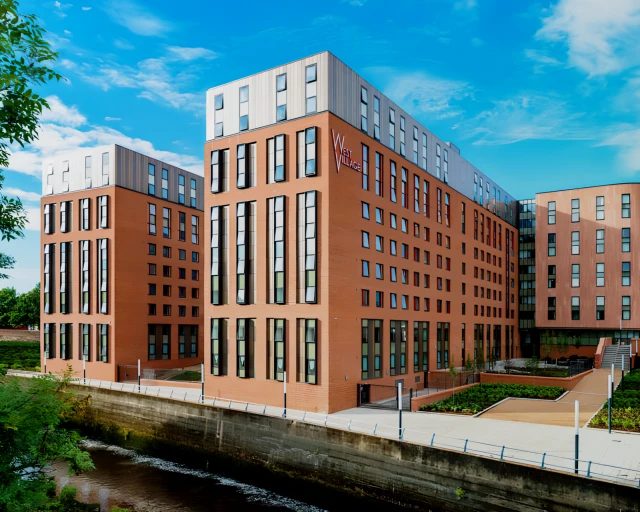
Shortlist Logic: How to Choose Between Nearby Residences
Since the dataset does not include specific residence names, here is a general logic for shortlisting housing near Università Vita-Salute San Raffaele. Use this framework when searching on any platform.
Step 1: Define your maximum commute.
Decide whether you prioritise a short walk (under 20 minutes) or a comfortable transit ride (under 45 minutes). For walking, focus on postal codes 20132 (Olgettina area) and 20090 (Segrate). For transit, consider any location within 1 km of an M2 station from Centrale eastwards.
Step 2: Set a budget band (indicative 2026–2027).
- Low budget (€450–€600): Shared rooms in Segrate, Cologno Monzese, or Crescenzago.
- Medium budget (€600–€800): Single rooms in the same areas or further west (Loreto, Pasteur).
- High budget (€800–€1,200): Private studios near the campus or in central districts like Porta Venezia.
Step 3: Check lease terms.
Many student flats require 12-month contracts, but some offer tenancy for 9 months (aligned with academic terms). Always ask about penalties for early termination. For 2026–2027, confirm with the operator whether the price includes utilities (condominium fees, water, waste). Many landlords exclude electricity and gas.
Step 4: Verify transport links.
Use Google Maps or an app like Citymapper to check the exact walking time to your potential flat from the nearest bus stop or metro. During peak hours, buses and metro run every 4–7 minutes. After 10:30 PM, frequency drops; if you plan to return late, check night bus availability.
Step 5: Inspect the area for daily needs.
Walk around the neighbourhood. Look for a supermarket (Conad, Carrefour, Esselunga), a pharmacy, and a café or takeaway. The campus itself has a cafeteria, but off-site options are limited.
Step 6: Compare with PBSA (Purpose-Built Student Accommodation) options.
Milan has several private student halls, often managed by companies or foundations. These offer furnished studios, on-site gyms, and all-inclusive bills. For 2026–2027, prices range from €750 to €1,200 per month. Check the exact distance from the residence to the university; some are in the city centre (e.g., near Bicocca) rather than close to San Raffaele. Use the provider’s official website for exact locations – do not rely on third-party aggregators that may show outdated maps.
Frequently Asked Questions
1. How do I get from the city centre to Università Vita-Salute San Raffaele?
Take Metro Line M2 (green) in the direction of Gessate or Cologno Nord. Get off at Cascina Gobba. From the station, either walk south-east for 10–15 minutes along Via Olgettina, or take bus line 923 toward “San Raffaele Ospedale.” The journey from Duomo to Cascina Gobba takes about 15 minutes on the metro, plus the walk. A whole trip from central Milan (e.g., Piazza della Repubblica) is about 35 minutes. Taxi/Uber rides cost €20–€30.
2. Are there supermarkets and other shops near the campus?
Yes. Right outside the hospital complex on Via Olgettina there is a small convenience store. For a full supermarket, walk about 10 minutes east to Via Caracciolo, where you will find an Esselunga (open 7:30–21:00). There are also bakeries, a pharmacy, and a few pizzerias in Segrate centre (15 minutes on foot). For more variety (clothing, electronics, restaurants), most students go to the Loreto area or the Centro Commerciale Piazza Lodi (bus 923 from San Raffaele to Cascina Gobba, then metro to Lodi TIBB).
3. Is the area around the university safe for students, especially at night?
The Olgettina-San Raffaele area is generally considered safe, with moderate street lighting and a steady flow of hospital staff and patients around the clock. Incidents of petty theft are rare but not unheard of, as in any Milan suburb. If you are walking from Cascina Gobba after dark, stick to the main roads and keep your valuables hidden. Many students in the area report feeling comfortable walking alone until about 10 PM. For later hours, consider using a ride-share service or the hospital’s night shuttle (check if available). The local police station is not far, and the hospital security maintains a visible presence.
All prices and timings in this article are indicative for the 2026–2027 academic year and may change. Always confirm with the accommodation operator or landlord before signing a contract. Data as of 2026.
See also: listing details · browse more