Campus Reviews: What Students Say
Located in the northern outskirts of Madrid, the Universidad Autónoma de Madrid (UAM) consistently ranks among Spain’s top universities. Student reviews on Google (4.3 stars from 1,075 ratings) highlight a campus that balances academic rigour with a pleasant environment.
Punya Aires, a recent reviewer, gave the university 5 stars and wrote: “Spacious green campus and top level academics.” This sentiment is echoed by Francisco Ruiz de Mendoza, who rated it 4 stars and noted: “The campus has very new functional buildings and some older and less functional ones. It has lots of green areas and all necessary facilities.” Another 5-star review from anvolu 77, a first-year engineering student, states: “It is only my first year here but I can already see why this is one of the most recommended universities to study in. At least the EPS (for engineers) is mostly well organised. Other than the administrative aspect of the uni, the thing that appeals to me the most are the people who study here, so op” (the comment cuts off, but the positive tone is clear). Interestingly, the campus also appeals to sports enthusiasts — Álvaro, a volleyball player, gave 5 stars and remarked: “Really nice volleyball court, definitely an amazing place to spend a few hours playing”.
These reviews underline a key trade-off for incoming students: the UAM campus is spacious and green, but it is not located in central Madrid. Choosing accommodation near this university therefore involves balancing the quiet, well-equipped campus life with access to the city’s wider amenities.
Living in Madrid: City Context
Madrid is Spain’s largest city and a major European student hub. It offers a vibrant cultural scene, extensive public transport, and a relatively affordable cost of living compared to other Western European capitals. The UAM campus is situated in the Cantoblanco district, about 15 kilometres north of the city centre. This area is characterised by open green spaces, low-density housing, and a more suburban feel.
Students living near campus benefit from quiet surroundings and proximity to university facilities. Those who prefer city life often choose accommodation in central neighbourhoods such as Chamberí, Salamanca, or Moncloa, and commute to Cantoblanco by train or bus. The commuter rail line C-4 connects several central stations to the campus stop (Universidad Autónoma), with a journey time of roughly 30 minutes from Sol or Atocha. Buses also serve the area, though they may be less frequent.
The cost of living in Madrid varies. For housing, typical monthly rents for a single room in a shared flat range from €400 to €800, depending on location and condition. The two accommodation options listed below offer an alternative to private rentals, with a starting indicative price of €755 per month — confirm with the operator for exact rates and availability.
Budget Bands for Student Housing (2026–2027 Indicative Prices)
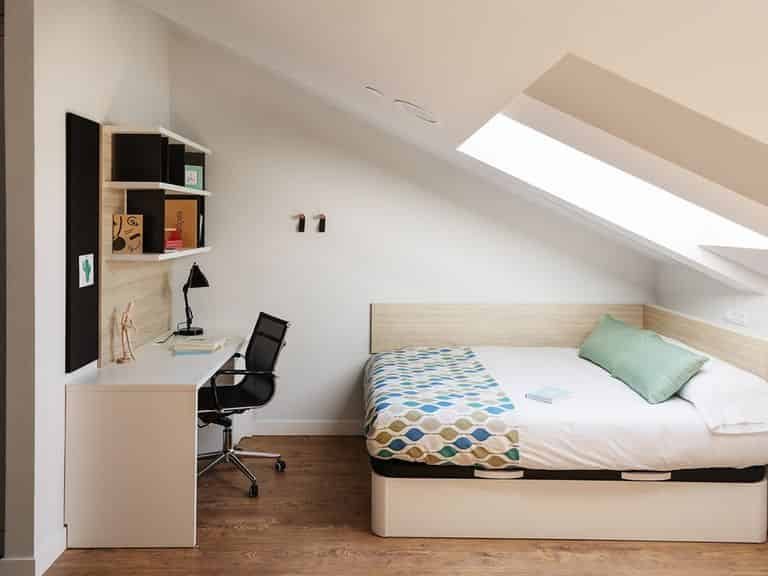
When planning your budget, consider three broad price bands. Note that all prices are indicative — you must confirm exact figures with the accommodation provider.
- Budget-friendly (€400–€600 per month): This typically covers a room in a shared private flat in suburbs further from campus, or a spot in a less central student residence. Commuting time may be longer (45–60 minutes). Shared flats in areas like Alcobendas or San Sebastián de los Reyes can fall into this range.
- Mid-range (€600–€900 per month): A room in a shared flat closer to campus or a spot in a purpose-built student residence. The two options highlighted below start at €755 per month, placing them in this band. You may also find private studios for around €800–€900 in areas like Cantoblanco or Tres Cantos (though availability is limited).
- Premium (€900–€1,300 per month): Studios or one-bedroom apartments near the campus or in central Madrid. These offer more space and privacy, but require a higher budget. Some luxury student residences in the city centre charge above €1,000 per month.
Prices have risen in recent years across Madrid, so always check current listings. The indicative price of €755 per month (from the sample accommodation) is a useful benchmark for mid-range housing near UAM.
Walk vs Transit: Choosing Your Location
Your choice of housing largely depends on how much you value walking to campus versus having quicker access to Madrid’s centre.
Walking distance to UAM: Accommodation within the Cantoblanco area or in the nearby neighbourhoods of El Goloso or Fuente del Pino allows you to walk or cycle to the university in under 20 minutes. This saves you time and transport costs. Reviews mention that the campus itself is spacious and well-maintained, so living close by means you can easily use its facilities — libraries, sports courts, green areas — on a daily basis. The downside is that these suburbs have fewer shops, restaurants, and nightlife options. You will need to travel to central Madrid for a wider social life.
Transit connections: Many students choose to live in central Madrid and commute by train. The C-4 line runs frequently, and a 30-minute ride is acceptable for most. This gives you access to the city’s cultural and social hubs, as well as a wider range of housing options at various price points. The trade-off is the cost of a monthly transport pass (around €30–€50 for young people, depending on the zone) and the daily travel time.
Hybrid option: Some students find a compromise by living near a C-4 station outside the city centre but not directly on campus. For example, areas around Chamartín station offer more urban amenities than Cantoblanco while still providing a commute of about 20 minutes to UAM. This is often a good middle ground.
To make an informed decision, check the actual walking distance from any shortlisted property to the campus or to the nearest train/bus stop. Online maps are useful, but always verify with the landlord or residence operator.
Shortlisting Accommodation: Two Nearby Options
Based on available data, two sample accommodation options near UAM are Cantoblanco (area or specific residence) and Yugo Lope De Vega. These are presented here as a starting point for your shortlist. You must confirm details directly with the operator.
-
Cantoblanco: This refers to the area surrounding the UAM campus. Some student residences are located within the campus itself or in the immediate vicinity. While no specific building name is provided, searching for “student housing Cantoblanco Madrid” will yield several options. The advantage is obvious: you can walk to class in minutes. Given the campus’s green setting, living here aligns with the peaceful atmosphere praised in reviews. Indicative prices can start from €755 per month or higher depending on room type and facilities. Confirm with each residence.
-
Yugo Lope De Vega: This is a purpose-built student residence located in a more central area of Madrid (near the Lope de Vega street, likely in the Salamanca or Chamberí district). It offers en-suite rooms, shared kitchens, and common areas such as study rooms and a gym. The journey to UAM would require a train from a central station (e.g., Recoletos or Chamartín) to the campus stop. The commute is around 30–40 minutes one way. The starting indicative price is also €755 per month — confirm with the operator. This option suits students who want to live in the heart of Madrid and don’t mind the daily trip.
When shortlisting, consider the following logic:
- Prioritise walking if your schedule demands it — for example, if you have many early classes or plan to use campus labs and libraries extensively.
- If you value city life, choose a central residence like Yugo Lope De Vega, and factor the commute into your daily routine. The campus is well connected.
- Check the exact room type and contract length — some residences include bills and a meal plan; others do not. Ask for a full breakdown.
- Read recent reviews for each residence on independent platforms (not provided here). Pay attention to comments about noise, maintenance, and management responsiveness.
- Visit in person or request a virtual tour before signing any agreement.
No single option is universally “best”; your choice depends on your priorities for budget, commute time, and lifestyle.
Frequently Asked Questions
How far is Universidad Autónoma de Madrid from the city centre?
The UAM campus in Cantoblanco is about 15 kilometres north of central Madrid. By commuter train (line C-4), the journey from Sol station takes approximately 30 minutes. Buses are also available but may take longer.
What is the typical cost of student housing near UAM?
Indicative prices for a room in a shared flat near campus range from around €400 to €700 per month. Purpose-built student residences, such as the sample options above, often start at about €755 per month. Always confirm current rates with the accommodation provider, as prices vary by season and room type.
Are there student residences directly on the UAM campus?
Yes, there are a few residences located within or immediately adjacent to the campus, often referred to as Colegios Mayores. These offer the convenience of walking to classes. Availability is limited, so early application is recommended. The Cantoblanco area also has private apartments and shared houses for rent.
Data last updated: February 2026. Prices are indicative — confirm with the operator.
See also: listing details · browse more