What campus reviews reveal about living near UCL
University College London (UCL) sits in the heart of Bloomsbury, central London, a stone’s throw from the British Museum and surrounded by leafy garden squares. Its global reputation — ranked 9th in the QS World University Rankings — draws students from across the world. But what is it actually like to live and study around here? Recent Google reviews offer a window into daily life beyond the lecture hall.
Daniel Tozadore, rating 5 stars, wrote: “Just the best in the world. Free museums, huge library nice community, portico is lovely and all staff in the caffees are friendly and welcoming.” This captures the immediate atmosphere: a campus open to the city, with cultural and social amenities within walking distance. The “portico” — the iconic main entrance — is a popular meeting point, and the on‑site cafes and library spaces make it easy to spend a whole day on campus.
L H Silva-Clark (Tupinambah) gave 5 stars, describing UCL as: “More than a College or University. UCL is a lighthouse of wisdom, knowledge, inclusiveness and diversity with academic rigor and creativity.” For prospective students, the emphasis on diversity suggests a cosmopolitan environment where you will find peers from every continent. That international feel also extends to the surrounding neighbourhood: Bloomsbury’s streets are lined with international restaurants, specialist bookshops, and small parks that host student gatherings.
However, not every review focuses on academics. Neil Collis (4 stars) mentioned: “Well, in truth we have not enjoyed the university so much as their adjacent gardens in Gordon square and Momo’s garden kitchen, lovely coffee and cakes. The garden is a beautifully curated area with mature trees and blossoming roses.” This points to a key advantage of living near UCL: access to quiet green spaces like Gordon Square and Russell Square, which are especially welcome after a long day in the library. Nearby squares often become impromptu study spots or picnic areas during warmer months.
The competitive edge of the university also appears in reviews. Preamsss (4 stars) wrote: “University College London is widely recognized as one of the top universities in the world, known for its strong academic reputation, cutting-edge research, and highly competitive admissions process—especially in fields like medicine. The proximity of University College Hospital adds significant val” (review truncated). While the reviewer’s sentence ends mid‑flow, the “significant value” of being adjacent to a major teaching hospital is real – it means students in medical and health sciences benefit from a hospital that is literally next door.
These reviews collectively tell us that the campus atmosphere is vibrant, intellectually stimulating, and supported by excellent local infrastructure. For students choosing accommodation, the key takeaway is to look for a place that complements this experience: quiet enough for study, close enough to enjoy the parks and cafes, and with good transport links to the many UCL buildings scattered across Bloomsbury and beyond.
City context: London as a student city and budget bands
London is an expensive city, but student housing options are diverse. According to the platform data, student accommodation near UCL starts from an indicative £130 per week — confirm with the operator. That figure usually applies to shared rooms or budget rooms in more distant locations. Most purpose‑built student residences (PBSA) near central London cost between £200 and £350 per week for an ensuite, with studios ranging upwards from £300.
The 53 properties listed on the platform cover a wide spectrum. Some are within a 10‑minute walk of UCL’s main campus; others are further out but connected by Tube or bus. Typical budget bands (indicative — confirm with the operator):
-
Budget (under £200/week): Usually shared flats or cluster flats with basic furnishings, often located in zones 2–3 or in areas like Kingston or Brent Cross. Example sample: One Penrhyn Road Kingston and Fusion Brent Cross Town. These can be a good option if you are willing to commute 30–45 minutes.
-
Mid‑range (£200–£280/week): Ensuite rooms in modern PBSAs, typically in zones 1–2, with good proximity to UCL. Urbanest Westminster Bridge and Scape Hammersmith fall into this band. You get your own bathroom and share a kitchen with 4–6 flatmates. Commute time to UCL is around 20–25 minutes by Tube or bus.
-
Upper‑range (£280+/week): Studios or premium ensuites in prime central locations. LH-County Hall is a well‑known example situated on the South Bank, a short walk from Waterloo station and about a 15‑minute ride to UCL. These often include amenities such as a gym, cinema room, and common social spaces.
Rents in London do not include council tax for full‑time students (you are exempt), but bills (utilities, internet) are usually included in PBSA contracts. Check the tenancy terms carefully, as some properties charge a premium for shorter leases (e.g., 44 weeks versus 52 weeks).
Walk versus transit: the trade‑off near UCL
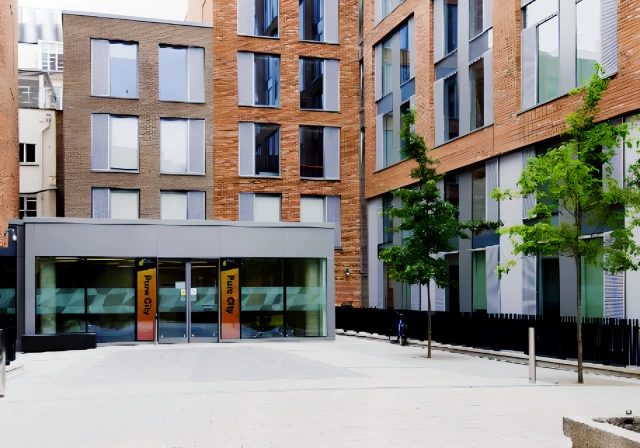
UCL’s main campus is in Bloomsbury, zone 1. Many students walk to university – it’s a pleasant 10–20 minute stroll from areas like Camden, King’s Cross, or Fitzrovia. If you choose accommodation within a 15‑minute walk, you save money on travel and can pop back to your room between classes. However, such properties usually command higher rents (often £280+/week for a decent ensuite).
For those willing to take public transport, the cost savings can be significant. Look at these sample residences (all indicative — confirm with the operator):
-
One Penrhyn Road Kingston – about 12 km south‑west of UCL. A train from Kingston to London Waterloo takes roughly 30 minutes, plus a short Tube journey. Total door‑to‑door commute around 50–60 minutes. Rents here start lower, often below £200/week.
-
Fusion Brent Cross Town – located in north London, zone 3. A direct bus or Thameslink train to central London takes about 35–40 minutes. Typical rents in this area are in the budget‑to‑mid band.
-
Scape Hammersmith – in west London, zone 2. The Piccadilly line from Hammersmith to Russell Square takes about 20 minutes. Rents here tend to be mid‑range.
-
Urbanest Westminster Bridge – very central, on the south bank of the Thames. Walk to Waterloo station (2 minutes) then take the Northern line to Euston Square (10 minutes). Total commute under 20 minutes. Rents are in the mid‑to‑upper band.
-
LH-County Hall – a landmark building on the South Bank, next to London Eye. Walk to Waterloo (5 minutes), then Tube to UCL – about 15 minutes. Upper‑end pricing.
The trade‑off is simple: a longer commute frees up budget for other expenses, but eats into study and social time. Many students find that a 25–30 minute commute by Tube is a good compromise – it gives them time to read or catch up on podcasts without feeling too far from campus.
Shortlist logic using nearby residences
When building a shortlist of student housing near UCL, you need to consider three factors: budget, commute preference, and lifestyle. The following sample residences (from the platform’s 53 listings) illustrate different profiles.
1. LH-County Hall – Located in a prestigious building on the South Bank, it offers studios and ensuites with views of the Thames and the London Eye. It is close to the Southbank Centre, the National Theatre, and many restaurants. Commute to UCL: about 15 minutes by Tube. Ideal if you prefer a lively cultural environment and have a higher budget. Indicative price: from £330/week — confirm with the operator.
2. Urbanest Westminster Bridge – Another central option, right next to the Westminster Bridge and the London Eye. It has a modern common room and study spaces. Commute: around 15–20 minutes to UCL. Slightly lower price range than County Hall, typically £250–£300/week. Good for students who like being close to the Thames and parliament area but still want a manageable rent.
3. Scape Hammersmith – Located in Hammersmith (zone 2), this is a well‑established PBSA brand. It offers ensuite rooms and studios, with a gym and common area. Commute to UCL: about 25 minutes (Piccadilly line direct to Russell Square). Indicative price: from £220/week. A good middle‑ground choice: not too far, not too expensive, and Hammersmith has its own shopping centres and park.
4. Fusion Brent Cross Town – This is part of a larger regeneration project in north London, with purpose‑built student accommodation and retail on the doorstep. It is further out (zone 3) but still well‑connected by train or bus. Commute: around 35–40 minutes. Indicative price: from £180/week. Great for students on a tight budget who do not mind a longer ride and want a quieter residential feel.
5. One Penrhyn Road Kingston – In Kingston upon Thames, a historic riverside town south‑west of London. Kingston has its own university but also many students who commute to central London. Commute to UCL: about 50–60 minutes (train + Tube). Indicative price: from £150/week. This is one of the cheapest options, but the trade‑off is a longer journey. Kingston has a vibrant high street and riverfront, so if you prefer living outside the central rush, it might suit you.
How to shortlist:
- Decide your maximum weekly rent (indicative). If it’s £200, focus on Kingston and Brent Cross options. If £250, look at Scape Hammersmith or similar. If £300+, consider Urbanest or County Hall.
- Map your commute tolerance. Add up door‑to‑door time using TfL journey planner. Remember that the UCL campus has multiple buildings: main Bloomsbury, the Institute of Education, and the UCL East campus (newer, in east London), so check where your lectures are.
- Consider your lifestyle: do you want to be in the heart of the action (South Bank) or prefer a quieter neighbourhood (Hammersmith, Kingston)? Look at the reviews of each property on the platform – real student experiences can reveal noise levels, management quality, and social vibes.
- If you plan to cook at home, check kitchen size and number of flatmates. Some buildings have large common kitchens with dishwashers; others are more compact.
Always verify availability and prices directly with the operator, as rates change by season and by room type.
Frequently asked questions
1. What is the typical rent for student accommodation near UCL in 2026?
Rents vary widely. Based on the platform’s listings for the 2026 academic year, you can expect indicative prices starting from £130 per week for shared rooms in distant areas. A standard ensuite in a well‑located PBSA (e.g., zone 1–2) typically costs between £220 and £300 per week. Studios in central locations can exceed £350 per week. Always confirm with the operator, as early‑bird discounts or promotions may apply.
2. Is it cheaper to walk or take public transport to UCL?
Walking is free and fastest if you live within 20 minutes. Properties within walking distance (Bloomsbury, Fitzrovia, Camden) usually have higher rents. Living in zone 2–3 and commuting by Tube or bus may save you £50–£100 per week on rent, but your monthly travel costs will be around £90–£130 (student Oyster with a 16‑25 Railcard discount). For most students, a 25–30 minute commute offers the best balance.
3. How far in advance should I book accommodation for September 2026?
Most PBSAs open bookings for the following academic year from October to February of the preceding year. Popular places like LH-County Hall and Urbanest Westminster Bridge fill up quickly. It is advisable to start researching by late 2025 and secure a room by early 2026. Some operators also release rooms throughout the year, but availability becomes limited after March.
Data updated: March 2026. Prices shown are indicative and subject to change. Confirm all details directly with the accommodation operator.
See also: listing details · browse more