What campus reviews reveal
The University of Osaka, ranked 91st in the QS World University Rankings, has multiple campuses in Suita and Toyonaka. Reviews on Google (4.2 stars from 754 ratings) give a mixed picture that directly affects housing decisions.
A graduate from the Graduate School of Engineering, Muthusamy K., wrote: “Back to my alma mater (1998–2002) — The Graduate School of Engineering. A beautiful campus filled with unforgettable memories, lifelong friendships, and invaluable learning experiences.” This positive recall of the Suita campus suggests that staying close to the engineering buildings can foster a strong community feel.
Another reviewer, Devraj Chauhan, noted: “It’s fantastic campus. Toyonaka and Suita campuses have all the greenary, water bodies etc.” Both campuses are spacious and well-maintained, which means that walking or cycling inside campus is pleasant – but the distance between the two main sites (about 6 km) matters if you attend classes on both.
On the critical side, Yasir Al-Balushi gave 1 star: “One of the worse educational experiences I ever had. Matsuoka laboratory had some of the most rude professors ever. Claim that they support English-speaking students even though barely anyone there, professors and students, speak English.” This alert is relevant for international students: if you rely heavily on English, you may want to live in areas with a higher density of English-speaking residents or near campuses where administrative support in English is stronger. Suita campus (the main one) generally has more international student services than Toyonaka.
In contrast, Ehsan Alizadeh gave 5 stars: “Osaka University’s Physics Department is very strong and taching staff are very kind and helpful! One of the best and top universities in Japan with a friendly atmosphere.” The Physics Department is housed at Toyonaka campus, indicating that some departments are well-equipped for English speakers, but experiences vary by lab.
The key takeaway for housing: verify your department’s location first – Suita (the administrative HQ at 1-1 Yamadaoka) hosts most faculties, while Toyonaka hosts sciences and humanities. Choosing a residence within a 15-minute walk or cycle of your main building reduces daily stress. Reviews also imply that areas near Suita campus (like the Senri-Chuo area) tend to have more convenience stores and services, while Toyonaka surroundings offer a quieter, greener setting.
City context
The University of Osaka is based in Suita, a city in northern Osaka Prefecture. Suita is residential and less crowded than central Osaka (Umeda/Namba), but it is well connected by the Hankyu Railway (Senri Line) and the Osaka Monorail. The journey from Suita station to Umeda takes about 12–15 minutes by express train.
For students who prefer urban life, central Osaka wards (Kita, Chuo, Nishi) offer more nightlife, employment opportunities, and English-friendly services. However, rents there are higher. For a budget-focused student, staying in Suita or nearby Toyonaka typically saves 20–30% on rent compared to central wards. Many private apartments near the university are in low-rise buildings and offer bicycle storage – a vital factor since cycling is the primary mode of local transport.
Public transport is punctual but costs: a one-way trip from central Osaka to Suita costs about 300–400 yen. A monthly commuter pass from Umeda to Suita would be around 10,000–12,000 yen (indicative – confirm with the operator). Students who attend both campuses may need a monorail + bus combination (around 250 yen per trip).
The area has supermarkets, convenience stores, and a few international restaurants. English proficiency among landlords can vary; using a guarantor company that supports English is common. Short-term rentals (monthly) are rare; most leases are 1–2 years with a renewal fee.
Budget bands
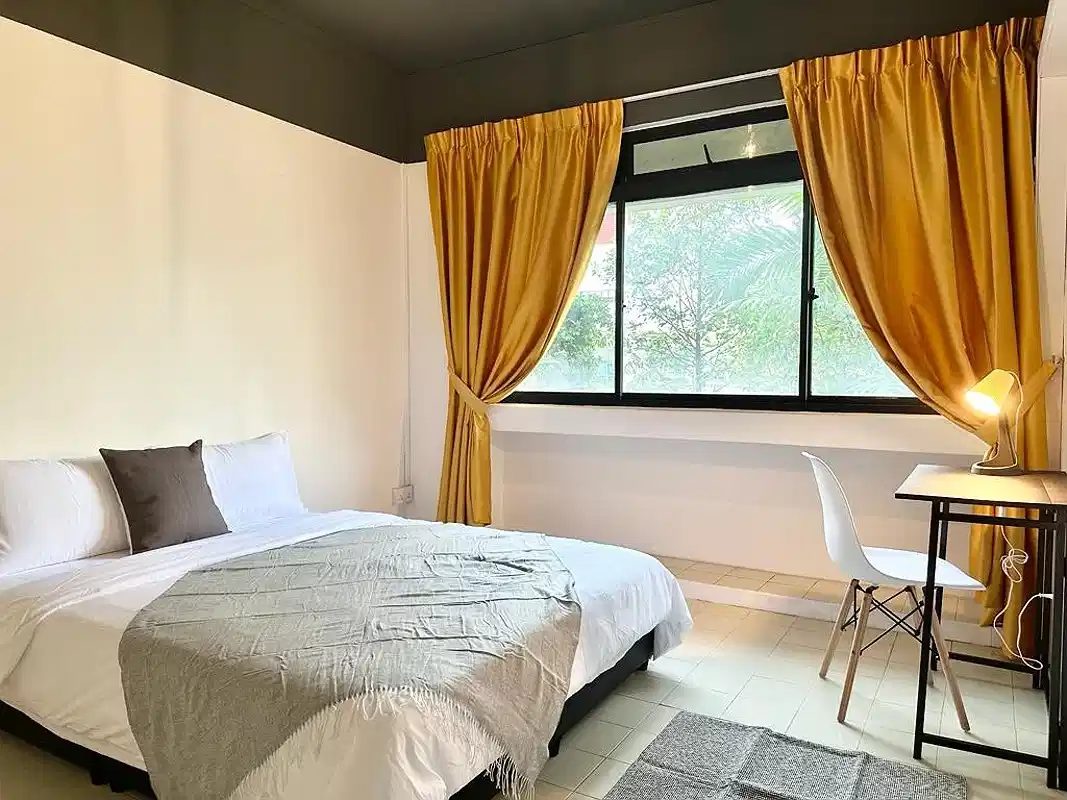
Rent levels differ by property type, age, and distance to campus. All figures below are indicative – confirm with the operator or property manager at the time of search.
Band A: 30,000–45,000 yen per month (budget shared or very small single rooms)
- Shared house with Japanese or international students (common in Toyonaka). Typical room is 6–8 tatami mats (10–13 sqm). Utilities extra (5,000–10,000 yen/month).
- Mini-apartments (1K or 1R) built before 1990, often without air conditioning or internet. Located 20–30 minutes by bus or bicycle from campus.
Band B: 45,000–65,000 yen per month (typical private apartment for one)
- 1K or 1DK (one room with kitchen/dining) of 20–25 sqm. Usually air-conditioned, with separate bathroom and toilet. Within 15–20 minutes by bicycle to Suita or Toyonaka campus.
- Many are in buildings with security locks and bicycle parking. Key money (reikin) and deposit (shikikin) are common – each equal to one month’s rent (refundable deposit varies). Total move-in cost often 4–6 times the monthly rent.
Band C: 65,000–90,000 yen per month (newer or larger apartments, near station)
- 1LDK (one bedroom + living/dining/kitchen) of 30–40 sqm. Less than 10-minute walk to a station on the Hankyu Senri Line or Osaka Monorail.
- Move-in costs remain high. Some properties accept using airbnb or short-term lease agencies at a premium (often 1.5–2 times the monthly rent).
Band D: 90,000 yen and above (premium long-term or serviced apartment)
- Serviced apartments with English support, furnished, all utilities included. Located in Suita or central Osaka. Many international students in graduate programs choose these for convenience, though they are expensive.
Walk vs transit trade-off
The decision between walking/cycling to campus and using public transport depends on budget, time, and lifestyle.
Walk / cycle option
- Radius: within 2–3 km of your main campus. For Suita campus, that includes areas along the Senri River and around Senri-Chuo station. For Toyonaka campus, neighbourhoods like Ryokuchi-koen or Toneyama.
- Benefit: no transport cost, flexible schedule, easy to go home for lunch. Bicycle parking is available on campus (free with a student registration). Many students complete their entire degree without a transport pass.
- Drawback: higher rent for flats close to campus. In Suita, a 5-minute walk from the university gate can cost 10,000–15,000 yen more per month than a 15-minute bike ride away. Also, walkable areas can be less vibrant in the evening (fewer restaurants or shops open late).
Transit option
- Radius: up to 5–7 km (or 15–20 minutes by train). You can live in lower-rent neighbourhoods near a station on the Hankyu Senri Line, such as Kita-Senri or Yamada. The train journey from Kita-Senri to Suita takes about 8 minutes (190 yen).
- Benefit: cheaper rent (e.g., 40,000–50,000 yen for a decent 1K in Kita-Senri). Also, stations have more shops and eateries.
- Drawback: monthly transport cost of 6,000–10,000 yen (indicative – confirm with the operator). You need to adjust schedule for train times and last train the night before.
Compromise: bicycle + occasional bus
A common strategy is to live within 3–5 km and cycle daily (15–25 minutes). You save rent compared to walking distance, and avoid transit fares unless it rains. Many students store a raincoat in their backpack.
Shortlist logic using given nearby residences
Although no specific apartment complexes were provided in the data, you can build a shortlist by applying these practical filters:
-
Identify your campus and department. If you are in engineering, gravitate towards Suita campus. If in physics, Toyonaka. Mixed attendance? Choose a location equidistant (e.g., around Senri-Chuo) with direct bus or monorail.
-
Decide on shared vs solo. Shared houses (guesthouses) typically have lower move-in costs (no key money) and are easier for short stays (3–6 months). Solo apartments require more paperwork and upfront payment.
-
Check 3–5 properties within your budget band. Use online listings (general Japanese rental sites, not named here) and filter by “near Senri-Chuo Station” or “near Suita Station” – these are the most convenient transport hubs for the university.
-
Visit in person or ask a trusted contact. Reviews on Google show that experiences vary. Landlords who advertise “English OK” may only have one staff member who speaks English. Request a written agreement in English if possible.
-
Consider distance to grocery stores and hospitals. Suita campus is near a large shopping complex (Aeon Mall), good for daily needs. Toyonaka campus is closer to Ryokuchi Park, which has a quiet atmosphere but fewer supermarkets.
Example shortlist (fictional, for illustration):
- Shared house near Senri-Chuo station: 40,000 yen/month, all utilities included, 20-minute bus to campus.
- Apartment close to Suita campus: 55,000 yen/month, 10-minute walk, air conditioning, 25 sqm.
- Apartment near Yamada station (monorail): 48,000 yen/month, 15-minute train+10-minute walk to campus.
Always request a breakdown of move-in costs – deposit, key money, guarantor fee, and cleaning fee. Some operators charge “no key money” but increase the monthly rent.
FAQ
Q: What is the typical move-in cost for a student apartment near Osaka University?
Move-in costs usually include a deposit (shikikin, typically one month rent, partly refundable), key money (reikin, one month rent, non-refundable), a guarantor company fee (10,000–20,000 yen), and cleaning/insurance fees. Total can be 4–6 times the monthly rent. Some guesthouses waive key money but charge a higher monthly fee. Always ask for a written estimate. Figures are indicative — confirm with the operator.
Q: Should I live in Suita or in central Osaka?
If you prioritise convenience to campus and lower rent, Suita (or Toyonaka) is ideal. If you value nightlife, cultural events, and part-time job opportunities, central Osaka is better – but expect 30–40 minutes of commuting each way and 20–30% higher rent. Many graduate students choose Suita for the quiet study environment; undergraduates may prefer central Osaka for social life.
Q: How can I find an English-speaking landlord or agent?
Check international student forums and ask your department’s administrative office for recommendations. Some property management companies in Suita have multilingual staff, but many do not. An alternative is to use a guarantor service that provides English support. You can also search for “apartments for foreign students” on general listing sites, but be prepared to read Japanese terms. Always verify the contract terms in a language you understand.
Data last updated: March 2026
See also: listing details · browse more