Southern University of Science and Technology (SUSTech) – Housing Guide
What Campus Reviews Reveal
Southern University of Science and Technology (SUSTech) has earned a Google rating of 4.8 from 73 reviews, indicating strong overall satisfaction among students and visitors. The campus is described as “Amazing campus with impressive features and infrastructure. It’s most emerging university in China” by reviewer 신영수, who gave it five stars. Another student, Monte Carlo, wrote: “It’s where I dream and grow. The 3 years I spent in college must be the most unforgettable time in my life. … the university grows super fast and now it is one of the education and techn…” (the review cuts off, but the tone is clearly positive). Falk Schlaudraff gave four stars, noting “Pretty nice university with many bright people!” Jiarui Wang added five stars and called it “Awesome place, the future of Chinese higher education!”
These reviews point to a young, rapidly developing institution with modern infrastructure and an academically driven atmosphere. However, the “middle of nowhere” comment from the Monte Carlo review suggests the campus was initially remote, though the city has since expanded around it. For prospective students searching for housing near SUSTech, understanding the current urban context is essential.
City Context: Shenzhen’s Nanshan District
SUSTech is located at 1088 Xue Yuan Da Dao, in the Nanshan District of Shenzhen, Guangdong Province. Nanshan is one of Shenzhen’s most dynamic districts, home to tech giants, universities, and startup hubs. The area around SUSTech, known as the “University Town” (Daxuecheng), also hosts other higher education institutions, though we will not name them here. This concentration creates a lively student population with numerous study-friendly cafes, bookstores, and restaurants within a 2–3 km radius.
Shenzhen’s climate is subtropical, with hot, humid summers and mild winters. That means air conditioning and ventilation are key considerations when choosing accommodation. Public transport is well-developed: the Shenzhen Metro Line 5 serves the area via Tanglang Station (approx. 800 m from the main gate of SUSTech) and the nearby University Town Station (Shenzhen Metro Line 7). Buses cover the area thoroughly.
Given the district’s rapid growth, rent levels have risen in recent years. A mix of mass-market apartments, serviced studios, and a few luxury complexes exist within walking distance. The university itself provides on-campus dormitories for undergraduate and many graduate students, but postgraduates, researchers, and international students often need off-campus housing. This guide focuses on that segment.
Budget Bands (Indicative – Confirm with the Operator)
Off-campus housing options near SUSTech can be grouped into three general budget categories. All figures are monthly rents in Chinese Yuan (RMB). Prices are indicative — confirm with the operator before signing any lease.
-
Economy (≈ 1,500 – 2,500 RMB per room)
Shared apartments in older residential compounds (e.g., inside Tanglang Village or near Pingshan Village). Rooms are typically small (10–15 m²), with shared kitchen and bathroom. Buildings may lack elevators or central air conditioning. This budget is most common among students willing to commute 20–30 minutes by bike or bus. -
Mid-range (≈ 2,500 – 4,500 RMB per month for a studio or one-bedroom)
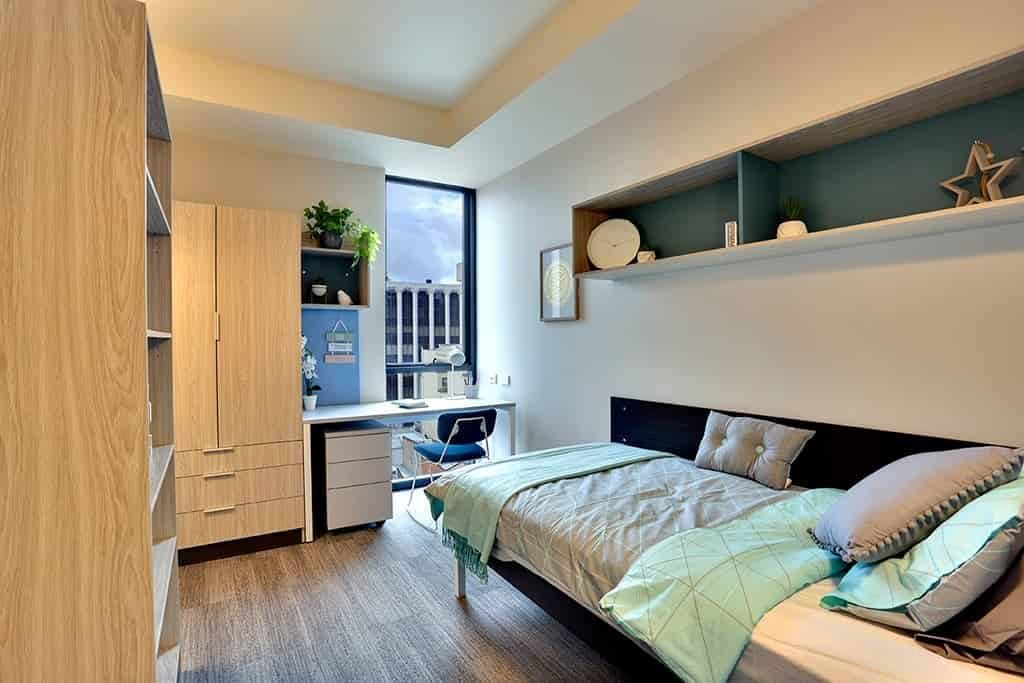
Private studios or one-bedroom apartments in newer complexes within 1–2 km of campus (e.g., Tiancheng Huating, Jiaoli Dao, or the residential towers along Liuxian Avenue). These usually have a private bathroom, kitchenette, and reliable air conditioning. Many are within a 10–15 minute walk to the campus gate. -
Premium (≈ 4,500 – 7,000 RMB per month for a one-bedroom)
Serviced apartments or high-end complexes (e.g., Vanke Yundong Gongguan or the towers near Tanglang Metro Station) offering concierge services, gym, swimming pool, and modern furnishings. Some may include a study room or coworking space. These are about 5–10 minutes’ walk from the campus or directly above a metro station.
These bands are based on general market data from 2025–2026 and vary with exact location, building age, and floor. Always check current listings and visit in person.
Walk vs. Transit Trade-Off
The trade-off between walking distance and cost is sharp near SUSTech.
-
Walking distance (≤ 15 minutes on foot): Rent is typically in the mid-to-premium range. The convenience is obvious: no morning commute stress, more time for study, and easy access to campus facilities. However, the immediate vicinity (within 500 m) offers fewer daily shopping options — a small supermarket and a few eateries, but for larger groceries you would still take a short bus ride.
-
Transit commute (≥ 20 minutes by bus/metro): Rents can drop by 30–50% compared to the closest complexes. Many students choose to live further along Metro Line 5 (e.g., Xili, Liuxiandong, or Shenzhen North Station) or toward the east (e.g., Minzhi). A typical commute using the metro takes 20–30 minutes from platform to campus gate. The trade-off is time and monthly transit costs (≈ 200–400 RMB). Some apartment buildings also offer free shuttle buses to the university.
For those who own a bicycle (common on campus), cycling expands the affordable zone. A 15–20 minute bike ride can reach areas like Pingshan Village or Guihua Road, where rents are more moderate. Bicycle parking is secure inside the campus.
Shortlist Logic Using Nearby Residences
When creating a shortlist of housing options near SUSTech, start from these criteria:
- Purpose of stay (short-term exchange vs. full-degree program) – longer stays usually justify a better location.
- Class schedule – if you have early-morning labs, a 5-minute walk is worth the extra rent.
- Budget ceiling – know your maximum monthly rent inclusive of utilities (add 200–400 RMB for water, electricity, internet, and management fees).
- Housemate preference – solo or shared; shared can halve the rent.
- Transport preference – metro-first vs. walking-only.
Given the university’s location, the following residence clusters are commonly considered by students (please confirm availability and exact pricing with the operators, as data change):
-
Cluster A: West Gate Area (5–10 minutes walk)
Includes residential towers along Liuxian Avenue and Xueyuan Road. Most are mid-to-premium. Advantages: directly across the street from campus, many new buildings with modern layouts. Disadvantages: limited food choices at night; slightly higher prices. -
Cluster B: Tanglang Station Area (8–15 minutes walk / 1 metro stop)
Apartment complexes near Tanglang Metro Station (Line 5). Advantages: metro access to downtown Shenzhen, nearby shopping plaza (Tanglang City), more restaurant variety. Disadvantages: walk to campus is 15 minutes, or a short bus (one stop). This area offers a good balance between price and convenience. -
Cluster C: Xili Town (≈ 20 minutes by bus + walk)
More affordable housing, including older village apartments and new developments. Xili also has a large wet market and many budget eateries. Commute time is longer, but the savings can be significant. -
Cluster D: University Town Station Area (Line 7, about 10 minutes by shared bike + 5 minutes walk)
Close to several other university campuses. Suitable if you want a more vibrant student social scene. Residential compounds here are modern but pricier.
Shortlist logic in practice:
- If budget is below 2,500 RMB, look at Clusters C or shared rooms in Cluster B.
- If budget is 3,000–4,500 RMB and you value walking, look at Cluster A or B.
- If budget is above 5,000 RMB and you want a premium experience, check Cluster A or the newer towers at Tanglang.
Always visit the apartment during the day and evening to assess noise, safety, and convenience. Ask for a trial metro commute during peak hours.
3 Frequently Asked Questions (FAQ)
1. How far is the nearest metro station from campus?
Tanglang Station (Line 5) is about 800 meters from the main gate – a 10–12 minute walk. University Town Station (Line 7) is about 1.5 km away, closer to the east side of campus. Bicycles and shared bikes are widely available.
2. Are utilities included in the rent?
Usually not. Most leases charge rent only; water, electricity, gas, internet, and property management fees are paid separately. Budget an additional 200–400 RMB per month for a single person, and 300–600 RMB for a couple. Confirm with the landlord.
3. Is it better to sign a lease before arriving or after viewing?
If you cannot visit in person, ask a current student or friend to check the apartment. Scams exist; never wire money before signing a contract. For the first semester, consider a short-term rental (e.g., 3 months) via a serviced apartment or a homestay, then look for a longer lease after arrival.
Data as of 2026 – all prices are indicative and must be confirmed with the operator. Reviews quoted verbatim from Google Maps as of the time of writing.
See also: listing details · browse more