What Campus Reviews Reveal
Sejong University, ranked 392nd in the QS World University Rankings, sits at 209 Neungdong-ro in Seoul’s Gwangjin District. The campus itself draws mixed reactions from students and visitors, and reading through recent reviews helps set realistic expectations for anyone planning to live nearby.
The entrance makes a strong first impression. One reviewer, King Topaz, noted: “Sejong University has a really beautiful entrance that immediately makes a great impression. Right at the front, there’s a Starbucks, which is such a convenient spot if you want to grab a coffee, study, or get some work done. It adds a nice touch to the campus atmosphere and makes the entrance feel.” That convenience factor — a coffee shop right at the gate — is a small but practical detail for daily student life.
The campus size is another point worth considering. Aziz Kayumov, who studied there for six years, commented: “I loved every day of it, there are so many things to do around the campus, despite being comparatively small. You will enjoy walking in the Children Park, climbing at Achasan, and outdoor activities in the Han River which are all at 15m.” The proximity to Children’s Grand Park, Achasan Mountain, and the Han River means that even though the campus itself is compact, the surrounding area offers significant recreational space. This matters for housing choices: living closer to those green areas could enhance your experience without adding commute time.
Not all feedback is positive. Muhammad Yunus Ikromjonov shared a starkly different view: “I studied there in 2022 spring semester for my Master’s degree. Graduate school staff were so rude and didn’t know English at all. As well school fees were quite expensive. It’s better to study private school instead of this university. Never recommended.” This review highlights potential administrative friction, particularly for international students who may rely on English-language support. It does not directly address housing, but it suggests that having reliable housing off campus — where you can manage your own environment — might be beneficial if on-campus administrative experiences prove frustrating.
Overall, the university holds a Google rating of 4.3 from 610 reviews, indicating that most experiences lean positive. The practical takeaway for housing is that the campus is small but well-located, with easy access to parks, outdoor activities, and basic amenities like coffee shops — all factors that influence where you might want to live.
City Context: Gwangjin-gu and Seoul
Sejong University is located in Gwangjin District, on the north side of the Han River in eastern Seoul. This area is less central than districts like Jongno or Gangnam, but it offers a balance of urban convenience and green space. The neighbourhood around the university is primarily residential, with a mix of older low-rise apartments, newer officetels (multi-use buildings with studio units), and standalone houses (single-family homes or multi-unit buildings).
The district is well-served by Seoul’s subway system. Sejong University is closest to Konkuk University Station (Line 2 and Line 7) and Children’s Grand Park Station (Line 7). Line 2 is a circular line that connects to major hubs like Hongdae, Sinnonhyeon, and Gangnam, while Line 7 runs north-south through eastern Seoul. Commuting to central Seoul takes roughly 20–30 minutes by subway.
For daily life, the area around Konkuk University Station is a major commercial and entertainment hub. It has a large street-food market (the “Konkuk University Food Street”), multiple cinemas, shopping centres like Star City, and plenty of cafes and restaurants. The Han River is within walking distance (about 15 minutes from campus), with a popular park and bicycle paths. Children’s Grand Park, mentioned in the review, is a large public park with a zoo, botanical garden, and walking trails — ideal for weekend relaxation.
The neighbourhood is also popular among international students, particularly those attending Sejong University and Konkuk University (which are adjacent). As a result, you’ll find a fair number of real estate agencies and housing services that cater to non-Korean speakers, though the level of English support varies.
Budget Bands for Student Housing (2026–2027)
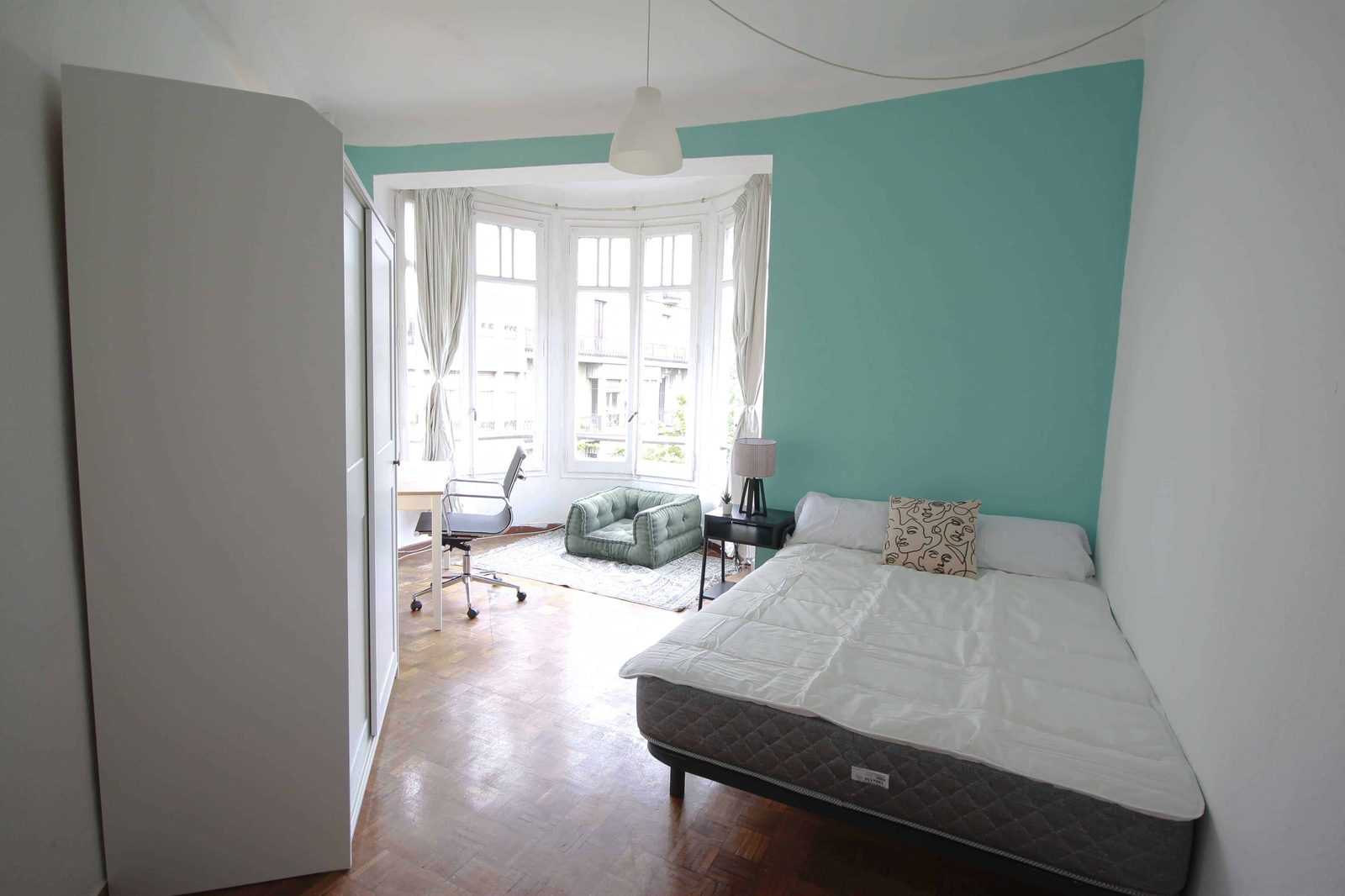
Rental prices in Seoul vary significantly by location, property type, and contract length. For a student living near Sejong University, you should expect the following indicative monthly rent ranges — always confirm directly with the operator. All figures are in South Korean won (KRW).
Shared rooms or goshiwons (small, basic single rooms): 350,000 – 550,000 KRW per month. Goshiwons are tiny units (often 3–5 square metres) with a bed, desk, and small fridge; bathrooms and kitchens are shared. They are the cheapest option but offer minimal privacy and comfort.
One-room studio (private, self-contained): 500,000 – 800,000 KRW per month. These are typically officetels or small apartments with a combined living/sleeping area, a private bathroom, and a small kitchenette. Utilities (electricity, water, gas, internet) may be extra, adding roughly 50,000–100,000 KRW monthly.
Two-bedroom or larger apartment (shared among 2–3 people): 400,000 – 650,000 KRW per person per month. Splitting a larger flat can be cost-effective, especially if you find roommates. Units in older buildings are cheaper but may lack modern amenities.
Key money (deposit): In Korea, rental contracts typically require a large deposit called “jeonse” or a smaller “monthly rent” deposit (for month-to-month contracts). For student-friendly housing, deposits usually range from 5,000,000 to 20,000,000 KRW (approximately 3,700–14,800 USD). Some landlords accept a reduced deposit for a higher monthly rent, but many still expect a minimum of 5 million KRW. Be prepared for this upfront cost.
Important note: These prices are indicative for the 2026–2027 academic years and can shift depending on the specific building, floor, sunlight, and negotiation. Always verify current rates with the housing operator or landlord before signing any contract.
Walk vs Transit: Choosing Your Location
Deciding between walking distance to campus versus a short transit ride depends on your priorities: convenience, cost, and lifestyle.
Walking distance (within 15 minutes of campus): The area immediately surrounding Sejong University includes several residential streets, primarily along Neungdong-ro and side lanes near Children’s Grand Park Station. Living within walking distance saves you subway fare (1,400 KRW per ride) and commute time. You can easily access the campus Starbucks, nearby convenience stores, and the park. However, rents in this immediate zone may be slightly higher due to demand, and the available housing stock tends to be older low-rise buildings rather than modern officetels.
Transit-based (one subway stop, 5–10 minutes): If you are willing to take Line 7 or Line 2 one or two stops, you open up more modern housing options in the Konkuk University or Hanyang University (Line 2) vicinity. These areas have more officetels and newer apartment complexes, often at similar or slightly lower rents than the immediate campus vicinity. For example, a one-room studio near Konkuk University Station might cost 500,000–700,000 KRW — comparable to a similar unit closer to Sejong University, but in a busier commercial area. The trade-off is that you will spend about 10–15 minutes commuting plus waiting time.
Farther out (three or more stops): For budget-minded students, areas like Gunja Station (Line 5, Line 7) or Yongmasan Station (Line 7) offer cheaper rents (around 300,000–500,000 KRW for a goshiwon) but add 15–20 minutes to your commute each way. This works well if you have a flexible schedule and prioritise lower rent over convenience.
A good rule of thumb: if you plan to be on campus most of the day (classes, library, clubs), walking distance is worth the premium. If you prefer a more lively neighbourhood with more dining and shopping options, living near Konkuk University Station even if it adds a short subway ride might suit you better.
Shortlist Logic: Using Nearby Residences
When evaluating specific housing options, use the following shortlist logic based on the reviews and neighbourhood context:
1. Prioritise proximity to parks and the Han River. The positive review about Children’s Park and Achasan highlights that outdoor access is a real benefit of this area. Housing near the park (e.g., along the east side of campus or near Children’s Grand Park Station) can offer a pleasant environment for walking and jogging. Look for buildings that mention “park view” or “river access” in listings.
2. Check for English-speaking management. The negative review about rude graduate staff points to potential language barriers. For off-campus housing, ask whether the property manager or landlord speaks English. Some real estate agencies in the area (often near Konkuk University Station) specialise in international tenants and can provide contracts in English. Prioritising such agencies may save you headaches.
3. Consider the building’s age and amenities. Older low-rise buildings (often called “villas”) are common in the immediate campus vicinity. They tend to be cheaper but may have less soundproofing, older heating systems, and fewer security features. Newer officetels near Konkuk University Station or Children’s Grand Park Station often have better insulation, CCTV, and a security desk — but at a higher monthly cost. Decide based on your budget and tolerance for noise.
4. Factor in grocery shopping and daily errands. The area around Konkuk University Station has large supermarkets (e.g., Homeplus, Emart), while the campus itself has small convenience stores. If you cook frequently, staying near a major grocery store might be worth a few extra minutes of commute time.
5. Use virtual tours and contact multiple agencies. Since you cannot always inspect in person before arriving, ask for video walkthroughs. Many Korean real estate portals (though not referenced here by domain) allow you to filter by station, deposit range, and monthly rent. Cross-check at least three listings per area to gauge market rates.
A practical shortlist for a typical international student (budget 500,000–700,000 KRW, private studio, willing to walk up to 15 minutes) would include: studio officetels near Children’s Grand Park Station (Exit 2 or 3) for park proximity, or studios near Konkuk University Station (Exit 3 or 4) for nightlife and convenience. For those on a tighter budget (350,000–500,000 KRW), goshiwons or shared flats along the side streets between the campus and Gunja Station are worth considering.
Frequently Asked Questions
What is the typical rental deposit in Seoul?
For student-friendly housing in Seoul, the deposit (often called “key money”) usually ranges from 5,000,000 to 20,000,000 KRW (approximately 3,700–14,800 USD as of 2026). Goshiwons may ask for a lower deposit (around 500,000–1,000,000 KRW), while private studios in modern officetels often require 5,000,000–10,000,000 KRW. Some landlords accept a “reduced deposit” option where you pay a higher monthly rent but a lower upfront sum — ask about this if the standard deposit is beyond your budget. Always confirm the exact amount with the operator before signing.
How early should I start looking for housing?
For a semester starting in March (spring) or September (fall), begin your search at least 2–3 months in advance. That means for March 2026 enrolment, start looking in December 2025 or January 2026. Many landlords prefer contracts starting on a specific date, and desirable units get snapped up quickly. If you are arriving from overseas, consider booking a short-term guesthouse or Airbnb for the first 1–2 weeks so you can view apartments in person before committing to a long-term lease.
Are there any student dormitories on campus?
Sejong University does offer on-campus dormitories, but they are limited in number and typically prioritised for freshmen, exchange students, and scholarship recipients. If you are a graduate student or a returning student, you may face a waitlist. Dormitory costs are generally lower than off-campus housing (around 200,000–400,000 KRW per month) but come with shared rooms and strict rules (curfew, guest restrictions). For more independence and flexibility, off-campus housing is the preferred option for many upper-level students.
Data-date: 15 March 2026
See also: listing details · browse more