What Campus Reviews Reveal About Rice University
Student reviews of Rice University paint a picture of a demanding yet rewarding academic environment, set on a beautiful campus with strong community resources. Gary Osterloh (5-star review, 4 months ago) notes: “Rice is intentionally structured to be demanding and personal. Smaller classes, close faculty involvement, and a highly driven student body create constant pressure to perform.” This suggests that students who thrive under close mentorship and high expectations will fit well here. However, not all departments are equally praised. Abraham M (3-star review, 2 months ago) mentions: “I used to attend a lot of lectures and events. Now I only attend Physics. The physics department does great. Most of the public lectures are dumb down for the masses. I hope actual student lectures are better. The religion department is a disappointment.” This mixed feedback highlights that academic experiences can vary by department, and students should explore course offerings before committing.
The physical campus itself receives strong praise. Maritza Ortega (5-star review, 7 years ago) describes: “What a wonderful experience! The campus is the ideal place to take a stroll along the trees and appreciate the architecture. The arches were among my favorite! The university has a lot of places to explore like the Chapel, the library, the gardens and the many sitting areas to just enjoy the view!” This indicates that the grounds are well-maintained and offer spaces for relaxation and study. Patrick Billette (5-star review, 10 months ago) adds: “This is a nice place. We hosted the genuine World Cup at rice university in July of 2025 and it was nice. Very close to the soccer field and the stadium and there are plenty of nearby activities to do whenever you are bored. I love the dorms and the plentiful amount of food for all 3 meals they serv…” Although this review mentions on-campus housing, many students opt for off-campus living due to space or cost constraints.
Given the university’s high overall rating of 4.7 on Google (based on 961 reviews), the campus culture is broadly positive. The emphasis on academic intensity, coupled with a physically appealing environment, suggests that students prioritising quiet study spaces, green areas, and easy access to facilities will benefit from living near campus.
Houston City Context for Student Living
Rice University is located at 6100 Main St, Houston, TX 77005, USA, in the Museum District, a neighbourhood known for cultural institutions, parks, and relatively low crime compared to other parts of the city. Houston is the fourth-most populous city in the United States, with a diverse economy dominated by energy, healthcare, and aerospace. The city’s sprawling layout means that car ownership is common, but the public transit system (METRO) offers bus and light-rail options, including the Red Line that runs near Rice.
For students, the trade-off between living close to campus and living further out is significant. Properties within walking distance (under 1 mile) tend to be more expensive but eliminate the need for a vehicle or regular transit costs. Those in neighbourhoods like Montrose, the Medical Center, or Upper Kirby offer a mix of walkability and proximity. Moving further east or south (e.g., near Hobby Airport or Clear Lake) lowers rent but adds commute time.
As of 2026, the student housing market in Houston shows a wide range of prices. Based on city-wide listings, the minimum advertised price for a room or studio near Rice is around $649 per month (indicative — confirm with the operator). The average for a one-bedroom within 2 miles of campus typically falls between $1,000 and $1,500, while shared apartments can go from $700 to $1,000 per person. Utilities and parking may add $100–200 monthly.
Budget Bands for Off-Campus Housing (2026–2027)
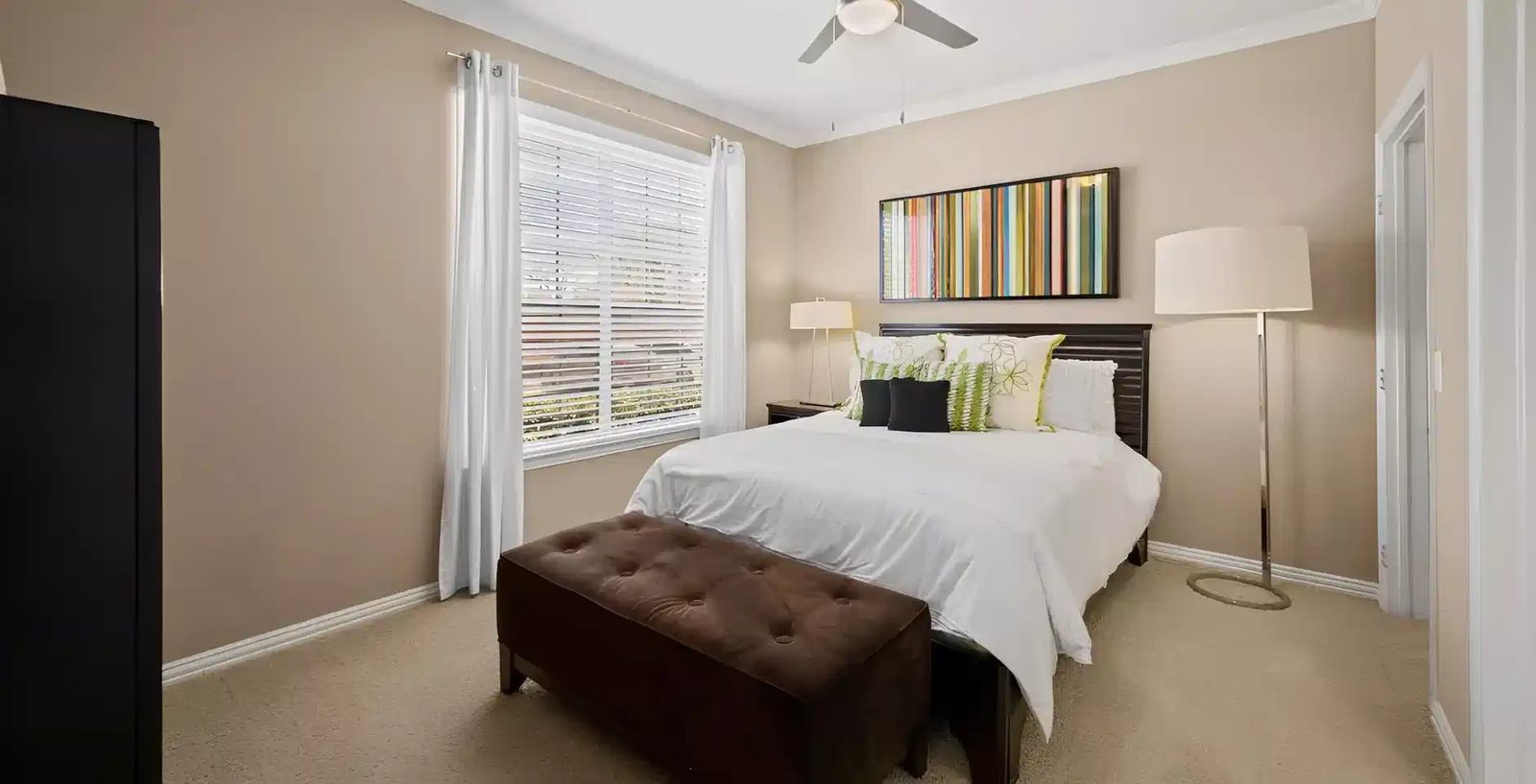
When planning your housing budget near Rice University, consider the following indicative price bands (all prices are indicative — confirm with the operator):
- Economy ($649 – $850/month per person): Shared apartments or older complexes in areas like the Medical Center or southeast Houston. Options may include older buildings with basic amenities. Commute to Rice by bus or bike can take 20–40 minutes.
- Mid-range ($850 – $1,200/month per person): Closer to campus in the Museum District, Montrose, or Upper Kirby. Many purpose-built student housing complexes and renovated apartments fall in this range. Often include utilities and basic furniture. Transit time 10–20 minutes by bus or light rail.
- Premium ($1,200 – $1,800/month for a studio or one-bedroom): Within walking distance of Rice (0.5–1 mile). These properties typically have modern finishes, gyms, pools, and 24/7 concierge. Parking may cost extra.
- Luxury ($1,800+ for a one-bedroom): High-end high-rises in the Galleria area or Downtown. Commute by car or light rail is 15–30 minutes. Features include rooftop amenities, full-service management, and premium fixtures.
Note that Houston rents have been rising at roughly 3–5% per year, so 2027 prices may be slightly higher. Always verify current rates directly with the property operator.
Walk vs. Transit Trade-Off
Rice University sits in a relatively walkable pocket of Houston. The campus itself is compact, and several neighbourhoods within a 1-mile radius (e.g., the Rice Village area, parts of the Medical Center) have sidewalks, grocery stores, and restaurants. Walking is feasible for students living in the Museum District or near Hermann Park, but Houston’s heat and humidity (especially from May to October) make walking longer distances uncomfortable without shade.
Walking pros:
- Zero transit cost.
- Flexible schedule — no waiting for buses or trains.
- Better for spontaneous trips to campus libraries, gyms, or study spaces.
Walking cons:
- Limited to properties within ~1.5 miles.
- Higher rent for close proximity.
- Hot weather can be a deterrent for daily walks over 10–15 minutes.
Public transit pros:
- Access to cheaper housing further from campus.
- METRO light-rail Red Line stops near Rice (the “Rice University” station on Main St). Buses also serve the area.
- Student discounts are available (METRO U-Pass for full-time students costs about $80–100 per semester, though not all apartments are within walking distance of a stop).
Public transit cons:
- Schedules reduce flexibility — late-night study sessions require planning.
- Travel time can be 2–3 times longer than driving.
- Buses may be less reliable in outlying areas.
Driving/biking: Many students drive to campus. Parking permits cost around $500–1,200 per year (indicative). Biking is popular, as Houston has some bike lanes, but traffic can be heavy. A typical commute from a mid-distance neighbourhood (e.g., Montrose) is 10–15 minutes by car; from Clear Lake it’s 30–40 minutes.
Shortlist Logic: Five Nearby Residences
Using the sample of student housing options provided (Altitude, Breeze at Clear Lake, Alegria I and II, Concord at Allendale Apartments, The Cove), here is a logical framework for evaluating each based on location, budget, and lifestyle preferences. These are not exclusive recommendations, but examples of how to apply the trade-offs discussed above.
1. Altitude
- Typical location: Often found in the Midtown or Medical Center areas. Accessible to light rail and bus lines.
- Suitable for: Students who want a modern building with amenities (pool, gym) and are willing to pay mid-range to premium prices. Commute to Rice is 10–15 minutes by transit or 5 minutes by car.
- Consideration: Verify whether the property is specifically marketed to students or offers month-to-month leases. Parking may cost extra.
2. Breeze at Clear Lake
- Typical location: Clear Lake area, near Johnson Space Center, about 20–25 miles southeast of Rice.
- Suitable for: Students on a tight budget (economy to lower mid-range) who do not mind a 30–40 minute commute by car. This area has lower rent but limited transit options.
- Consideration: A car is almost essential here. Check if there is a park-and-ride or express bus that serves Rice.
3. Alegria I and II
- Typical location: Likely in the Montrose or Upper Kirby area, close to Rice Village. These are older apartment complexes with a mix of studios and one-bedrooms.
- Suitable for: Students seeking an affordable yet walkable option. Usually in the mid-range band ($850–1,100). Walking distance to campus is about 0.5–1 mile.
- Consideration: Units may be older; ask about recent renovations, pest control, and noise levels.
4. Concord at Allendale Apartments
- Typical location: Allendale neighbourhood, near the Texas Medical Center (about 3 miles from Rice). Close to bus routes.
- Suitable for: Students prioritising value and space (e.g., two-bedroom flats). Commute by bus is about 20 minutes, or 10 minutes by car/car share.
- Consideration: Verify safety and walkability to groceries. Some medical centre apartments cater to longer-term renters.
5. The Cove
- Typical location: Possibly in a quieter residential area, often with a community feel. May be oriented towards families or professionals.
- Suitable for: Students who prefer a more mature environment and are willing to drive. Usually mid-range to premium.
- Consideration: Check lease flexibility (12-month vs. semester) and proximity to a bus stop.
Shortlist steps:
- Define your maximum commute time (e.g., 20 minutes by transit).
- Filter by rent range from the budget bands above.
- Confirm available amenities (parking, internet, furnished) that match your needs.
- Read recent resident reviews on Google or other independent platforms (not on this site) to gauge management responsiveness and noise.
- Visit in person or do a virtual tour before signing.
All prices mentioned in this section are indicative — confirm with the operator.
Frequently Asked Questions
1. What is the average rent for a one-bedroom apartment near Rice University in 2026?
Indicative one-bedroom rents within 1.5 miles of campus range from $1,000 to $1,500 per month. Studio apartments may go as low as $800 in older buildings. Prices are higher in the Museum District and lower in areas like the Medical Center or Sharpstown. Always confirm current rates directly with the property operator, as seasonal demand can shift prices.
2. Is it better to walk or use public transit to get to Rice University?
If you live within a 1-mile radius, walking is generally faster and more convenient for spontaneous access to campus facilities. For those living further out (2–5 miles), the METRO light-rail Red Line (stops at Rice University station) is a reliable option, with student passes costing around $80–100 per semester (indicative). Buses are cheaper but less frequent. Many students combine walking, biking, and transit depending on the weather and time of day. If you own a car, driving is the most time-efficient but adds parking costs.
3. Which student housing complexes near Rice are most popular among undergraduates?
The five properties listed above — Altitude, Breeze at Clear Lake, Alegria I and II, Concord at Allendale Apartments, and The Cove — represent typical options across different budgets and lifestyles. Undergraduate students often favour Altitude and Alegria for their proximity and social atmosphere, while graduate students may prefer Concord for space and quiet. However, popularity varies by semester; ask current students or the Rice housing office for up-to-date feedback. No single complex suits everyone, so shortlist based on your commute tolerance and budget.
Data as of 2026. All prices are indicative and should be confirmed directly with the housing operator. Ratings and reviews cited are from public Google reviews and may not reflect current conditions.
See also: listing details · browse more