What Campus Reviews Reveal
Peking University’s campus consistently earns high praise from visitors and students alike. Based on 544 Google reviews with an average rating of 4.5, four recurring themes emerge from the comments: beautiful surroundings, academic atmosphere, peaceful environment, and active student life.
One reviewer, David Hong, wrote: “Beautiful campus. Definitely a place you should visit if you’re a tourist here. And the people you’d meet here are fun to hang out with and super smart/passionate. If you’re lucky you also get to see tons of student groups doing activities outdoors.” This highlights that the campus is not only scenic but also a hub for social and intellectual engagement.
Astraeus Brigham added: “peking university is the best university in the world (tsinghua university is the second after peking u) many of its majors and colleges are ranked the top in china, including science (math physics chemistry) and medical and business and literature… it is the dream of every chinese gaokao stu” (sic). While the tone is enthusiastic, the underlying point is clear: the university commands academic prestige that draws talented students from across the country.
Alexander Chen described the campus’s architecture: “Peking University is the top university in China. It is not only a perfect place to study but also a very beautiful campus for visitors. There are many typical architecture in classical Chinese styles with beautiful gardens, and a unique lake. The PKU campus is also call ‘Yanyuan’, namely a beautifu” (sic). The reference to “Yanyuan” (the Garden of Yan) underscores that the campus itself feels like a park, making it a desirable place to live nearby.
Estelle Iunjr Chao emphasised the tranquillity: “Beautiful campus with lakes and small forests. Lots of students and facilities but always quiet and peaceful. Lovely place!” This suggests that despite being in a bustling city, the university grounds offer a retreat conducive to focus.
For someone searching for housing, these reviews indicate that proximity to such an environment is a significant advantage – you can walk to class in a setting that feels removed from Beijing’s urban noise. However, the popularity of the campus also means that demand for nearby apartments is consistently high, pushing up rents within a 1–2 km radius.
City Context: Beijing, Haidian District
Peking University is located in Haidian District, Beijing’s premier university zone. The address is 5 Yi He Yuan Lu, close to the Yuanmingyuan (Old Summer Palace) metro station on Line 4 and a short ride from Zhongguancun, the city’s technology hub. Haidian is known for its concentration of research institutes, libraries, and bookstores, as well as a large student population.
Living in this area means you are surrounded by cafés, affordable eateries, and study spaces. The district is also well-connected: Line 4 runs north–south, linking directly to central Beijing (Xizhimen, Xidan) and the Beijing South railway station. Bus routes serve the university gates, and ride-hailing apps are widely used.
The climate is continental – hot summers (up to 35°C) and cold, dry winters (down to -10°C). This influences housing preferences: apartments with air conditioning and central heating are essential, and many students look for buildings with reliable insulation.
Budget Bands for Off-Campus Housing (2026–2027)
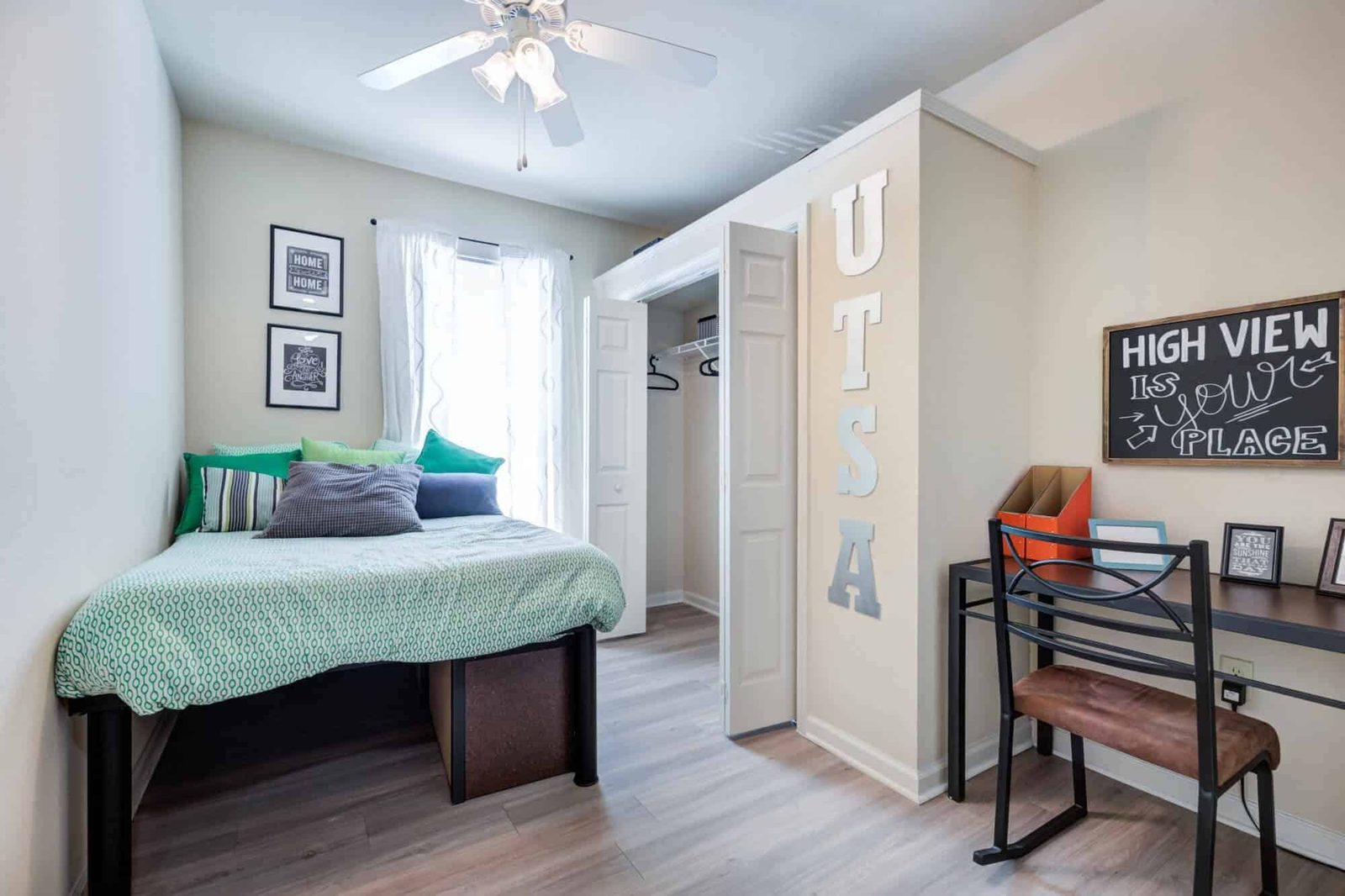
Rental prices in Haidian vary significantly depending on distance from campus, apartment type, and whether the room is shared. Below are indicative monthly bands as of 2026–2027. All figures are indicative – confirm with the operator before signing any contract.
- Lower band (~2,000–4,000 RMB): Shared rooms in older residential compounds (e.g., “hezu” apartments with 3–4 bedrooms) or private rooms in student-focused buildings 20–30 minutes away by metro. Expect basic furnishings, shared bathroom/kitchen, and higher utility costs in winter.
- Mid band (~4,000–8,000 RMB): Studio or one-bedroom apartments within a 15-minute walk from campus, or private rooms in newer purpose-built student housing. Usually includes a private bathroom, simple kitchenette, and likely air conditioning.
- Upper band (8,000+ RMB): Spacious one- or two-bedroom apartments in modern complexes near the southeast gate or Zhongguanyuan area. May include property management, 24-hour security, and access to amenities like a gym or courtyard.
Note that deposits (typically one month’s rent) and agent fees (often half to one month’s rent) are additional. Rent is usually paid on a semester or annual basis; monthly leases are rare.
Walk vs. Transit Trade-Off
The decision between walking to campus and using public transport largely comes down to how you weigh time, cost, and convenience.
Walking (≤15 min) Living within a 1 km radius – for example, near the South Gate, East Gate, or the Yuanmingyuan area – lets you roll out of bed and be in a lecture hall in minutes. The comments about campus being “peaceful” and “beautiful” suggest that the walk itself is pleasant, passing through tree-lined streets and historic architecture. However, this convenience has a price: studios in this zone often fall into the upper budget band. Additionally, the oldest residential compounds may lack modern soundproofing, so you might hear traffic or neighbours more clearly.
Transit (metro or bus, 15–30 min) Choosing a home further from campus – say, along Line 4 towards Haidian Huangzhuang or even Zhongguancun – can cut rent by 20–40% for similar space. The metro runs every 2–3 minutes during peak hours, so a 5–10 minute walk to the station plus a 10-minute ride is manageable. Some students prefer this option because it opens up a wider range of amenities (large supermarkets, gyms, food streets) and gives a clearer separation between study and home life. The trade-off? You lose the spontaneous campus library visits, and the walk from the station to your apartment may be less scenic.
For many students, the sweet spot is a 10–15 minute bike ride (bicycles are very common in Haidian) or a 20-minute bus journey. Bike-sharing apps are cheap and cover the last mile seamlessly.
Shortlist Logic: How to Choose Among Nearby Residences
Since the available housing stock changes constantly and no specific apartment complex is included in this dataset, a solid shortlist logic relies on your own criteria. Use the following step-by-step framework to evaluate options:
- Budget confirmation – Set a firm upper limit for monthly rent (including utilities and management fees). Because rents in Haidian are indicative, contact at least three operators to compare current offers for the same apartment type.
- Define your priority – Do you need a quiet study environment (like the campus itself) or do you prefer to live where other students socialise? The reviews mention active student groups – some housing clusters near the South Gate have a lively street-food and café scene, while compounds behind the university hospital are quieter.
- Use distance-to-campus metrics – On a map, measure walking distance (not straight-line) from the campus gates to potential apartments. Anything within 1.2 km is a <15 minute walk. For transit options, check whether the apartment is within 500 m of a metro entrance (Line 4, or bus stops 331, 365).
- Check apartment conditions in person – The budget bands above are guides. Visit at different times of day to assess noise, natural light, and Internet speed. Ask about the deposit refund policy and whether utilities (water, electricity, gas) are billed separately or included.
- Consider shared vs. private – If you want the social environment described in the reviews (“tons of student groups”), a shared apartment might help you meet people. If you need sustained focus, a private studio within 20 minutes by transit may be a better fit.
Because no official student housing directory is published here, your shortlist will come from listing sites. Always confirm with the operator that the rental price, contract length, and move-in date are as advertised. The market moves quickly; what you see in February 2026 may change by March.
Frequently Asked Questions
1. Does Peking University provide on-campus dormitories for international students? Yes, limited on-campus accommodation exists, primarily for degree-seeking international students and some exchange programmes. However, availability is not guaranteed, and many graduate students and independent programme participants find off-campus housing in the surrounding Haidian area. On-campus rooms are typically more affordable but require early application. For self-funded students, private rentals offer greater flexibility.
2. What is the typical cost of living off-campus, beyond rent? Utilities for a small studio (electricity, water, gas, Internet) can range from 300–600 RMB per month, higher in winter due to heating. Food is relatively cheap – a meal at a campus cafeteria or a nearby noodle shop costs about 15–30 RMB. Grocery shopping at local markets (e.g., the ones near the West Gate) is economical. Monthly transport on the metro (using a Yikatong card) for a daily commute is about 100–150 RMB. Budget around 3,000–5,000 RMB per month for basic expenses, excluding rent.
3. How safe is the area around Peking University at night? Haidian District is generally considered safe for students. The university campus is patrolled, and the surrounding streets near the gates remain well-lit and busy until late evening. Most residential compounds have security guards at the entrance. Nonetheless, standard precautions apply – avoid walking alone in poorly lit alleys after midnight. Many students use ride-hailing apps for late returns, and bike theft is the most common nuisance, so lock your bicycle well.
Data as of February 2026. Prices and availability are indicative – confirm all details with the operator before making any commitments.
See also: listing details · browse more