What Campus Reviews Reveal
Reviews of Leibniz Universität Hannover (LUH) on Google rate the institution 4.2 out of 5 based on 895 contributions. A handful of reviews offer direct insight into student experience, which can inform housing decisions.
One international exchange student, Gastone Ghirardi, gives 1 star and writes:
“I studied at Leibniz Universität Hannover as an international exchange student and, unfortunately, my experience was quite disappointing from an academic and organizational perspective. Having previously studied abroad in both the United States and Norway, I do not think the problems I experienced w” (truncated)
The negative review hints at organizational challenges. For housing, this suggests that students – especially internationals – may benefit from choosing accommodation with a support network, such as a student dormitory or a shared flat with experienced locals, to ease administrative and logistical hurdles.
In contrast, Raden Oktova Gamma Star, a Ph.D. graduate, gives 5 stars:
“I got my Ph.D. here in 2001. The official German name of the university is Gottfried Wilhelm Leibniz Universität Hannover, abbreviated Leibniz Universität Hannover (LUH), the largest university in Niedersachsen, Germany. A high standard of education, demanding from the students the ability to learn …”
This points to academic rigour. Students who need quiet study spaces should prioritise housing with a dedicated desk, or choose a neighbourhood where noise levels are low.
SATYAWRAT TAMRAKAR (5 stars) mentions:
“A well known, renowned, and old university with big labs and great research facility and also have tieups with many other universities around the world”
Research-oriented students may value proximity to campus to access labs and libraries easily, making walkable housing a priority.
Rumbidzai Masamba (5 stars) highlights the surrounding environment:
“The University, gardens, small lakes in the immediate vicinity, it’s all just beautiful. A place for spazieren, jogging, dog walking and cycling.”
The campus is embedded in a green area (Georgengarten and the Herrenhausen Gardens), which means housing in the immediate vicinity offers recreational space. However, the area can be more expensive than districts further out.
City Context: Hannover as a Student City
Hannover is the capital of Lower Saxony and the 13th largest city in Germany, with a population of about 550,000. It is known for its large green spaces, the Maschsee lake, and the Herrenhausen Gardens. The city is a major transportation hub, with an international airport, a central train station (Hauptbahnhof), and an extensive network of trams (Stadtbahn) and buses.
As a student city, Hannover hosts around 50,000 students across its three main universities (LUH, Hannover University of Applied Sciences, and Hannover Medical School). The student population is visible in districts like Nordstadt (north of campus), Linden (southwest), and the List (east). Rents are moderate compared to Munich, Frankfurt, or Hamburg, but have risen in recent years.
The city has a strong bicycle culture. Many students cycle year-round because the terrain is flat and dedicated bike lanes are common. Public transport is reliable, with a semester ticket (included in the student contribution) covering unlimited travel within the region – a significant cost saver.
Budget Bands for Student Housing
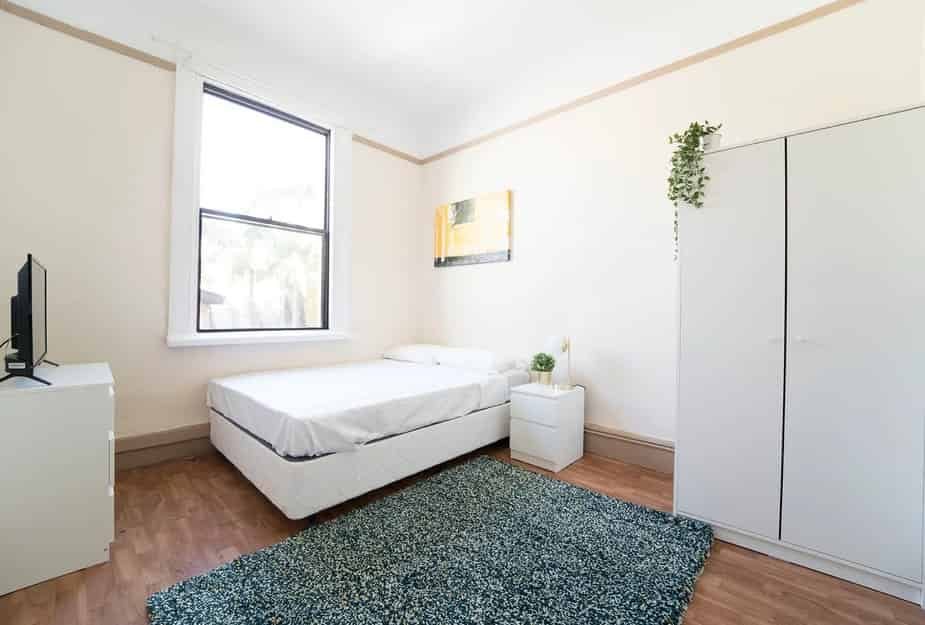
The following are indicative monthly rent ranges for student housing in Hannover for the academic year 2026‑2027. Confirm all prices directly with the operator before signing any contract.
-
Shared flat (WG) – €350 to €550 per month
A room in a shared apartment (Wohngemeinschaft) is the most common option. The price depends on location (Nordstadt is more expensive; Linden and List are mid-range) and whether utilities are included. Warm rent (including heat, water, and electricity) is typical. -
One‑bedroom apartment or studio – €550 to €750 per month
A small flat for single occupancy. These are harder to find in the city centre and often require early applications. Expect slightly lower rents in districts like Bothfeld or Döhren, but commuting time increases. -
Student dormitory (Studentenwerk) – €280 to €420 per month
Fully furnished rooms with shared kitchen and bathroom in dormitories run by Studentenwerk Hannover. Waiting times can be several months, so apply as early as possible. Dorms are often located near campus (e.g., in Nordstadt) or with good tram connections. -
Temporary housing – €400 to €600 per month
Short‑term rentals (for one semester) are available through online platforms. These are typically more expensive per month than long‑term contracts but offer flexibility for exchange students.
All prices are indicative. Always ask for a written contract specifying the exact rent, utility cost, and any deposits (typically 2–3 months’ cold rent). The standard deposit is three months of base rent.
Walk vs Transit Trade-Off
The LUH main campus at Welfengarten 1 is located in the Nordstadt district, directly north of the city centre. Many students choose to live in Nordstadt itself to be within a 10‑15 minute walk of lecture halls and libraries. The advantage is zero commute cost and the ability to go home between classes. The downside: Nordstadt rents are at the top of the budget bands, and the area can be busy with student parties.
If you prefer quieter, cheaper housing, consider:
-
Linden (southwest, 20–25 minutes by tram line 9 or 10). It has a lively, alternative atmosphere with cafes and shops. Rents are slightly lower than Nordstadt. Walking to campus is not practical (45 minutes), but the tram runs frequently.
-
List (east, 15–20 minutes by tram lines 3, 7, or 9). A more affluent district with many restaurants and a quiet residential feel. Rents are similar to Linden.
-
Mitte (city centre, 10–15 minutes walking). Very convenient for all transport, but nightlife noise can be an issue. Prices are comparable to Nordstadt.
-
Ahlem or Bemerode (outskirts, 30–40 minutes by tram). Lower rents but longer commute. Fine if you have few morning classes.
For most students, a bicycle is the fastest door‑to‑door option. From Linden, cycling to campus takes about 15 minutes. The tram same distance. Walking from Nordstadt is best if you value zero waiting time.
How to Shortlist Housing Options
Since the article does not list specific residences, you can apply the following logic to evaluate any listing near LUH:
-
Distance to campus
Use Google Maps or the university’s own map (https://www.uni-hannover.de/en/universitaet/lageplan/) to measure walking time. Focus on listings within 1.5 km (20‑minute walk) or within a direct tram line (lines 4, 5, 9, or 10). -
Public transport connection
Check how many tram stops separate the apartment from the main stop “Leibniz Universität”. A commute longer than 30 minutes one‑way may become draining over a full degree programme. -
Grocery and daily needs
Confirm that a supermarket (Netto, Rewe, Aldi) is within a 10‑minute walk. In Nordstadt, there is a Rewe and an Edeka near the campus. Linden and List each have multiple supermarkets. -
Noise and atmosphere
If you need quiet for studying, avoid apartments directly above bars or on major tram lines (e.g., Limmerstraße in Linden). The university library closes at midnight, but many students prefer to study at home late at night. -
Cost‑to‑salary ratio
As a guideline, your net monthly rent should not exceed 35% of your income. Most students in Germany rely on parental support or a part‑time job (up to 20 hours/week during semester). Use the indicative budget bands to narrow down candidates. -
Lease flexibility
Exchange students typically need a short‑term lease (6–12 months). Ask if the landlord allows “Zwischenmiete” (subletting) or if the contract is unlimited. Dormitory contracts are often semester‑based.
FAQ
Is it better to live in a student dormitory or a private shared flat near LUH?
Dormitories offered by Studentenwerk Hannover are cheaper (€280–€420 per month) and come fully furnished, but waiting lists are long – apply at least 3–4 months before the semester starts. Private shared flats (€350–€550) give you more freedom in location and flatmates but require you to deal with private landlords, deposits, and utility bills. For international exchange students, a dormitory often provides a smoother start because the administration is used to dealing with non‑German speakers.
What is the average commute time from popular student districts to LUH?
From Nordstadt: 10‑15 minutes walking. From Linden: 20‑25 minutes by tram (or 15 minutes cycling). From List: 15‑20 minutes by tram. From the city centre (Mitte): 15 minutes on foot. Outlying districts like Bothfeld or Döhren require 30‑40 minutes of travel.
Are there any housing considerations specific to international students at LUH?
Yes. First, ensure your contract is in German or translated, and understand the “Kaution” (deposit) rules – it must be placed in a separate deposit account (Mietkautionskonto). Second, many internationals are asked for a “SCHUFA” credit check; if you don’t have one, offer to pay a higher deposit or provide a proof of enrolment. Third, check whether your semester ticket covers your daily route; most districts listed above are within the Hannover zone (Zone A and B). Finally, consider joining an online student group (e.g., “WG‑Gesucht.de” or local Facebook groups) where current students advertise sublets – this is often faster than formal channels.
Data as of March 2026 – rents and availability are indicative; always confirm directly with the housing provider.
See also: listing details · browse more