What Campus Reviews Reveal About the Neighbourhood
Korea University sits in the Anam-dong area of Seongbuk District, a well-established academic and residential hub in northeastern Seoul. Student reviews on Google (4.7 stars from 1,286 ratings) paint a picture of a campus that is both prestigious and physically impressive. One reviewer, sumi Jeung, notes: “On summer hot day in Aug, I visited Korea University Seoul Campus in Anam-dong. It is one of the best private university in Korea that is well known for law, business, and medicine.” This academic reputation draws students from across the country and abroad, and the surrounding neighbourhood has evolved to serve their needs.
The campus itself is described as a beautiful environment. Sunset Dream writes: “Beautiful educational environment many people say looks like Harry Potter was filmed here:)” — a reference to the Gothic-style Main Building (본관) that is a landmark of the university. The aesthetic appeal is matched by practical observations. widya recommends: “I would recommend taking buses to this place since there is a bus stop right in front of the campus.” This is useful for anyone considering housing slightly farther away.
Perhaps most telling is a review from Raymart Jay, a former student and scientist: “This is the place where I have developed my skills as a mid-level scientist. I had also learned a lot of valuable life lessons both from my professors and colleagues. It’s a very nice place to grow, but definitely not for the faint hearted.” The phrase “not for the faint hearted” hints at the academic rigour, which means having a comfortable, convenient home base is important for managing stress and study time.
Taken together, the reviews suggest that Korea University’s neighbourhood is attractive, well-connected by bus (and subway nearby), and populated by students who value both aesthetics and practicality. Housing options in Anam-dong and adjacent areas should reflect this mix of convenience and character.
Seoul’s Seongbuk District: City Context for International Students
Seongbuk District (성북구) is a primarily residential area north of the Han River. It covers hillsides with a mix of older low-rise homes, modern apartment complexes, and a large university population concentrated around Korea University. The district has a quieter, less commercial feel than central Seoul districts like Jongno or Mapo, but it is well served by Seoul Subway Line 6 (Anam Station) and frequent buses.
Anam-dong itself is a classic “university town” with budget-friendly restaurants, cafés, karaoke rooms (noraebang), and convenience stores lining the streets. Because Korea University has no campus-wide dormitory that can accommodate all students — on-campus housing is limited and highly competitive — most students live in private accommodation off campus, typically within a 10–20 minute walk or a short bus ride.
Key landmarks near campus:
- Anam Station (Line 6) — about a 10-minute walk from the main gate.
- Korea University Hospital — near the Anam-dong campus, as noted by sumi Jeung.
- Seongbukcheon Stream — a popular walking path.
- Sungkyunkwan University — another major university about 2 km south, adding to the student density of the area.
Living in Seongbuk District means you are within 30 minutes of central Seoul by subway, yet rent tends to be slightly lower than in the Gangnam or Hongdae areas. Safety is generally good, even at night, due to the constant student presence.
Budget Bands for Student Housing (2026–2027)
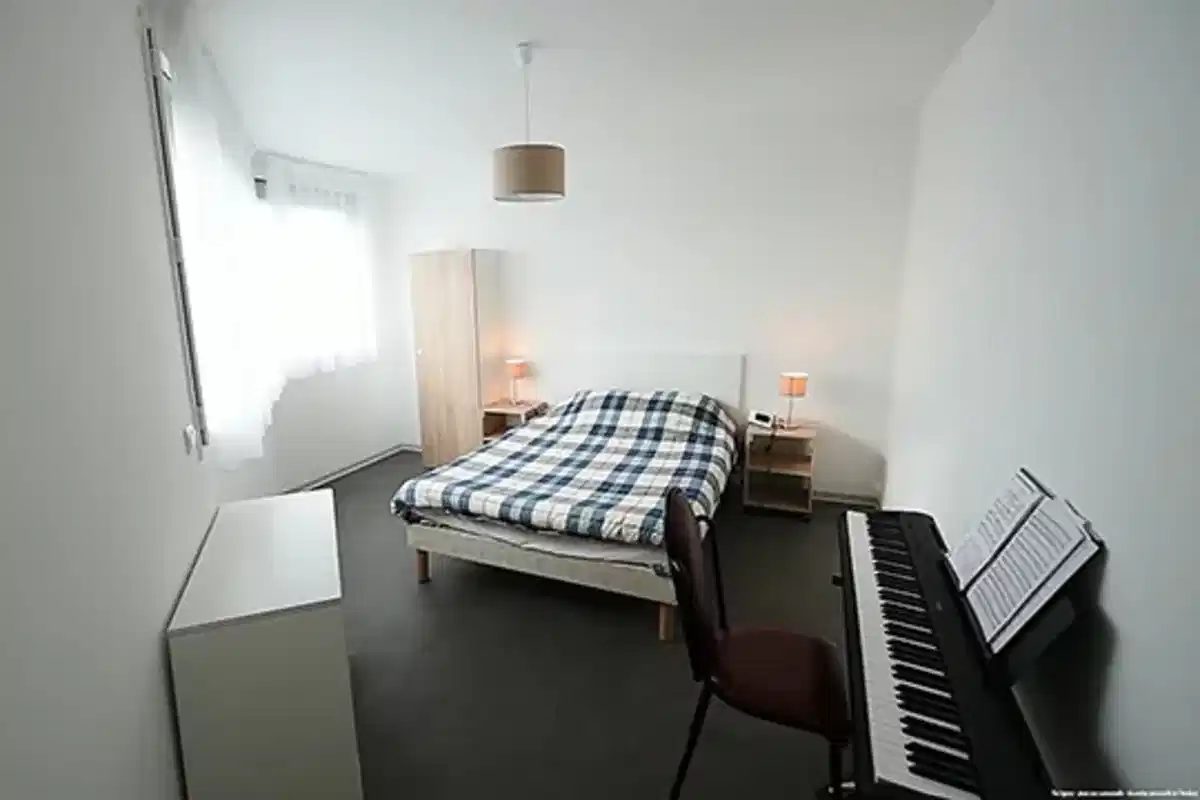
Housing costs in Anam-dong and neighbouring areas vary by room type, distance from campus, and whether utilities are included. All prices below are indicative — confirm with the operator, as actual rates depend on season, contract terms, and exact location. The prices reflect the 2026–2027 academic year expectations, based on pre-pandemic trends and current inflation in Seoul’s rental market.
1. Very tight budget: ₩250,000 – ₩400,000 per month
- Room type: Gosiwon (고시원 — a small private room, often with a shared bathroom and kitchen)
- Location: within 15 minutes’ walk of campus or near Anam Station
- What you get: a room of 5–8 m², a bed, desk, small fridge; utilities (electricity, water, internet) usually included
- Trade-off: Minimal privacy, shared facilities, no cooking space
2. Moderate budget: ₩400,000 – ₩650,000 per month
- Room type: One-room (원룸 — studio apartment with private bathroom and small kitchenette)
- Location: 10–25 minutes’ walk from campus
- What you get: 15–25 m², separate bathroom, a cooking area; usually utilities separate (₩50,000–100,000 extra per month)
- Trade-off: More independence, but you need to manage utility bills and possibly a deposit (₩5–10 million)
3. Higher budget / sharing: ₩700,000 – ₩1,200,000 per month
- Room type: Larger studio or two-bedroom apartment shared with a flatmate
- Location: 5–10 minutes’ walk from campus or in a new apartment complex
- What you get: 30–50 m², modern fittings, washing machine, air conditioning; utilities separate
- Trade-off: Higher deposit (₩10–20 million if through a real estate agent); splitting with a trusted roommate is common
4. Premium / short-term: ₩1,300,000+ per month
- Room type: Serviced apartment or officetel (officetel — a mixed residential/commercial unit) near Anam or across the stream in Seongsu-dong
- Location: 15–20 minutes by bus or subway
- What you get: 25–40 m², fitness centre or rooftop, furnished, utilities included
- Trade-off: Convenience and comfort at a high cost; typically requires a 6-month minimum lease
Deposit note: For most private rentals, a deposit (“key money” 보증금) of ₩5–20 million is required. This is returned at the end of the lease, but it ties up cash. Some landlords accept lower deposits for students with a guarantor. Alternatively, government-run or university-linked gosiwon sometimes have very low deposits (₩100,000–500,000).
Walk vs. Transit: The Trade-Off Around Korea University
The campus has two main gates: the main gate faces Anam-ro (a major road), and the back gate (towards the Science Library and the dormitories) opens to quieter residential streets. Your choice of housing location will affect your daily commute time and convenience.
Walking distance (up to 15 minutes)
- Best areas: Anam-dong 1-ga, 2-ga, 3-ga; parts of Seongbuk-dong (성북동).
- Advantages: No transport cost; easy to go home for lunch; less dependent on bus/subway schedules.
- Disadvantages: Narrow alleys with older buildings; noise may be higher near the main street; limited grocery options compared to larger supermarkets.
- Typical rent premium: Studios within a 10-minute walk are often 10–20% more expensive than similar rooms 20 minutes away.
Bus or subway commute (15–30 minutes one way)
- Best areas: Jeongneung-dong (정릉동) near Kookmin University; Seokgwan-dong (석관동); or across the stream in Seongsu-dong (성수동) — the latter is trendier and has more modern apartment towers.
- Advantages: Lower rent for more space; access to different neighbourhood vibes (e.g., Seongsu is known for cafés and galleries).
- Disadvantages: Monthly public transport cost (~₩60,000–80,000 for a T-money card recharge); need to factor in waiting time and possible delays.
- Recommended for: Students who prefer a quieter living environment or who need a larger room for a couple.
The bus stop advantage
As reviewer widya noted, there is a bus stop right in front of the campus. That means even students living 20–30 minutes away by bus can have a direct route without transferring. Line 6 subway (Anam Station) is also reliable, but it is slightly farther from some lecture buildings than the bus stop.
Personal trade-off recommendation: If your classes are concentrated in a few hours (e.g., 10 am – 5 pm), walking saves time and money. If you have breaks during the day, a short walk is ideal. If you need more square metres for study and living, consider a 15–20 minute commute by bus.
Shortlist Logic: How to Choose Among Nearby Residences
When evaluating specific housing options near Korea University, use the following criteria in priority order. This “shortlist logic” helps you compare listings without being overwhelmed.
1. Distance to your faculty building (not just the main gate)
Different departments are scattered across the campus. The College of Law, Business, and Medicine are near the main gate (Anam-ro side), while science and engineering buildings are deeper inside near the back gate. Choose a room that minimises walking time to your building, not just the campus entrance.
2. Deposit and monthly rent balance
A lower deposit often means higher monthly rent, and vice versa. If you have savings for a ₩10 million deposit, you can negotiate monthly rent down by ₩50,000–100,000. If you cannot lock away that much cash, look for gosiwon or furnished studios with low deposit (₩500,000–1,000,000). Check whether the operator accepts foreign student deposits without a Korean guarantor — some agencies require one.
3. Utility costs included or separate
Many Korean landlords list rent as “management fee included,” which may cover water, gas, and internet, but not electricity. Ask explicitly: “Does this include electricity? Is there a separate 수도세 (water bill)?” Running air conditioning in summer can add ₩100,000 per month to your bill. An indicative utility breakdown for a one-room:
- Water: ₩15,000–25,000
- Gas (for heating/cooking, winter only): ₩30,000–80,000
- Electricity: ₩20,000–80,000 (varies wildly with A/C and heater use)
- Internet: ₩30,000–40,000
4. Roommate or solo?
Splitting a two-room apartment could cut monthly per-person cost to ₩350,000–500,000, which fits a moderate budget — but you need a compatible roommate. Korea University has student clubs and online bulletin boards (e.g., KU Facebook groups, or the university’s own notice system) where you can find potential flatmates. Avoid random roommate matching without a credit check.
5. Build a shortlist of three options
For most international students, the best balance is:
- Option A: A gosiwon or studio within 10–15 minutes’ walk (budget tight, focus on study).
- Option B: A one-room 15–25 minutes’ walk (moderate budget, more space).
- Option C: A shared apartment near Anam Station or in Seongsu-dong, 20–30 minutes door-to-door (higher budget, modern amenities).
Visit each during a weekday afternoon to check noise, natural light, and phone signal. Ask to see the bathroom and kitchen (often very small). Once you have visited three, rank them by cost per square metre and commute time. The winner is the one that removes the most daily friction — being able to roll out of bed and be in class in 10 minutes is worth a higher rent for many students.
Frequently Asked Questions
1. Is it better to live on campus or off campus near Korea University?
On-campus dormitories at Korea University are limited — typically less than 15% of the student body can be accommodated. They are cheaper (approx. ₩300,000–₩500,000 per semester for a shared room) and include meals, but you must adhere to strict curfews and guest rules. Off-campus housing gives you more freedom, choice of area, and often a private room, but requires a larger deposit and monthly utility management. If you value independence and have the budget for a studio, off-campus is generally preferred; if you want the cheapest total cost and don’t mind rules, apply for on-campus housing early (applications open in May and November for the following semester).
2. How much should I budget for utilities in a one-room near Korea University?
For a typical studio of 20 m², expect to spend ₩70,000–₩180,000 per month on water, gas, electricity, and internet combined, excluding rent. The large range is due to seasonal heating and cooling. Winter gas heating can add ₩50,000–80,000; summer air conditioning adds ₩30,000–60,000 to electricity. Always confirm with the landlord whether any utilities are included in the monthly management fee. Indicative — confirm with the operator when you sign the lease.
3. What is the typical lease duration in Seoul, and do I need a Korean guarantor?
Standard leases are 12 or 24 months for one-room apartments with a deposit. Many landlords accept 6-month contracts, especially for students, but may charge a premium (₩50,000–100,000 extra per month). Gosiwon usually operates on month-to-month basis with no deposit. For private rentals, a Korean guarantor (보증인) is often required if you do not have a credit history or employment proof. Some international student offices at Korea University can act as a guarantor for a fee, or you can use a guarantor service that charges about 5% of the deposit. Always verify the exact lease terms in writing and avoid paying the full deposit before signing a contract.
Data updated: 2026-03-15
See also: listing details · browse more