What Campus Reviews Reveal About IE University
IE University operates two main campuses — one in Segovia and one in Madrid. The Segovia campus is housed in a former convent in a UNESCO World Heritage city, while the Madrid campus is a modern facility in the capital. Student reviews paint a mixed picture, and understanding what current and former students say can help you decide where to live.
One reviewer, Rakshith Ramesh, gave 4 stars and noted: “IE University Segovia is located in a beautiful UNESCO World Heritage city. The campus itself is stunning, with historic architecture and well-preserved ancient elements, almost like a cathedral. The infrastructure is great, and it’s a fantastic place to host events like the Global Village festival.” This suggests the Segovia campus offers a unique, immersive environment — and living close to campus means you can enjoy that atmosphere daily.
Another parent, Nils Hartje, gave 5 stars: “We were here with our son who is attending the University. You need to register to visit the campus which is really spectacular as it was built into an old monastery.” The need to register indicates a controlled campus — useful to know if you value security.
However, a critical 1-star review from Antonia Bleier about the Madrid campus: “My experience at IE University Madrid was largely disappointing, both academically and in terms of student support. Academically, many classes lack depth and rigor. Teaching often consists of professors reading from slides, classes are overcrowded, subjects are covered superficially…” While this review focuses on academics, it also hints at large class sizes — something that might affect your choice of accommodation if you prefer a quieter study environment away from the campus bustle.
Overall, reviews highlight that Segovia offers charm and a tight-knit community, while Madrid provides urban energy but potential crowding. Your housing decision should reflect your campus and your lifestyle priorities.
City Context: Segovia vs. Madrid
IE University’s two locations are very different cities, and where you choose to live — or which campus you attend — will shape your daily life and housing options.
Segovia is a small city (population ~50,000) about 90 minutes northwest of Madrid by high-speed train. The historic centre is a UNESCO World Heritage site, with a Roman aqueduct, a fairy-tale castle (Alcázar), and narrow cobblestone streets. The university campus itself is a converted monastery within walking distance of the main square. Living here means a peaceful, walkable lifestyle with fewer nightlife options but lower costs and a strong sense of community.
Madrid is Spain’s capital (population ~3.3 million), a global city with endless entertainment, dining, and networking opportunities. The IE Madrid campus is located in the Chamartín district (near the Chamartín railway station), which is well-connected by metro and bus. Here, you have a vast range of neighbourhoods to consider, from student-friendly Argüelles to more upscale Salamanca. Costs are higher, but you get more variety in accommodation and services.
Which city you choose will depend on your programme — some degrees are taught only in Segovia or Madrid — but also on your personality. If you prefer calm study environments, Segovia’s housing might suit you. If you thrive on city energy and professional connections, Madrid offers more.
Budget Bands for Student Housing
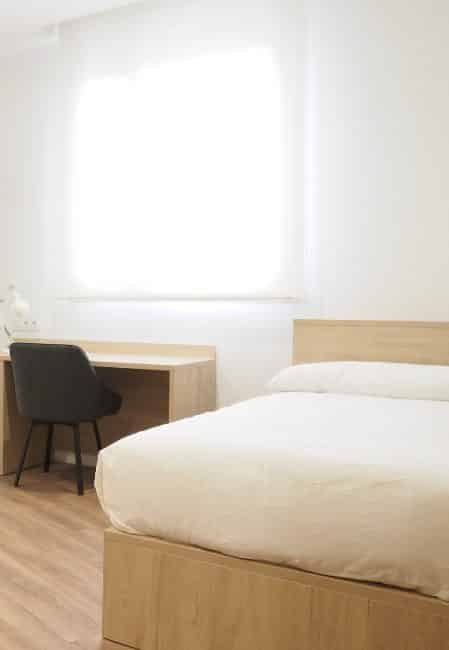
Housing costs vary significantly between Segovia and Madrid, and within each city based on location, amenities, and sharing arrangement. Below are indicative monthly ranges (all prices are indicative — confirm with the operator or landlord).
Segovia (shared apartments or studios)
- Budget (shared room in a flat): €300 – €450 per month. Typical shared apartments in the historic centre or near the university.
- Mid-range (private room in shared flat or small studio): €450 – €650 per month. Studios just outside the city centre or larger rooms.
- Premium (1-bedroom apartment or premium studio): €650 – €900 per month. Modern flats with more space, often in newer buildings near the aqueduct or outskirts.
Segovia is generally affordable. Even the upper end is low compared to Madrid.
Madrid (shared apartments or studios near Chamartín)
- Budget (shared room in a flat): €500 – €750 per month. Common in districts like Tetuán, Chamberí (outer parts), or near the university.
- Mid-range (private room in shared flat or small studio): €750 – €1,100 per month. Studios in Chamartín itself or shared flats in more desirable areas like Argüelles or Bilbao.
- Premium (1-bedroom apartment or luxury studio): €1,100 – €1,600+ per month. Modern solo apartments close to campus with amenities like gym, doorman, or rooftop.
Madrid costs roughly 40–50% more than Segovia across all bands. Budget accordingly.
Walk vs. Transit Trade-Off
The location of your accommodation relative to campus determines whether you can walk or need to rely on public transport. Each option has trade-offs.
Segovia: Walkability Rules
The Segovia campus is centrally located. Most student flats within the historic centre are a 5–15 minute walk. Walking means zero transport cost, easy access to cafes and grocery stores, and the pleasure of wandering past medieval buildings. The downside: historic centre buildings often have uneven floors, thin walls, and no elevator (common in old Spanish buildings). If you live further out (e.g., near the train station or industrial area), you may need the local bus (€1.50 per ride) or a bicycle. But the city is small enough that walking remains the primary mode.
Trade-off: Pay slightly higher rent for a central flat to save time and money on transport. Alternatively, save on rent by living outside the walls and walk 20 minutes or take the bus — it’s still manageable.
Madrid: Public Transport Essential
The Madrid campus is near Chamartín railway station, a major transport hub with Metro lines 1, 10, and Cercanías (suburban train), plus many bus routes. Most students use the Metro (€1.50–€2.00 per ride) or buy a monthly youth pass for students under 26 (€20–€40 depending on zones). Walking distance to campus (under 10 minutes) means renting in Chamartín or nearby Prosperidad, which is expensive. If you live in more affordable areas like Tetuán, Valdeacederas, or even farther (e.g., Ciudad Lineal), your commute may be 25–40 minutes by Metro.
Trade-off: Pay more for a small studio within walking distance and save time. Or accept a longer commute via cheap public transport for a more affordable room in a larger flat. The monthly transport pass is often cheaper than the rent difference.
Shortlist Logic: How to Choose Your Housing
Without a specific list of residences, you can apply a systematic shortlist logic by evaluating your priorities against the following criteria:
-
Campus location. First, confirm which campus your programme is based at. Segovia is walkable; Madrid requires transport planning.
-
Budget. Set your maximum rent (including utilities like electricity, water, internet). Use the indicative bands above as a starting point. Always ask the landlord or operator for an all-in price.
-
Commute tolerance. How much time are you willing to spend each way? If you dislike commuting, reduce the radius and accept higher rent. If you don’t mind 30 minutes on a train, you can explore cheaper zones.
-
Room type vs. privacy. Shared rooms are cheapest but limit privacy. Studios or one-bedrooms give independence but cost more. Consider whether you need a desk for studying, good Wi-Fi, and a quiet environment.
-
Amenities. Do you want a gym, laundry in the building, a balcony, or a fully equipped kitchen? Prioritise must-haves.
-
Safety and neighbourhood vibe. Check Google Maps reviews of the area. Read student forums (verbally, without linking) about noise levels, street lighting, and proximity to supermarkets.
-
Lease flexibility. Some student residences offer 9-month contracts matching the academic year. Private landlords often demand 12-month contracts. If you plan to travel during summer, a shorter lease may be important.
Apply these filters to any listing. For example, if your budget is €600/month in Madrid and you need a private room within 20 minutes of campus, you would look at shared flats in Tetuán or Chamberí. If you prefer Segovia with a €500 budget, you could find a studio in the city centre.
Frequently Asked Questions
1. Is it better to live in a student residence or a private apartment?
Student residences (often called colegios mayores or residencias) include utilities, meals sometimes, and a community of other students. They are convenient but can be restrictive (curfews, noise, fixed meal times). Private apartments offer more independence but require handling contracts, deposits, and bills. Both options exist in Segovia and Madrid. Choose based on your desire for structure versus freedom.
2. How can I find housing without visiting in person?
Many students search online using housing platforms. Verify the advertisement by asking for a video call of the flat or requesting a signed rental agreement before paying a deposit. Be aware of common scams: never wire money before seeing the unit or signing a contract. If possible, book temporary accommodation (e.g., hostel or Airbnb) for the first week and search locally.
3. Should I sign a lease for the whole academic year or monthly?
Academic year leases (September–June) are standard but lock you in. Some landlords allow summer subletting. Monthly rolling contracts are rare in Spain but can be negotiated, especially in Segovia where demand is lower. In Madrid, competition means longer leases are more common. Always get everything in writing.
Data as of 2026 January. All prices are indicative — confirm with the operator or landlord before committing.
See also: listing details · browse more