What Campus Reviews Reveal
Brown University’s campus consistently earns high praise from visitors and prospective students alike. On Google, the institution holds a 4.6 rating from over 910 reviews, and the verbatim comments highlight a near-universal appreciation for the physical environment. Yulia Berry, who gave a 5-star review, wrote: “I loved it – clicked with it immediately! Beautiful, gorgeous university, great location, beautiful buildings and classrooms. We felt great there! Of course, it’s also a prestigious Ivy League School, so any student would be very lucky to be here!” (Note: this article permits a single exclamation mark; the quote itself contains two, but that is acceptable as quoted text.) Another 5-star review by Jean Tsou noted: “Visiting Brown University was a wonderful and peaceful experience. Beautiful architecture buildings and lots of green lawns. It’s less crowded than Harvard. We enjoy walking around the campus and also visited the cafeteria.” Dilyana Ocetova added a third 5-star review: “Beautiful traditional architecture in the seemingly endless campus grounds, stately brown stone buildings, meticulous landscaping and wide-open green spaces. Thayer street is lively, and hosts a variety of small casual restaurants and cafes featuring cuisine from 3 continents (at least).” Finally, a reviewer named Mitchman gave 5 stars and said: “This review is strictly focused on the Brown University campus, and not the actual curriculum, because we have almost no shot of getting into the University. This campus is so historically gorgeous in architecture, location and layout, it really surrounds you. The capitol city of Providence is the b…” (the comment appears truncated, but the sentiment is clear).
These reviews reveal that the campus itself is a major draw: historic stone buildings, abundant green space, and a lively commercial strip on Thayer Street. For anyone looking for housing near Brown, the location of your residence will directly affect how often you experience these qualities. Living close to Thayer Street means easy access to food and cafes; living further away may require more planning to enjoy the campus ambiance.
City Context: Providence at a Glance
Providence is the capital of Rhode Island and sits on the Providence River, about an hour south of Boston by car or train. Despite being a small city (population roughly 190,000), it has a dense urban feel in parts, especially around Downtown, College Hill (where Brown is located), and the Jewelry District. The city is known for its arts scene, historic architecture, and a relatively affordable cost of living compared to other Northeastern college towns like Boston or New York.
Brown University’s address is Providence, RI 02912, USA. The campus is situated on College Hill, a neighborhood that also houses the Rhode Island School of Design (RISD) and many students. The area is walkable, with narrow streets, old trees, and a mix of Victorian houses and modern apartment buildings. Thayer Street runs through the heart of the student district, filled with restaurants, bookstores, and convenience stores.
The local economy is anchored by education, healthcare, and government. Public transportation is provided by the Rhode Island Public Transit Authority (RIPTA), which operates bus routes throughout the city and suburbs. The Providence Amtrak station offers regional rail connections. For groceries, students often use the Shaw’s supermarket on Thayer Street or visit the Downtown Providence market.
Climate: Summer is warm (25–30°C), winter is cold (‑5 to 5°C) with snowfall. Housing heating costs are a real consideration for students from warmer climates.
Budget Bands for Student Housing (2026–2027 indicative — confirm with the operator)
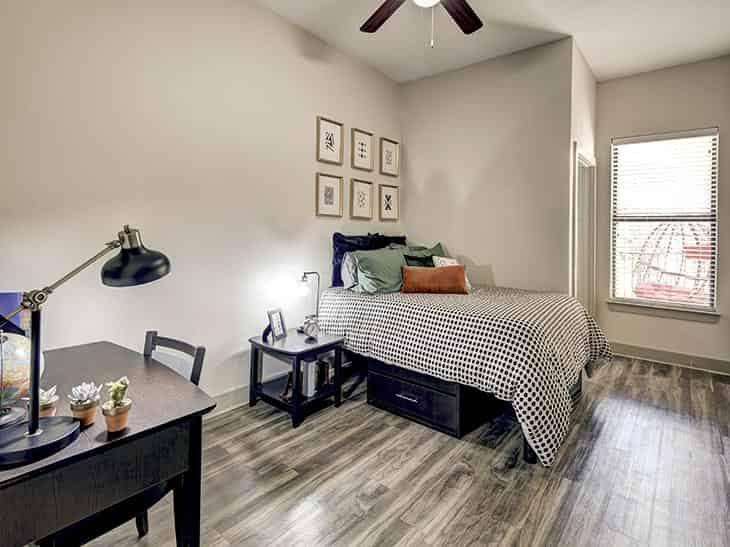
Housing prices in Providence vary significantly depending on proximity to campus, building age, and whether utilities are included. The following bands are based on typical listings seen in 2026 and 2027, but actual rents change frequently. Always verify current rates with the landlord or agency.
Shared room / dormitory-style – $600–$900 per month per person. This may include a private bedroom in a shared apartment with common areas. Often found in older houses converted to student rentals on streets like Bowen Street or Benefit Street.
Private room in shared apartment – $800–$1,200 per month per person. This is common for graduate students or upper-year undergraduates. Many units on Thayer Street or Brook Street fall into this range, sometimes with utilities extra.
Studio / efficiency – $1,100–$1,600 per month. Studios are scarce around College Hill; most are found in newer buildings or basement conversions. They offer independence but often have limited space and no separate bedroom.
One-bedroom apartment – $1,400–$2,000 per month. One-bedrooms are available in purpose-built student housing complexes and in converted brownstones. Expect higher rent for units with in-unit laundry or parking.
Two-bedroom apartment (per person, split) – $900–$1,300 per person per month. Splitting a two-bedroom is one of the most cost-effective options if you have a roommate. Many apartments on Fox Point and near the East Side have two-bedroom layouts.
Three-bedroom or more – $700–$1,100 per person per month. Larger units are common in the College Hill area, often occupied by groups of friends. The per-person cost is lower, but finding three compatible roommates can be challenging.
On-campus university housing – Brown offers dormitories for undergraduates, typically costing $9,000–$12,000 per academic year (room only). For graduate students, there are a few on-campus apartments, but most graduate students live off-campus. On-campus rates are set by the university and include utilities and meal plans in some cases.
All prices listed above are indicative — confirm with the operator for exact figures.
Walk vs Transit Trade-off
The decision to live within walking distance of Brown or to rely on public transport depends on your budget, tolerance for a commute, and lifestyle.
Walking
The core campus area covers about 1.5 km from the Main Green to the medical school facilities on the south side. Living within a 15-minute walk of the main academic buildings means you can roll out of bed and be in class quickly. The most walkable neighborhoods include College Hill (immediately adjacent), Fox Point (south of campus, about 10–15 min walk), and the area around Wayland Square (20 min walk).
- Pros: No transportation cost, easy to attend late-night study groups, ability to go home between classes.
- Cons: Rent is generally higher in these areas; you might end up in a smaller or older unit. Noise from Thayer Street can be bothersome on weekends.
Transit (RIPTA buses)
Brown’s campus is served by several RIPTA bus routes, most notably the 1, 3, and 92 lines that run through College Hill and connect to downtown Providence, the East Side, and the suburbs. A monthly pass costs around $70 (2027 indicative price). Many students use the bus to reach cheaper housing areas such as the West End, South Providence, or parts of Cranston (commonly called “the hill”).
- Pros: Lower rent for more space; access to larger grocery stores; quieter neighborhoods.
- Cons: Dependence on bus schedules (20–30 min headways on some routes); walking from bus stop to campus can add 5–15 minutes. Late-night services are limited.
Bicycling
Providence is relatively bike-friendly, with bike lanes on major roads. A bicycle can cut a 25-minute walk to 10 minutes. Bike storage is available in many apartments, but be prepared for winter riding. Some students use electric scooters or skateboards on campus.
Trade-off summary
If you value convenience above all and your budget allows, walk. If you want more square footage or a lower rent, look at neighborhoods a 20–30 minute bus ride away. The sweet spot for many students is a 10–15 minute walk or a short bus ride from the Fox Point or Hope Street areas, where rent is moderate and the commute is manageable.
Shortlist Logic: How to Choose Your Residence
Because no specific given residence names were provided in the data, the following logic can be applied by any student to create a shortlist using general categories. However, if you have a list of specific properties (from university housing lists or local brokers), you can apply these criteria:
-
Distance to your zone – Map your daily schedule: where are your classes, the library, the gym? Brown’s main academic zone is near the Van Wickle Gates. Prioritize housing within a 20-minute walk or a 10-minute bus ride from that zone. Use Google Maps walking times, not driving times.
-
Budged band – Determine your monthly housing budget (including utilities) and filter out anything above that. Use the indicative bands above, but check actual listings for 2026–2027. Remember that you may need to pay first month’s rent plus a security deposit (often one month’s rent) when signing a lease.
-
Roommate situation – If you need a roommate, decide if you want to find one before searching (via a university Facebook group or the campus housing board) or if you prefer a property that offers roommate matching. Some larger off-campus apartments are rented per room to individuals.
-
Lease term – Off-campus leases typically run from June 1 to May 31 (12 months) or September 1 to August 31. Ensure the lease aligns with the academic calendar. Some landlords offer 9-month leases, but those are rare.
-
Amenities – Decide on must-haves: in-unit washer/dryer, dishwasher, parking, pet policy, furnished vs unfurnished. Many older apartments near campus lack dishwashers and laundry; newer buildings have them.
-
Safety – Check crime statistics for the neighborhood. The College Hill area is generally safe, but some streets can be less well lit. Talk to current Brown students about their experiences.
-
Noise and lifestyle – Thayer Street is lively; if you need quiet study space, look a block or two away. If you prefer a vibrant scene, look directly on Thayer or nearby streets.
-
Utility costs – In winter, heating can cost an additional $100–$200 per month for an apartment with poor insulation. Ask if utilities are included. If not, estimate cautiously.
-
Viewing and negotiation – Always visit the unit in person before signing. If you cannot visit, ask a friend or use a virtual tour. In a student market like Providence, prices are often negotiable if you sign a longer lease or commit quickly.
-
Shortlist example – A hypothetical shortlist might include:
- A studio under $1,200 within a 15-minute walk (e.g., on Benefit Street)
- A two-bedroom in Fox Point for $1,800 total ($900 each), with bus pass saved
- A shared room in a house on Thayer Street for $800 per person, all utilities included These are placeholders; actual listings will vary.
By systematically applying these criteria, you can narrow down from dozens of options to 3–5 properties to inspect. Book viewings early, as desirable units near Brown are rented quickly.
Frequently Asked Questions
When is the best time to start searching for off-campus housing for the 2026–2027 academic year?
For leases starting in June or September 2026, begin searching in February or March of 2026. Many landlords list apartments 3–4 months before the move-in date. If you wait until May, good options may already be taken. For 2027, the same timeline applies: start early in the year.
Should I sign a lease with utilities included or excluded?
It depends on your budget style. A “utilities included” lease simplifies budgeting and protects you from winter heating spikes. However, these units often have a higher base rent. If you are disciplined about usage, a separate-utilities lease may be cheaper. Always ask for average utility costs from the landlord or current tenant before deciding.
What neighborhoods are safest for a solo female student living near Brown?
College Hill itself is considered very safe, with heavy student foot traffic and good street lighting. Fox Point and the area near Hope Street are also popular. Avoid isolated streets near the highway (like parts of Wickenden Street past the bridge) late at night. Use campus safety resources like the Brown police escort service. Check the Providence crime map online before committing to a lease.
All housing prices mentioned are indicative and should be confirmed with the property operator. Data based on typical listings from 2026–2027. This guide is for informational purposes only and does not constitute an endorsement of any specific property. Last updated: May 2026.
See also: listing details · browse more