What Campus Reviews Reveal
Boston University stretches along Commonwealth Avenue, a layout that both students and visitors consistently note. Shirley Wall, who visited for the Special Olympics, wrote: “I was there with my grandson, but his competition in special Olympics. Everybody was so nice to everyone and I love watching all the kids do their thing and watching them get their rewards. I’m looking forward to doing it again. Even. The staff what’s fantastic.” Her review points to the open, welcoming atmosphere on campus during major events. Dariusz Prokopowicz described BU as “a masterclass in urban higher education, seamlessly weaving a global research powerhouse into the very fabric of one of the world’s most intellectual cities.” This reflects the integration of the university with Boston’s academic environment. A former student going by Korean News said, “BU has come such a long way since my day. I still love the campus, decor, Greek Life,” suggesting the campus retains traditional elements while evolving. Caio Cascaes commented, “Very nice and well preserved place. Good for university time.” Overall, the reviews highlight a vibrant, well-maintained urban campus. Student housing near BU must match this setting—close enough to walk to classes, but also connected to the city’s public transport network.
Boston University’s location on Commonwealth Avenue places it within walking distance of many local amenities: coffee shops, grocery stores, and the Charles River Esplanade. The campus has a Google rating of 4.4 out of 5 from 541 reviews, indicating general satisfaction among those who know it. For a student starting in 2026 or 2027, selecting accommodation near BU means balancing access to campus, cost, and lifestyle.
City Context: Boston as a Student City
Boston is one of the most student-dense cities in the United States, home to dozens of colleges and universities. The city’s public transit system, the MBTA (known locally as the “T”), includes subway lines (Green, Red, Orange, Blue) and buses. BU has its own T stop on the Green Line B branch: Boston University East, Boston University Central, and Boston University West. This means students can live further out along the Green Line and still commute easily to campus. However, living within walking distance eliminates daily transit costs and time.
The city of Boston currently lists 27 student accommodations relevant to BU area, with indicative starting prices around $875 per month (indicative — confirm with the operator). This figure serves as a baseline; actual rents vary by size, location, and amenities. Many units are in shared apartments or purpose-built student residences. The sample provided includes buildings like 31 Queensberry Street (in the Fenway/Kenmore area) and 315 Allston Street (in the Allston neighborhood). Students should confirm with the operator for exact rates, lease terms, and availability for the 2026–2027 academic year.
Budget Bands for Student Housing
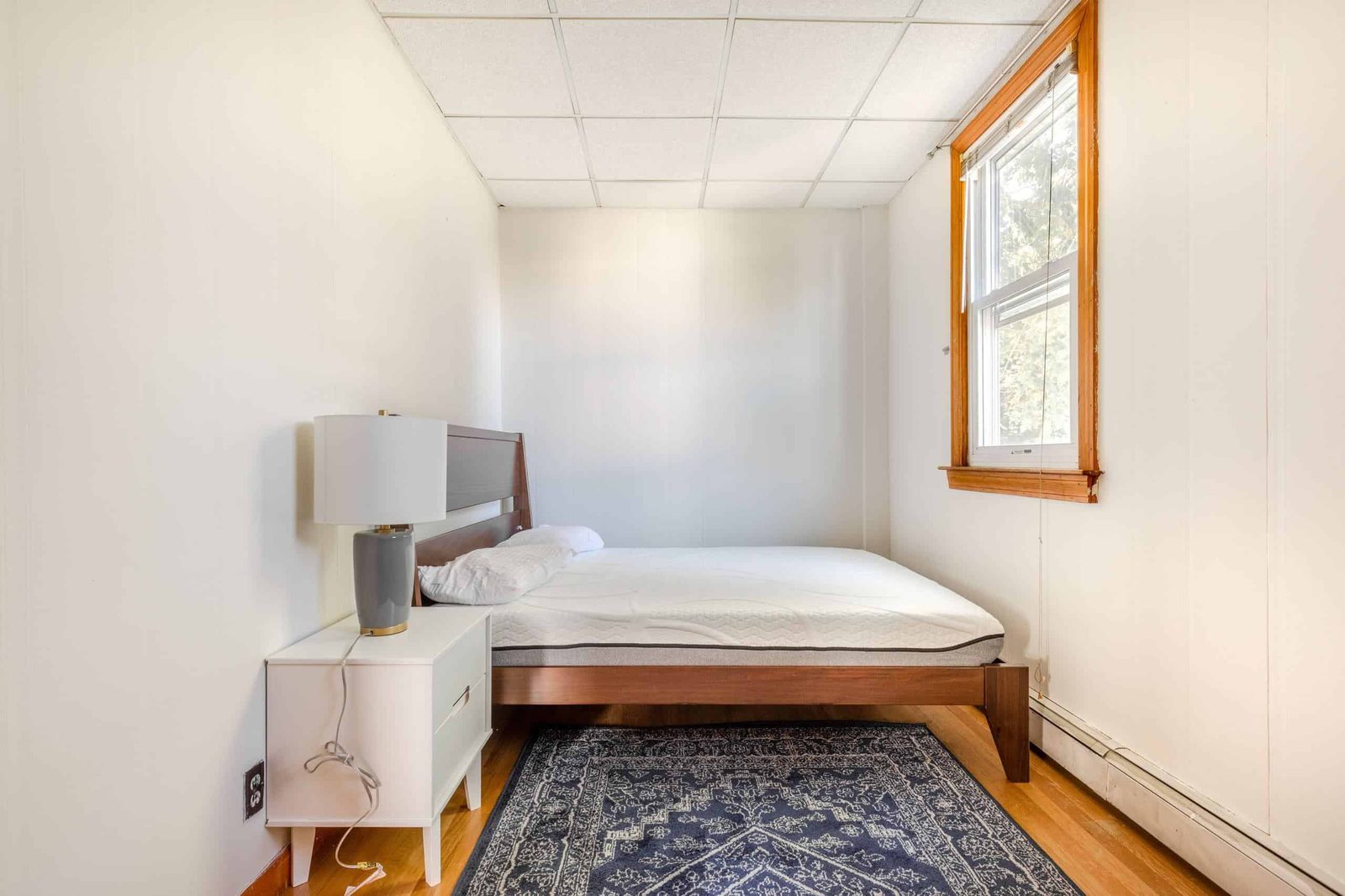
Based on the available data, a single budget figure of $875 per month is given as a starting point (indicative — confirm with the operator). In practice, student housing costs in Boston span a range:
-
Lower band (around $875 – $1,200): Often shared bedrooms or apartments in neighborhoods like Allston or Brighton. These areas are a bit further from campus but well-served by the Green Line B branch. Examples from the sample: 315 Allston Street and Mission Main fit this band. Mission Main is a multi-building complex near the border of Mission Hill and Roxbury, about a 20-minute T ride or bus to BU.
-
Mid band ($1,200 – $1,600): Private rooms in shared apartments or studios in Fenway, Kenmore, or the South End. These locations allow walking to BU (10–20 minutes). 31 Queensberry Street and 85 Park Drive are in this zone. 85 Park Drive is in the Fenway neighborhood, close to the BU campus and the Museum of Fine Arts.
-
Higher band ($1,600+): Studios or one-bedroom apartments in Back Bay, Beacon Hill, or near the BU campus. These offer convenience but command a premium. June Homes 02124 (if that refers to a specific property) could fall here, depending on unit type. June Homes operates co-living spaces, which may include utilities and community amenities.
Students are advised to query each operator for current 2026–2027 rates and to factor in utilities (electricity, gas, internet) which are sometimes not included. No single “best” option exists; choose based on your budget and commuting tolerance.
Walk vs Transit Trade-off
Boston University’s linear campus means that most academic buildings sit along the Green Line B branch. The trade-off between walking and using public transit depends on where you live:
-
Walking distance (usually within 1.5 km of central campus): Most convenient for early classes, late library sessions, and spontaneous campus events. You avoid monthly transit passes ($90 for students as of 2025, but check 2026–2027 rates). Apartments near the western end of campus (Allston) or along Commonwealth Avenue itself are ideal for walking. Examples: 315 Allston Street is on the Allston-Brighton border, about a 10–15 minute walk to BU West. 31 Queensberry Street is in Fenway, a 15–20 minute walk to the eastern part of campus.
-
Transit commute (10–25 minutes by T or bus): Opens up more affordable neighborhoods like Brighton, Brookline, or Mission Hill. The Green Line B branch is direct, but can be crowded during peak hours. Mission Main, for instance, is near the B line’s Chiswick Road stop (about 15 minutes to BU Central). 85 Park Drive is close to the D branch of the Green Line (Fenway station), a 5-minute ride to BU.
-
Biking: Many students also bike along the Charles River paths. Bike-friendly residences with secure storage are a plus.
Choose a location that matches your schedule and lifestyle. If you have 8 a.m. classes, walking may win. If you prefer quiet evenings away from the student bustle, a short transit ride may be better.
Shortlist Logic: Using the Given Nearby Residences
The sample of five residences represents different housing types and locations. Below is a logical way to evaluate them for a BU student in 2026–2027:
31 Queensberry Street – Located in the Fenway neighborhood, close to Kenmore Square and the BU campus. This area is popular among students from multiple universities. It offers easy access to the Green Line B, C, and D branches. The building likely has shared apartments or studios. Suitable for students who want to be near both BU and the Fenway entertainment district.
315 Allston Street – This address sits in the Allston area, a classic student neighborhood west of BU. Allston is known for its Korean restaurants, bars, and affordable rents. The walk to BU West is about 10–15 minutes, and the T is also available. A good mid-range option.
Mission Main – A large apartment complex in Mission Hill, close to the Brigham Circle area. It is a mix of affordable and moderate rent units. The commute to BU involves a brief walk to the Green Line E branch or a bus. This property suits students who want a quieter, slightly less student-heavy environment while still being on a transit line.
85 Park Drive – In the Fenway/Kenmore area, steps from the Museum of Fine Arts and Northeastern University. Very walkable to BU’s eastern end. Likely more expensive but offers proximity to campus and Fenway’s shops and restaurants.
June Homes 02124 – June Homes is a co-living operator. The “02124” is a Boston ZIP code (primarily Dorchester). That location would require a longer commute (about 30–40 minutes by T or bus). However, co-living may include furnished rooms, utilities, and flexible leases. It is an unconventional choice for BU, but some students prioritize low upfront cost and short-term commitment.
When shortlisting, consider:
- Distance to your main classroom building (e.g., College of Arts & Sciences vs. the Medical Campus)
- Lease duration (academic year vs. 12 months)
- Whether rent includes utilities
- Roommate matching options (if offered by the operator)
- Access to grocery stores and public safety
Given that the city has 27 available listings, these five samples are a starting point. Contact each operator directly for 2026–2027 pricing and availability.
FAQ
Q: When should I start looking for housing near Boston University for the 2026–2027 academic year?
A: Most operators begin leasing for fall 2026 around January–March of 2026. Popular buildings like 31 Queensberry Street and 315 Allston Street often fill by April. Start your search early, and confirm lease start dates (some require September 1 move-in). The earlier you secure a place, the more options you have.
Q: What is typically included in the monthly rent for these residences?
A: Inclusion varies. Some buildings include heat, hot water, and basic kitchen appliances; others require you to set up electricity and internet separately. For example, co-living operators like June Homes often include utilities, while traditional apartments in Mission Main or 85 Park Drive usually do not. Always ask for a list of included items and any additional fees (e.g., amenity fees). The $875 starting figure (indicative) may or may not include utilities — confirm with the operator.
Q: Is it better to live in Allston or Fenway for a BU student?
A: Both are popular. Allston (315 Allston Street) offers lower rents and a vibrant, casual dining scene, with a 10–15 minute walk to BU’s western campus. Fenway (31 Queensberry Street, 85 Park Drive) is closer to the eastern campus and more expensive but also closer to downtown Boston and Fenway Park. Your choice depends on budget, preferred walk time, and whether you want a quieter (Allston) or more centrally located (Fenway) lifestyle. Either way, the Green Line T connects both neighborhoods.
Data date: 2026-01-15
See also: listing details · browse more